
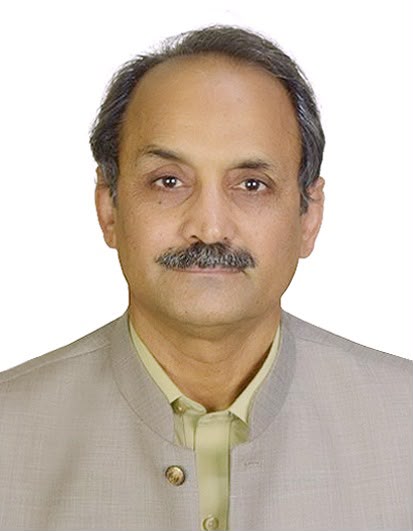
By: Dr. Muhammad Tariq
Human beings acquire knowledge, skills, and values through both formal and informal education.
Formal Education refers to an organized system of teaching and learning. It is conducted in educational institutions such as schools, colleges, and universities.
Formal education comes to an end after a specific period.
Informal Education refers to the process of acquiring knowledge without the need for a formal educational institution. In it, a person learns knowledge and skills through personal observation, experience, and study.
Both formal and informal education are essential for human beings. However, it is often observed that people give importance to formal education while ignoring the importance of informal education.
After obtaining formal education from an educational institution, many people do not give importance to acquiring knowledge and skills through informal means, even though informal methods can greatly increase a person’s knowledge.
In other words, informal education can continue throughout one’s entire life.
It is a fact that the nations of the world which progress are those that emphasize informal education along with formal education. Informal education continues to increase a person’s knowledge throughout life because it is free from the limitations of time and place.
A society is made up of individuals, and the progress of a society depends on the improvement in the knowledge and thinking of its people. Pakistan is a developing country. Its literacy rate is much lower than that of developed countries. Due to the low literacy rate, people face various economic, social, and psychological problems.
The citizens of developed countries continue the habit of reading and learning throughout their lives because they understand the importance of informal education. This is why they have achieved remarkable accomplishments by continuing to learn through informal education.
Michelangelo (1475–1564) was a great Italian painter, sculptor, and poet. He lived during the European Renaissance, a period of great intellectual and cultural awakening that lasted from the 14th to the 17th century. During this era, Europe made tremendous progress in knowledge, literature, science, and philosophy, and the learning of ancient Greek and Roman civilizations was revived.
Michelangelo received formal education only up to the school level. He developed his knowledge and artistic skills mainly through informal learning and became one of the greatest sculptors, painters, and poets in history. One of his famous sayings, written when he was 87 years old, was:
“I am still learning.”
He had no formal degree in the fine arts, yet throughout his life he continued to improve his artistic knowledge and skills through informal learning and reached the highest level of excellence.
Alexander Graham Bell, the inventor of the telephone, was born in Scotland. He also received formal education only up to the school level. However, he continued learning informally throughout his life. He increased his knowledge through his father, personal study, and personal experiments.
Similarly, Thomas Edison, the inventor of the electric light bulb and many other inventions, also had limited formal education. He continued acquiring knowledge through informal learning by means of personal study and observation.
History contains many other examples of people who expanded their knowledge and skills through informal learning and achieved outstanding success.
The purpose of these examples is to show that human intellectual ability is extremely vast. To make proper use of this ability, it is essential that the process of learning should continue throughout life.
Learning is a positive activity that benefits not only the individual but also society, because society is made up of individuals, and the improvement of individuals leads to the improvement of society.
A book is one of the best friends of a person. However, this friendship is becoming weaker with time. The practice of learning and teaching through informal means has become very limited. Libraries have become deserted. If you visit any library, you will find only a few people reading, and few of them will be elderly.
The situation in Europe and America is much better. People there enjoy reading books. During travel, they often carry a newspaper or a book with them and read it. In our country too, the situation was better some time ago. People used to read newspapers or magazines while traveling, but now both newspaper reading and book reading are declining; most people spend their time on mobile phones.
Human beings always need knowledge. Therefore, the process of acquiring knowledge—that is, learning—should continue throughout life. Along with formal education, emphasis must also be placed on informal education. This is the need of the time and is also a requirement of Islam.
