
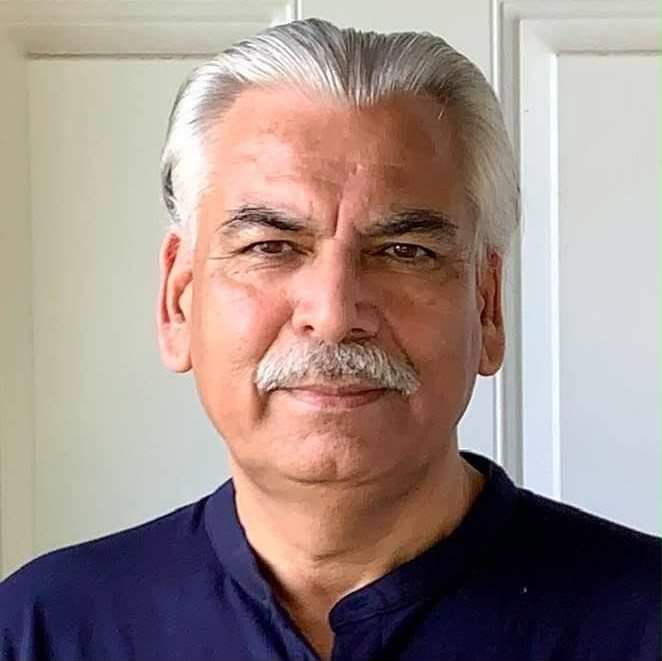
Barrister Usman Ali, Ph.D.
Questions about judicial independence in Pakistan are not new. Since the country’s founding, one concern has repeatedly recurred: are judges truly free to decide cases solely in accordance with the Constitution, the law, the evidence, and their conscience, or must they also consider whether the consequences of their decisions may extend beyond the courtroom and reach their families?
A strong state is built not only on economic growth, modern infrastructure, or political stability. It also depends on public confidence that courts will administer justice impartially, without fear or favour. Judicial independence is the foundation of that confidence.
If a judge, while writing a judgment, must consider not only the law and the evidence but also the possible consequences for his family’s safety, livelihood, reputation, or professional future, the issue is no longer personal. It becomes a threat to the integrity of the justice system itself.
In a democratic society, courts are not expected to deliver popular decisions. They are expected to deliver lawful ones. Cases must be decided on the basis of evidence, legal principles, and constitutional requirements, not public sentiment, political pressure, television commentary, or social media campaigns.
Those who disagree with a judicial decision have every right to challenge it. The law provides avenues of appeal, review, and recourse to higher courts. What weakens the rule of law is pressure created outside that process, particularly when it is directed not only at the judge but also at members of the judge’s family.
Pakistan’s political history shows that judgments involving prominent political leaders are rarely treated as purely legal matters. They are usually interpreted through a political lens. This pattern has not been confined to one party, one leader, or one period. Political forces across the spectrum have, at different times, framed judicial decisions in ways that support their own narratives.
In such an environment, legal questions often disappear from public debate. Attention shifts instead to the judge’s motives, background, personality, and character. The merits of the case become secondary to political claims about the person who decided it.
The danger becomes even greater when a case concerns a major political figure or an issue of national significance. Political reactions may be inevitable, but whether an offence has been proved in a criminal case is a matter for the courts. It cannot be determined at political rallies, in television studios, or through social media campaigns. If a court makes an error, that error must be corrected through the legal system itself.
On 5 August 2023, Additional Sessions Judge Humayun Dilawar delivered a judgment in the Toshakhana case against former Prime Minister Imran Khan. The decision prompted a strong reaction from Pakistan Tehreek-e-Insaf. Alongside the legal and political controversy, however, a more troubling question emerged: does a judge’s responsibility end when he delivers a judgment, or may he and his family also be made to bear its consequences?
According to publicly available court records and reports, following the judgment, Judge Humayun Dilawar and members of his family faced, and reportedly continue to face, a series of legal, political, and public controversies in Khyber Pakhtunkhwa, where a PTI-backed provincial government remains in power.
Social media campaigns against him continued for an extended period. Members of his family were also subjected to criticism and pressure. The family’s business and financial interests were reportedly affected, while criminal cases were registered against certain relatives. According to available reports, those cases were later found by the courts to be false.
It was also reported that Judge Dilawar’s sister had operated an educational institution for nearly three decades. After facing sustained difficulties, she was eventually compelled to close it.
His father had practised law since 1956. During a long and respected professional career, he had never faced allegations of corruption or dishonesty. Yet, in the final years of his life, he was named in a criminal case.
An elderly and highly regarded lawyer was thus forced to face criminal proceedings in retaliation for a judgment delivered by his son against an influential political figure. He died in January 2026.
During the same period, Judge Humayun Dilawar reportedly approached the courts to seek the dismissal of cases registered against him and certain members of his family. He succeeded through the legal process.
There is a symbolic dimension to this episode. When a guardian of the law himself becomes the subject of legal proceedings, he must seek protection and justice from the very judicial system of which he is a part. Like every other citizen, he must place his trust in the courts.
The significance of this matter extends far beyond one judge or one case.
Judicial independence is not merely a constitutional phrase. In practical terms, it means that a judge must be able to decide a case without fear of political, administrative, social, personal, or familial consequences.
Pressure on the judiciary does not always take the form of a direct instruction from a political party, state institution, or organised group. It can also arise through sustained character assassination, coordinated social media campaigns, professional obstruction, financial pressure, and the involvement of family members in legal or public controversies.
A judge need not be explicitly told how to decide a case. It may be enough to create an atmosphere in which an independent decision appears likely to carry a serious personal or familial cost. Such an environment can create a chilling effect and undermine the judge’s independence of judgment.
At the same time, judges are not above the law, nor are their family members entitled to immunity.
Where there is a genuine, credible, and provable legal case against a judge or a member of the judge’s family, it should be investigated impartially and transparently. Judicial independence cannot be used as a shield against legitimate accountability.
There is, however, a fundamental difference between accountability and retaliation.
Any investigation must be evidence-based, conducted through ordinary legal procedures, and protected from political influence. Otherwise, it may create the impression that a judge’s relatives are being made to pay for a judicial decision.
Political leaders and their supporters also have an unquestionable right to criticise judgments, identify legal weaknesses, and pursue appeals. Strong criticism of judicial decisions is a legitimate part of democratic discourse.
That criticism, however, should remain focused on the judgment, the evidence, the law, and the reasoning of the court. It should not extend to a judge’s family or to individuals who had no legal role in the case.
Turning political disagreement into a personal or familial campaign is not only ethically indefensible; it also establishes a dangerous precedent for the justice system.
A state is not strengthened by elections, parliament, or executive power alone. Independent and fearless courts are equally essential to a constitutional order.
The supremacy of the Constitution remains meaningful only when the public has confidence in the judiciary. That confidence depends on citizens believing that judges decide cases according to law rather than political affiliation. It also requires judges to know that performing their legal duties will not expose them or their families to unrelated pressure, harassment, or revenge.
One may agree or disagree with Judge Humayun Dilawar’s judgment. Its legal correctness may properly be debated in courts, legal forums, and public discourse. But the events surrounding the case raise a much larger question of principle.
If another judge is called upon tomorrow to decide a case involving a powerful political leader, an influential individual, or a state institution, will that judge feel entirely free to decide solely on the basis of the Constitution, the law, and the evidence?
Or will the judge also be compelled to consider what may happen to his parents, siblings, children, career, reputation, or family’s livelihood?
If the answer is uncertain, the problem is no longer confined to one case, one judgment, or one judge. It becomes a question about the future of judicial independence and the rule of law in Pakistan.
Every citizen has the right to disagree with a judicial decision. Criticism of courts is an accepted feature of democratic societies. But disagreement must remain within the boundaries of the Constitution, the law, and basic standards of decency.
When opposition to a judgment moves beyond the judge and begins to engulf the judge’s family, it is no longer merely a dispute about one case. It becomes a test of the fundamental principle upon which every constitutional state depends:
Is a judge truly free to decide according to the law, or must he first consider the price that his family may be forced to pay for justice?
