

By Junaid Qaiser
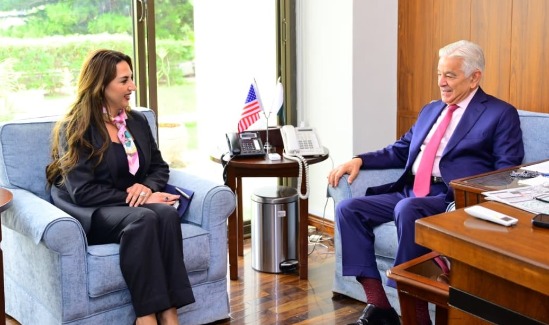
The meeting between Defence Minister Khawaja Asif and US Chargé d’Affaires Natalie Baker in Islamabad this week offers an important glimpse into the direction of US-Pakistan relations. While such engagements are often viewed as routine diplomatic exchanges, they frequently reveal shifts in priorities and emerging areas of cooperation that carry broader strategic significance.
According to official statements, discussions focused on regional and international security developments, as well as ways to strengthen cooperation between Islamabad and Washington. The emphasis on continued engagement was particularly noteworthy at a time when South Asia remains confronted by security challenges, geopolitical competition, and economic uncertainty. Both sides appeared keen to maintain open channels of communication and build on areas where their interests converge.
More importantly, this meeting did not occur in isolation. It comes on the heels of the recent US-Pakistan Counterterrorism Dialogue in Washington and amid ongoing negotiations aimed at finalising a reciprocal trade framework between the two countries. Taken together, these developments point to a broader trend: a gradual but noticeable effort by both Islamabad and Washington to move beyond the narrow security-driven relationship of the past and towards a partnership that increasingly encompasses trade, investment, regional stability, and strategic cooperation. In a rapidly changing geopolitical environment, that shift deserves close attention.
For much of the past two decades, US-Pakistan relations were largely shaped by security concerns linked to Afghanistan and the global fight against terrorism. Cooperation often intensified during periods of crisis and weakened when immediate security priorities changed. This created a relationship that, while strategically important, frequently lacked long-term stability and broader engagement.
Today, there are encouraging signs that both countries are attempting to move beyond that narrow framework.
The fourth US-Pakistan Counterterrorism Dialogue held in Washington reaffirmed a shared commitment to combating terrorist organisations that continue to threaten regional stability. Both governments reiterated their resolve to confront groups such as ISIS-Khorasan, Al Qaeda, Tehreek-e-Taliban Pakistan (TTP), and the Balochistan Liberation Army (BLA), all of which pose serious security challenges across the region.
This cooperation comes at a critical moment. Pakistan continues to face a difficult security environment, with terrorist violence remaining a persistent threat. The sacrifices made by Pakistan’s armed forces, law-enforcement agencies, and civilians in combating extremism are well documented. Recent reports showing a rise in militant attacks serve as a reminder that the fight against terrorism remains far from over.
In this context, enhanced intelligence sharing, border security cooperation, and efforts to disrupt terrorist networks are not merely diplomatic objectives; they are practical necessities. Stability in South Asia requires coordinated action, and both Pakistan and the United States recognise that their security interests intersect in important ways.
What makes the current phase of engagement particularly noteworthy, however, is that security cooperation is no longer the sole pillar of the relationship.
Parallel to the counterterrorism discussions, both countries are making progress towards a reciprocal trade framework that could significantly strengthen economic ties. Finance Minister Muhammad Aurangzeb’s recent discussions with US Trade Representative Ambassador Jamieson Greer indicate that economic cooperation is increasingly becoming a central component of bilateral relations.
This shift is important because durable international partnerships cannot rely exclusively on security considerations. Economic engagement creates long-term incentives for cooperation, generates employment opportunities, encourages investment, and fosters stronger people-to-people connections.
For Pakistan, expanding trade with the United States aligns closely with its broader economic objectives. The government has repeatedly emphasised export-led growth, industrial development, and foreign investment as key drivers of economic recovery. Improved market access and deeper commercial engagement with the United States could support these goals while opening new opportunities for Pakistani businesses.
At the same time, American companies stand to benefit from greater engagement with one of South Asia’s largest markets. Pakistan’s strategic location, youthful population, and growing consumer base make it an increasingly attractive destination for trade and investment.
The involvement of institutions such as the US Export-Import Bank and the US International Development Finance Corporation further demonstrates the potential for cooperation in sectors ranging from infrastructure and energy to technology and private-sector development.
Beyond security and trade, Pakistan’s diplomatic role in regional affairs has also contributed to a renewed appreciation of its strategic importance. In recent months, Islamabad has played an increasingly active role in efforts aimed at reducing regional tensions and encouraging dialogue among competing actors.
Pakistan’s diplomatic outreach during periods of heightened US-Iran tensions attracted international attention and highlighted its ability to maintain relationships across diverse geopolitical divides. Such engagement has reinforced Pakistan’s position as a country capable of facilitating dialogue in an increasingly polarised international environment.
This evolving role is particularly relevant at a time when many regions are grappling with conflict, uncertainty, and shifting alliances. Countries that can serve as bridges between competing interests often find themselves playing an increasingly valuable role in international diplomacy.
