

By Junaid Qaiser
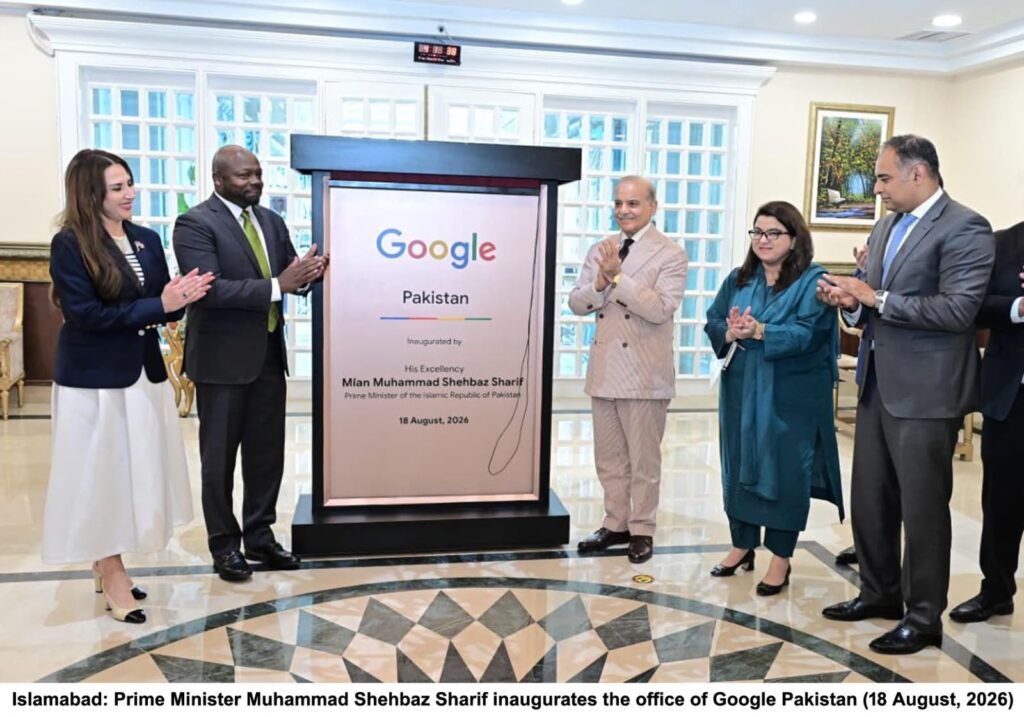
For years, discussions about Pakistan’s economic future have revolved around familiar themes: industry, agriculture, infrastructure, and trade. Yet beneath these traditional sectors, another transformation has been quietly taking shape. A new generation of Pakistanis has been building businesses online, developing software, freelancing for international clients, and creating digital solutions that connect the country to the global economy. The inauguration of Google’s first local office in Pakistan is recognition that this transformation is no longer a future possibility—it is already underway.
The decision by one of the world’s most influential technology companies to establish a permanent presence in Pakistan is more than a corporate expansion. It is a vote of confidence in the country’s talent, its digital potential, and its growing importance in the global technology ecosystem.
The significance of this development becomes even clearer when viewed alongside Pakistan’s ambitious goal of reaching $30 billion in annual IT exports. While such a target may have seemed unrealistic a decade ago, today it appears increasingly attainable. Pakistan possesses one of the youngest populations in the world, with millions of tech-savvy young people eager to participate in the digital economy. What has often been missing is access to global platforms, advanced skills, investment opportunities, and international partnerships. Google’s local presence has the potential to help bridge those gaps.
Prime Minister Shehbaz Sharif described the opening as a major milestone, and it is difficult to disagree. The establishment of a local office creates a stronger foundation for collaboration in areas such as artificial intelligence, cloud computing, digital governance, cybersecurity, startup development, and skills training. These are not merely technological buzzwords; they are the building blocks of modern economies.
Perhaps the most encouraging aspect of Google’s engagement is its focus on people. Over the past several years, the company has invested heavily in digital education and workforce development in Pakistan. Hundreds of thousands of Pakistanis have benefited from Google Career Certificate programs, while many more have received training through initiatives aimed at students, teachers, and entrepreneurs. Such programs are helping create a workforce that can compete internationally rather than being limited by geographic boundaries.
In an era when talent has become a nation’s most valuable resource, investments in human capital may prove even more important than investments in physical infrastructure. Every young Pakistani who acquires globally recognized digital skills represents not only an individual success story but also a contribution to the country’s export potential and economic resilience.
The Chromebook manufacturing initiative is another promising dimension of this partnership. Technology transfer and local assembly have long been priorities for countries seeking to move beyond consumer markets and become producers. The prospect of Pakistan manufacturing devices with the potential for regional exports demonstrates how the country can position itself within global supply chains rather than remaining on their margins.
Equally noteworthy was the presence of United States Chargé d’Affaires Natalie Baker at the inauguration ceremony. Her attendance reflected more than diplomatic protocol. It symbolized the growing role that technology, innovation, and education can play in shaping the future of Pakistan-US relations.
Natalie Baker has consistently highlighted education, entrepreneurship, and technological advancement during her engagements in Pakistan. Her participation in this milestone event underscored Washington’s recognition of Pakistan’s emerging digital landscape and its potential contribution to regional and global innovation.
The broader message sent by Google’s investment is equally important. International companies carefully evaluate markets before making long-term commitments. Their decisions are influenced by economic prospects, regulatory environments, talent availability, and future growth potential. Google’s decision to deepen its presence in Pakistan sends a powerful signal to other global technology firms that the country deserves serious consideration as a destination for investment and innovation.
Of course, a single office will not solve every challenge facing Pakistan’s technology sector. Sustained progress will require policy consistency, improved digital infrastructure, regulatory reforms, and continued investment in education. The private sector, academia, and government must work together to ensure that opportunities created by the digital economy are accessible to a broader segment of society.
Yet milestones matter because they mark the beginning of new possibilities. Google’s arrival is one such milestone. It reflects confidence in Pakistan’s future and offers a glimpse of what the country can achieve when its youthful energy is matched with global partnerships and technological opportunity.
As nations compete in an increasingly digital world, success will belong not merely to those with the largest populations or the richest natural resources, but to those that can harness knowledge, innovation, and talent. Pakistan has the ingredients to become a significant player in that future.
Google’s first local office is not the destination. It is the starting point of a journey that could help transform Pakistan into a regional technology hub and bring the country closer to its vision of becoming a $30 billion IT export economy. If nurtured wisely, the benefits could extend far beyond the technology sector, strengthening economic growth, creating opportunities for millions of young people, and opening a new chapter in Pakistan’s relationship with the world.
