
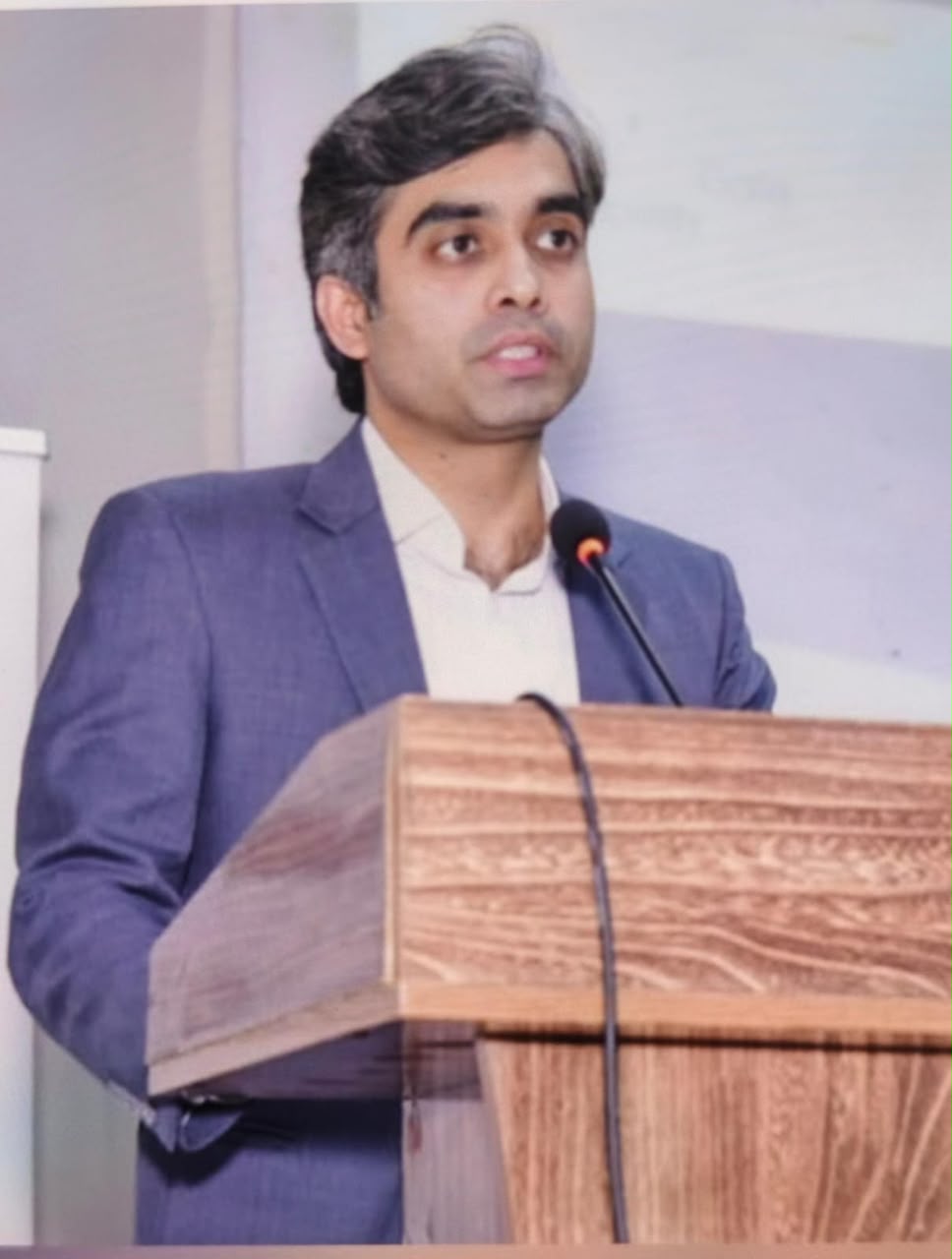
By:Dr. Shahbaz Tariq
The development of any nation ultimately depends on the quality of its people. Infrastructure, technology and financial resources are important, but without skilled, motivated and empowered human beings, sustainable national development remains difficult to achieve. This perspective was strongly reinforced during my participation as a guest of honor in the HR Think Tank Session, held at Health Services Academy in Islamabad as a pre-summit activity of the Health & Education Summit Pakistan (HESP) 2026.
I was honored to participate in the session as a participant and contribute to a meaningful dialogue focused on human capital development, leadership, education, and healthcare. The session brought together academics, vice chancellors, HR professionals, policymakers and industry experts, creating an important platform for exchanging ideas about Pakistan’s evolving human-resource landscape.
One of the most important takeaways for me was that human resource development should no longer be viewed merely as an organizational function. It is a national development priority. Pakistan has a young and potentially productive population, but converting this demographic potential into an economic and social dividend requires serious investment in education, skills, leadership, healthcare and opportunities for meaningful employment.
The discussion also highlighted the changing nature of work. Technology, artificial intelligence, digital transformation and new business models are rapidly changing the skills required in the workplace. Organizations and educational institutions therefore need to move beyond traditional approaches and develop systems that encourage continuous learning, innovation, critical thinking, adaptability and entrepreneurship.
Another important dimension is the connection between education and employability. Universities have a critical responsibility to ensure that graduates are not only academically qualified but also equipped with practical skills and an understanding of the needs of industry and society. Stronger collaboration between universities, employers, policymakers and professional organizations can help reduce the gap between academic learning and workplace requirements.
Leadership was another central theme that deserves greater attention. Pakistan needs leaders who can combine professional competence with integrity, empathy, innovation and a sense of responsibility. Leadership development should therefore begin early and continue throughout professional careers. Organizations that invest in people and create environments where employees can learn, contribute and grow are more likely to become resilient and successful institutions.
The inclusion of healthcare in the broader human-capital discussion is equally significant. A healthy workforce is a productive workforce. Education and healthcare cannot be treated as separate development priorities; they are interconnected pillars of human development. Investment in these areas has long-term implications for productivity, social stability and economic growth.
The HR Think Tank also provided an encouraging example of how dialogue between academia, industry and policymakers can contribute to national policy discussions. Meaningful recommendations emerge when diverse stakeholders come together, listen to one another and move beyond institutional boundaries.
As Head of Research at Freedom Gate Prosperity, I particularly value platforms that encourage evidence-based discussion and connect research with practical policy and institutional action. Research should not remain confined to academic publications. It should contribute to solving real-world challenges and informing decisions that improve people’s lives.
My participation in the HR Think Tank Session reaffirmed my belief that Pakistan’s greatest asset is its people. If we can build an education system that develops relevant skills, a healthcare system that protects human potential, workplaces that value talent, and leadership that encourages innovation and integrity, we can unlock enormous potential for national development.
The conversation on human capital must therefore continue, not only in conferences and think tanks, but also in universities, organizations, government institutions and communities.
The future of Pakistan will ultimately be shaped by how effectively we invest in, develop and empower our people.
I am grateful to Rashid Latif Khan University and the organizers of the Health & Education Summit Pakistan 2026 for providing a valuable platform for this important conversation. Following the valuable insights and discussions from the HR Think Tank Session, I am now looking forward to the main Health & Education Summit Pakistan 2026, scheduled for 29–30 August 2026 at Expo Center Lahore.
Dr. Shahbaz Tariq
Head of Research, Freedom Gate Prosperity
Islamabad
