
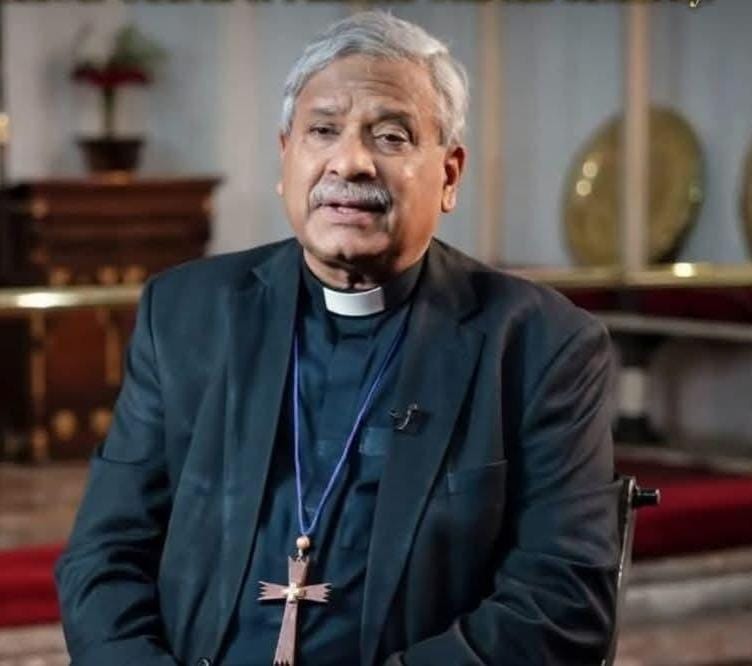
By Bishop Humphrey Sarfaraz Peters, Church of Pakistan.
When society needs healing, no single institution can bear the burden alone. Government, religious leadership, civil society, educators and citizens all have a role to play. Yet religious leaders bear a particular responsibility, as their words often reach places official statements cannot. A message from the Minbar or Pulpit can calm fear, dispel dangerous rumours, restore perspective and remind people that peace, dignity and national cohesion must outweigh our differences.
This influence is not merely ceremonial. It is a public trust. In difficult moments, people often instinctively turn to those whose moral voice they know and respect. That gives religious leadership an unusual capacity to ease tension, encourage restraint and protect the social fabric before disagreement hardens into hostility.
The international community has increasingly recognised this role. In 2017, the United Nations launched its Plan of Action for Religious Leaders and Actors to Prevent Incitement to Violence. It encouraged religious leaders to challenge hatred, counter false rumours, stand with threatened communities, and offer positive messages of peace and human dignity. The principle behind this recognition is simple: prevention cannot depend on law and security alone. It also requires trust, conscience, and moral persuasion.
Experience from different societies supports this understanding.
In Jordan, the Amman Message of 2004 brought together respected scholars to affirm recognised schools of Islamic thought and reject sectarian exclusion. In Morocco, the Marrakesh Declaration of 2016 drew on the Charter of Madinah to emphasise the protection of religious minorities and the principle of equal citizenship. Both initiatives demonstrated that responsible religious scholarship can confront extremism from within faith itself and make religious authority a source of reassurance rather than fear.
Mozambique offers another lesson. After years of civil war, trusted religious actors helped establish communication channels between the government and RENAMO. The 1992 peace agreement showed that patience, confidentiality, and moral credibility can sometimes reopen doors that formal confrontation has closed.
South Africa faced a different challenge. Its transition from apartheid required more than political change; it required a deeply wounded society to confront its past without allowing revenge to shape its future. The Truth and Reconciliation Commission, established under the 1995 law and chaired by Archbishop Desmond Tutu, placed truth, accountability and reconciliation at the heart of national healing.
History offers a longer perspective. In early medieval England, religious communities helped preserve learning, sustain literacy and provide continuity during periods of political fragmentation. They did not rebuild society alone, but they remind us that nations are strengthened not only by administration and security, but also by institutions that form conscience, preserve wisdom and sustain hope.These examples differ greatly, yet the lesson remains remarkably consistent. Religious leaders do not need to replace governments, courts or public institutions. Their role is different: to preserve trust where relationships are strained, to keep communication open where positions have hardened, and to encourage restraint when emotions run high.
For Pakistan, this lesson carries particular weight. Religion has deep public influence, and that influence can be a powerful source of stability when exercised wisely. Religious scholars, clergy, interfaith forums, and public institutions are already doing valuable work. The need is not to dismiss these efforts but to deepen them, connect them more effectively, and encourage those already serving peace.
Pakistan now needs a more deliberate architecture for prevention. National, provincial and district-level forums should bring together credible religious scholars, minority leaders, educators, women and young people before crises emerge, not only after tensions rise. These forums should have clear channels for verifying rumours, de-escalating sensitive situations, supporting lawful mediation and communicating responsibly with the public.
Religious leaders must also accept the discipline that comes with influence. A minbar or pulpit is a trust. Sacred language should never be used as an instrument of personal rivalry, political bitterness or collective blame. Those who speak in the name of faith bear a higher responsibility to speak with truth, fairness, compassion and restraint.
Public institutions, in turn, should engage credible religious leaders not as political instruments but as partners in promoting prevention, social harmony and community confidence. Regular consultation, local peace networks, responsible media engagement and peace education can help ensure that misunderstandings are addressed before they escalate into emergencies.
Pakistan’s strength will not come from making every citizen think alike. It will come from building enough trust so that people of different faiths, sects and backgrounds can disagree without seeing one another as enemies.
The task before us is not to identify who has failed, but to recognise what we can still strengthen. It is to encourage and protect one another’s dignity, and to move forward hand in hand. When religious leadership helps society choose calm over anger, truth over rumour, reconciliation over revenge, and shared citizenship over suspicion, it becomes more than spiritual guidance.
Pakistan faces social, economic, and security challenges, and misunderstanding and mistrust can easily deepen divisions. In such times, religious leadership carries a special responsibility. Its true measure is not only how faithfully it guides its own community, but also how wisely and courageously it helps safeguard the country’s peace, stability, and shared future.
