
By: AWAIS HAIDER SHEIKH
Pakistan Win T20 Series 2-1, but Final Defeat Exposes Bowling and Batting Concerns
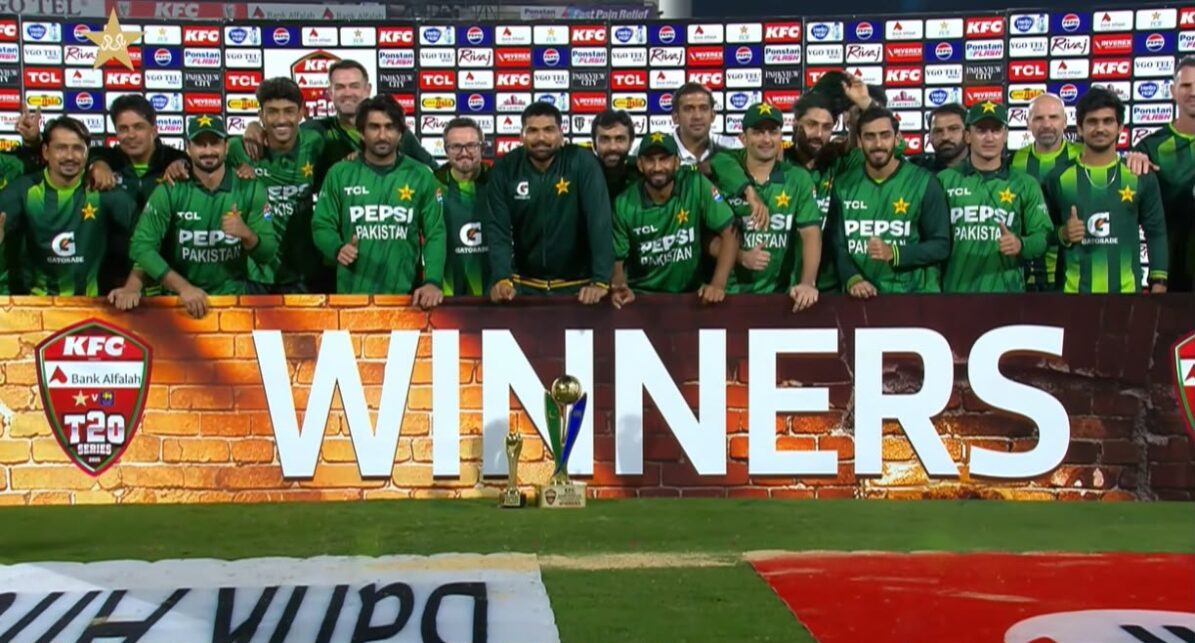
Pakistan secured a 2-1 series victory over Sri Lanka after winning the first two T20Is in Rawalpindi, but an eight-wicket defeat in the final match on October 13 highlighted areas that still require improvement. While Sahibzada Farhan’s outstanding batting, Maaz Sadaqat’s explosive innings and Imran Randhawa’s impressive bowling provided reasons for optimism, Pakistan’s inability to defend a competitive total raised concerns about their consistency.
The three-match series offered Pakistan an opportunity to test combinations, assess emerging players and strengthen their approach to T20 cricket. However, the final result demonstrated that individual brilliance must be supported by consistent team performances.
How the Series Unfolded
Pakistan won the opening T20I by four wickets on October 9 before producing a dominant performance in the second match on October 11. The hosts scored 215 for three, their highest T20I total at home at the time, before dismissing Sri Lanka for 133 to secure an emphatic 82-run victory.
Maaz Sadaqat narrowly missed a maiden international T20 century, scoring 96 off 51 balls, while Farhan contributed 73. Imran Randhawa also impressed with three wickets for just 11 runs in four overs.
Having secured the series, Pakistan entered the third match hoping to complete a clean sweep. Instead, Sri Lanka chased down Pakistan’s 168 for eight, reaching 169 for two in just 17.1 overs to register an eight-wicket victory.
Despite the disappointing finish, Pakistan claimed the series 2-1. Farhan emerged as the standout performer, scoring 238 runs across the three matches, including three consecutive half-centuries.
Positives: What Pakistan Got Right
1. Sahibzada Farhan’s remarkable consistency
Farhan was Pakistan’s biggest success story. His three consecutive half-centuries demonstrated his ability to score substantial runs while maintaining the attacking approach required in T20 cricket.
His 238-run series tally established a record for the most runs in a bilateral three-match men’s T20I series between two Full Member nations. His performances strengthened his case for a long-term role at the top of Pakistan’s batting order.
1. Maaz Sadaqat signals promise for the future
Sadaqat’s 96 off 51 deliveries in the second T20I was one of the series’ highlights. His innings included six fours and seven sixes, showcasing his power, confidence and ability to accelerate.
Although he missed a century by four runs, his performance demonstrated the potential to change the course of a match. Pakistan’s management should provide him with opportunities to develop and gain experience at international level.
1. Imran Randhawa makes an impression
Randhawa’s figures of three wickets for 11 runs in the second match offered encouragement to Pakistan’s bowling department. His disciplined spell played a crucial role in Sri Lanka’s collapse.
However, consistent performances against quality opposition will be necessary before he can be considered a dependable long-term option.
1. Pakistan demonstrate their batting potential
The second T20I illustrated what Pakistan can achieve when their batters combine a strong foundation with aggressive stroke-play. The total of 215 for three reflected the team’s capacity to put opposition bowlers under pressure.
The challenge is to reproduce this approach regularly rather than relying on occasional outstanding performances.
1. Emerging players gain valuable experience
The contributions of Sadaqat and Randhawa provided selectors with additional options. Developing young talent and encouraging competition for places will be important as Pakistan prepare for tougher international assignments.
Warning Signs: Where Pakistan Must Improve
1. Bowling discipline remains a concern
Pakistan’s biggest setback was their failure to defend 168 in the final T20I. Sri Lanka reached the target with 17 deliveries remaining, with Pathum Nissanka and Kusal Mendis helping the visitors dominate the chase.
Although Rawalpindi offered favourable batting conditions, Pakistan needed to create pressure through accurate lengths, effective variations and timely wickets.
The final match highlighted the need to improve powerplay control, middle-over discipline and execution during the death overs.
1. Greater stability is needed in the middle order
Farhan scored 76 off 47 balls in the final match, while Arafat Minhas remained unbeaten on 34. However, regular wickets prevented Pakistan from building a more imposing total.
Pakistan must develop greater depth and consistency in the middle order, particularly when their leading batters depart. The ability to rebuild an innings, rotate the strike and accelerate at the right time is essential in modern T20 cricket.
1. Pakistan fail to complete a clean sweep
Winning the series was the primary objective, and Pakistan achieved it. Nevertheless, the eight-wicket defeat in the final match exposed the difference between winning individual games and maintaining consistent standards throughout a series.
The team must learn to respond when opposition batters seize control and partnerships begin to develop.
1. More dependable bowling options are required
Randhawa’s performance was encouraging, but Pakistan need several bowlers capable of taking wickets and containing runs under pressure.
The management should carefully assess the balance between pace, spin and all-round options, especially for the middle and final overs. Greater variety and better execution could help Pakistan defend totals more effectively.
1. High-scoring performances must become consistent
Pakistan’s 215 for three in the second match demonstrated their batting potential, but their overall performance still requires greater consistency.
The objective should not simply be to chase a particular total. Instead, the batting unit must adapt to conditions, recover from setbacks and accelerate intelligently throughout an innings.
What Should Pakistan Do Next?
Pakistan should continue backing Farhan following his outstanding series, while providing Sadaqat with sufficient opportunities to develop. Randhawa’s performance also warrants further assessment against stronger opposition.
At the same time, the management must address bowling execution at the death, strengthen the middle order and improve the team’s ability to defend competitive totals.
The final defeat should be treated as a learning opportunity rather than dismissed because the series had already been secured. Selection decisions should consider performances across different conditions, while emerging players should be given time to establish themselves.
Verdict: A Promising Series, but More Work Ahead
Pakistan’s 2-1 series victory over Sri Lanka delivered several encouraging signs. Farhan’s record-breaking consistency, Sadaqat’s explosive batting and Randhawa’s impressive bowling provided genuine reasons for optimism.
However, the final T20I exposed concerns about bowling discipline, middle-order stability and consistency under pressure.
Pakistan have demonstrated that the talent exists, but translating individual performances into reliable team results remains the bigger challenge. The series represents a positive step forward, yet sustained improvement will be essential if Pakistan are to compete consistently against the strongest sides in international T20 cricket.
