
By Muhammad Mohsin Iqbal
In the National Assembly of Pakistan, where representatives from diverse regions and political parties assemble to debate the affairs of the state, disagreements are inevitable. Party loyalties often sharpen political differences, and parliamentary proceedings can become an arena of intense confrontation. Yet, from time to time, individuals emerge whose conduct transcends these divisions, reminding their colleagues that public service demands more than political allegiance. Chaudhry Mahmood Bashir Virk, the veteran parliamentarian from Gujranwala who passed away on September 11, 2026, at the age of 88, was one such figure. The tributes paid to him by members across the political spectrum offered a reminder that personal dignity remains among the most enduring qualities of parliamentary life.
Born on December 25, 1937, into a respected family of Gujranwala, Virk grew up in Kamu Workan, also known as Qila Kamu Workan. His father, Chaudhry Bashir Ahmed Virk, was remembered for his humanity during the upheaval of Partition in 1947, when he provided protection to Sikh and Hindu families, including that of Captain Ajit Singh Butalia. According to family accounts, he pledged on the Holy Quran to safeguard those entrusted to his care. This example of compassion across religious boundaries offers a meaningful glimpse into the moral traditions within which Mahmood Bashir Virk was raised.
Chaudhry Mahmood Bashir Virk chose law as his profession, becoming a senior legal practitioner and serving as president of the Gujranwala District Bar Association. He also taught at a private law college in his hometown. His professional experience brought him into sustained contact with legal principles, judicial procedure and the concerns of ordinary citizens. These foundations would later prove valuable in a parliamentary career in which the quality of legislation and respect for constitutional processes were central responsibilities.
His political journey began in local government. Elected chairman of a union council in 1962, he entered public life long before securing a seat in the National Assembly. His first election to the National Assembly came in 1997, when he represented Gujranwala as a candidate of the Pakistan Muslim League-Nawaz (PML-N). Although he lost the 2002 general election, he returned to Parliament in 2008 and was re-elected in 2013, 2018 and 2024. His election to five National Assembly terms reflected a sustained relationship with his constituents in a political environment often characterised by shifting loyalties and electoral uncertainty.
He remained closely associated with PML-N and its leadership, particularly Nawaz Sharif. Nevertheless, the significance of his parliamentary career lay not merely in his political affiliations but also in the manner in which he discharged his responsibilities. His colleagues remembered him for his composure, courtesy and willingness to listen, including to those who disagreed with him. In a legislature where political differences can sometimes overshadow institutional obligations, such qualities are neither insignificant nor easily acquired.
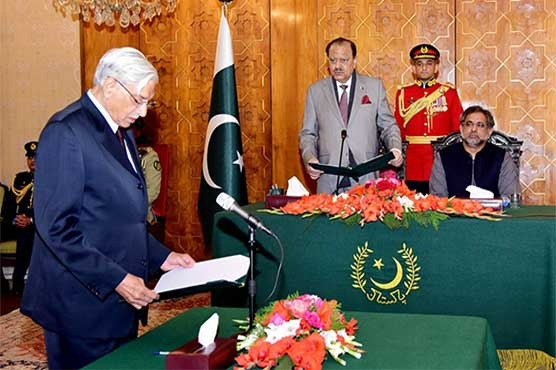
In January 2018, Virk joined the federal cabinet of Prime Minister Shahid Khaqan Abbasi as Minister for Law and Justice. He held the portfolio until the dissolution of the National Assembly in May that year. The appointment brought his legal experience into the sphere of executive responsibility, where legislation, constitutional requirements and administrative judgement intersect. He subsequently returned to Parliament following the 2018 election and continued his legislative work.
His association with the National Assembly’s Standing Committee on Law and Justice further reflected the connection between his professional training and public responsibilities. As chairman, he presided over deliberations concerning government legislation and private members’ bills. Parliamentary committees perform an essential function in democratic governance by examining proposed laws, scrutinising their implications and providing opportunities for informed discussion beyond the political theatre of the main chamber. The patience and fairness attributed to Virk in conducting such proceedings were therefore qualities relevant not only to his personal reputation but also to the effective functioning of Parliament.
Following his death, Prime Minister Shehbaz Sharif and National Assembly Speaker Sardar Ayaz Sadiq expressed their condolences and acknowledged his parliamentary, political and social services. Members of the Assembly also paid tribute to him during the session held on October 13, 2026. Their expressions of grief reflected the loss of a longstanding colleague and invited a broader consideration of the values that sustain democratic institutions. A parliament is strengthened not simply by the laws it passes, but also by the standards of conduct its members establish for those who follow them.
His death marked the end of a life that had traversed the legal profession, local government, national politics and ministerial office. The Holy Quran reminds humanity that honour and authority ultimately belong to Almighty Allah: “You honour whom You will, and You humble whom You will” (Surah Aal-e-Imran, 3:26). The verse places worldly position in its proper perspective, reminding us that titles and authority are temporary, while the moral consequences of how they are exercised carry a deeper significance.
Chaudhry Mahmood Bashir Virk’s public life spanned more than six decades. His five terms in the National Assembly, his tenure as federal law minister and his work in parliamentary committees constitute the formal record of his service. Yet the respect expressed by colleagues across party lines points to something less easily recorded: the value of civility, professional integrity and human decency in public affairs. His life serves as a reminder that political differences need not extinguish mutual respect, and that the lasting stature of a parliamentarian rests as much upon his character as upon the offices he holds.
