
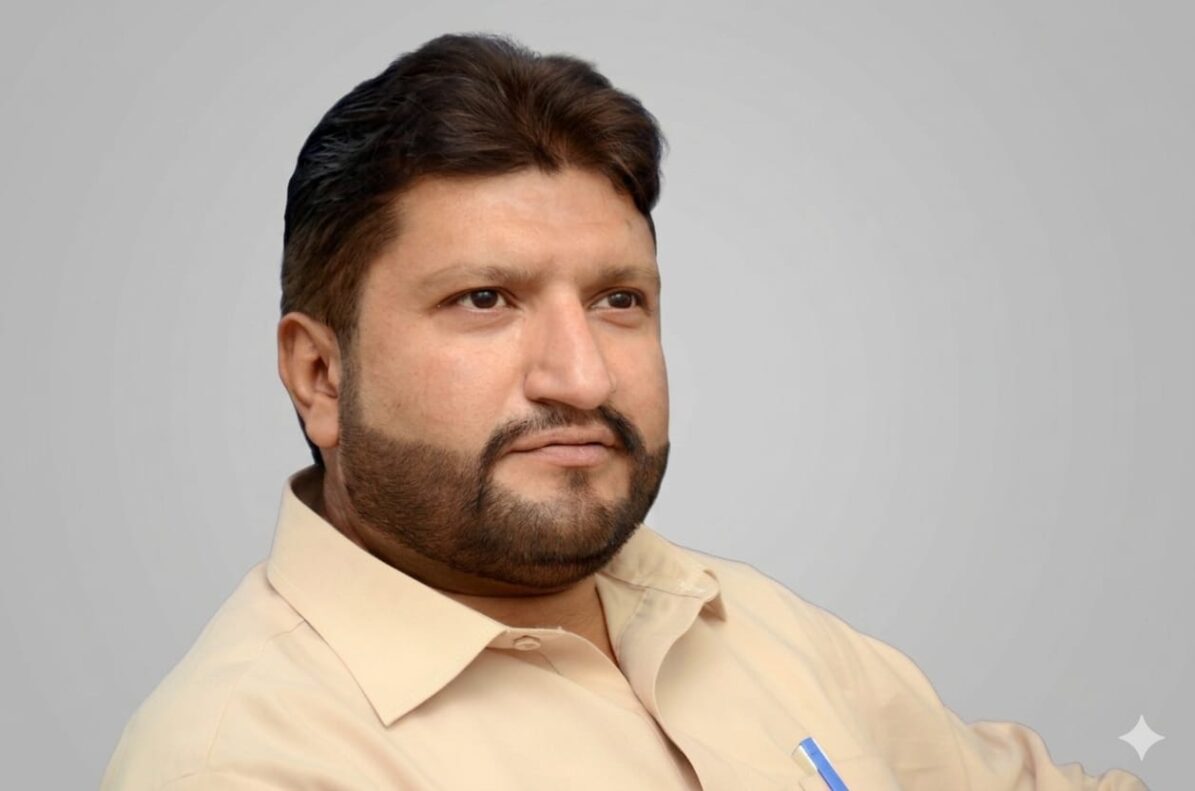
Amjad Hadi Yousafzai
Some voices do more than reach our ears; they find a place in our hearts and become part of our cherished memories. Some artists do more than entertain people; they become the identity of their homeland, language, and culture. Gulrez Tabassum was one such distinguished name in Pashto music, whose voice ruled the hearts of listeners for several decades. From radio programmes and television screens to the silver screen and vibrant stage performances, he demonstrated his extraordinary talent through his distinctive singing style. His death at the age of 76, yesterday, marked the end of a remarkable chapter in Pashto music. Nevertheless, his voice, songs, and artistic contributions will be remembered for generations to come.
Gulrez Tabassum was born in 1950 in the village of Marghuz, in Swabi district of Khyber Pakhtunkhwa. He was the son of Mahabat Khan, an accomplished tabla player, and the nephew of Sohbat Khan, a renowned Pashto singer. Music, therefore, was part of his family heritage. He belonged to a talented family that made significant contributions to the promotion and development of Pashto music. This rich family background laid the foundation for his artistic journey, and through his voice, dedication, and abilities, he carried forward the musical traditions of his elders.
Gulrez Tabassum entered the world of music in 1969. It was an era when radio and television were among the most important platforms for musicians and singers to reach audiences. He established himself through his melodious voice on both platforms and subsequently began singing for Pashto films. His musical career spanned approximately 46 years. During this period, he lent his voice to folk songs, ghazals, and various forms of Pashto poetry. He also sang in several languages, demonstrating the breadth of his artistic abilities. His singing reflected the sweetness of Pashtun culture, the charm of folk traditions, and the sincerity of human emotions, qualities that earned him widespread popularity.
Alongside radio and television, the stage remained an important part of Gulrez Tabassum’s identity. According to him, he performed in approximately 10,000 stage programmes in Pakistan and abroad. At events across the country, he sang not only in Pashto but also in Saraiki, Hindko, and Persian. One of the principal reasons behind his success was his ability to understand the temperament and psychology of his audience. He knew which song would suit a particular gathering and how to win the hearts of listeners through his performance. This distinctive quality set him apart from many other stage performers.
His extraordinary popularity on stage earned him the title of the “King of the Stage” in Peshawar. This was more than an honorary title; it was an acknowledgment of the popularity and public admiration he had earned through a lifetime devoted to bringing joy to audiences through music. By performing traditional Pashto folk songs and ghazals, he not only entertained people but also strengthened their love for their language and cultural heritage.
Gulrez Tabassum’s musical repertoire was not limited to folk songs. He also made a significant contribution to Pashto ghazal singing. According to him, the ghazal is a popular literary and musical form in the Pashto language, and he recorded numerous ghazals for radio and television. On one occasion, he even recorded as many as 20 ghazals for a single television programme. In addition to ghazals, he performed several traditional forms of Pashto poetry, including Sarbera, Tappa, Charbeta, and Badala. His command of these forms demonstrated his deep understanding of Pashto musical traditions and his ability to bring their diverse colours to life through his voice.
Gulrez Tabassum also made notable contributions to film music. According to him, he sang for approximately 120 films. During his career, he worked with renowned musician Rafiq Shinwari, although most of his work was with composer S.T. Sunny. Many of the songs he performed featured lyrics written by poet Amir Ghulam Sadiq. Through these songs, he established a distinctive place for himself in Pashto film music and won the admiration of cinema audiences.
Beyond singing, Gulrez Tabassum also explored acting. He appeared in films and television dramas, performing important roles that received appreciation from viewers. A friend of his, who worked as a film producer, once cast him in a leading role in a film. Unfortunately, the film failed commercially. Despite this setback, Gulrez Tabassum remained hopeful that the Pashtun people would remember him not only as a singer but also as an accomplished actor.
His artistic contributions were recognised at various levels. He received a Presidential Award from the Government of Pakistan, along with numerous other honours from cultural and musical institutions. Accounts concerning the year of his Presidential Award mention both 2002 and 2006, although the exact year requires verification. A significant role in his recognition was also played by the late Alam Zeb Amir, a Pakistan Television producer, who organised a ceremonial crowning in Peshawar in his honour. Similarly, renowned Pashto film stars Badar Munir and Tariq Shah organised a major event in Karachi to honour him. These tributes demonstrated that his work was appreciated not only by audiences but also by prominent figures associated with the arts and culture.
Gulrez Tabassum took great pride in his family’s association with music. According to him, his uncle Sohbat Khan was a major figure in Pashto music, and recordings of many of his songs were preserved in India and Europe. Other members of the family also made valuable contributions to the musical world. One of Sohbat Khan’s sons composed music for Urdu films, including Sitaaron Ki Duniya and Ishq. The musical composition of the celebrated qawwali Mera Koi Nahin Tere Siwa was also attributed to him. Another of Gulrez Tabassum’s cousins, Jafar Hussain, was an accomplished classical music teacher who composed numerous melodies for radio and television.
Despite this rich musical legacy, Gulrez Tabassum regretted that no one in the family after him had pursued the same artistic path. He had three daughters and one son, Muhammad Fayyaz Tabassum. He devoted special attention to providing for his children and ensuring their education and upbringing. His son is a Hafiz of the Holy Quran, a fact of which he was proud. For Gulrez Tabassum, music was more than a profession; it was a family inheritance and the result of a lifetime of dedication. He had hoped that other members of his family would carry this legacy forward.
Another notable aspect of Gulrez Tabassum’s personality was his perspective on changing musical trends. He regarded traditional music as nourishment for the soul, while criticising the increasing noise and lack of refinement in modern music, which he described as a punishment for the soul. In his view, the true beauty of music lay not merely in loud sounds or modern instruments, but in melody, rhythm, poetry, emotion, and the ability to touch the human heart. His views reflected the artistic sensibility that kept him connected to traditional music and instilled in him a deep pride in his cultural identity.
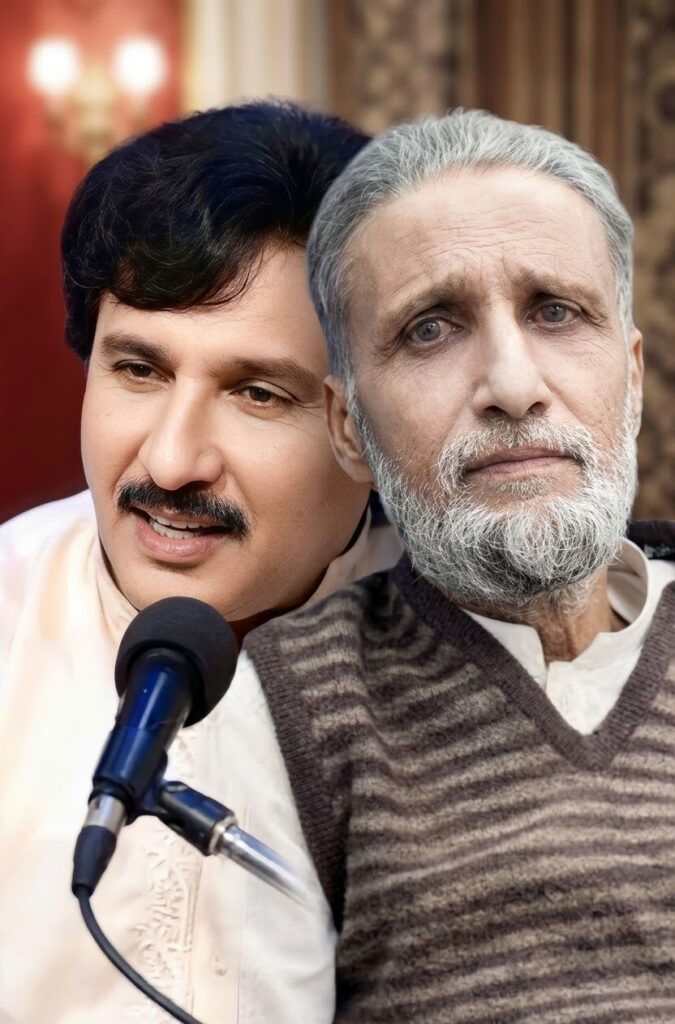
He retired from singing in 2015. According to him, advancing age prompted his decision to leave the profession, but he remained satisfied with his long artistic journey. He regarded his years of work in radio, television, films, and stage performances as a source of the honour, fame, and prosperity bestowed upon him by Allah Almighty. He maintained that he had always worked with sincerity and took pride in the respect and affection he had received throughout his life.
The death of Gulrez Tabassum represents more than the passing of an individual; it is a significant loss for an entire tradition of Pashto music. He belonged to a generation of artists who, despite limited resources, gave their language and culture a distinctive identity through radio, television, films, and stage performances. His songs reflected the emotions of Pashtun society, including love, happiness, sorrow, and devotion to the homeland. He used his voice not merely as a means of achieving fame but also as an instrument for serving and preserving his cultural identity.
Today, Gulrez Tabassum is no longer among us, but an artist’s life does not end with his final breath. He continues to live through his art, his voice, and the memories he leaves in the hearts of those who listened to him. The voice that emerged from the soil of Marghuz resonated through Pashto musical gatherings for decades, and now its echoes have become part of our collective memories. As time passes, many voices fall silent, but those that find a home in the human heart cannot be silenced even by death. Gulrez Tabassum was one of those rare artists whose name will remain a part of Pashto music history, remembered for his contributions, his distinctive voice, and his enduring commitment to his cultural heritage.
