
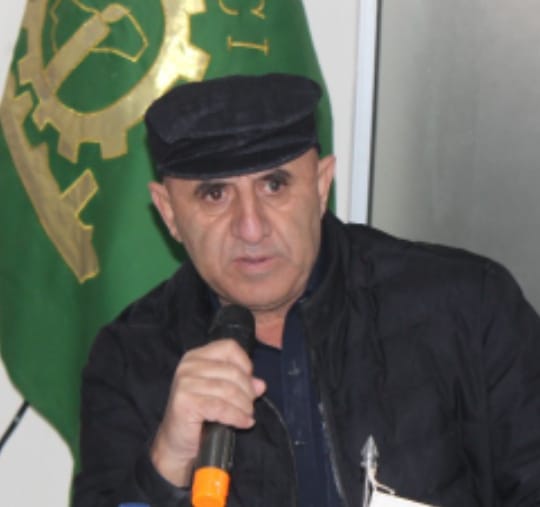
By Sartaj Ahmad Khan
Ex-Nazim, Lower Chitral | Former Coordinator, FPCCI Regional Office, Khyber Pakhtunkhwa
Khyber Pakhtunkhwa has considerable energy resources, a strategic geographical position and an industrial base with the potential to generate employment, attract investment and strengthen the provincial economy. Yet, despite these advantages, many of its industries continue to struggle with high electricity costs, rising production expenses and an increasingly difficult business environment. The result is a widening gap between the province’s economic potential and its industrial performance.
The introduction of electricity wheeling under Pakistan’s Competitive Trading Bilateral Contract Market (CTBCM) framework offers an opportunity to address one of the most persistent obstacles to industrial growth: unaffordable electricity. However, the real test of this policy will not be its announcement or regulatory approval, but whether it enables industries in KP to obtain electricity at commercially viable rates.
Wheeling allows eligible industrial consumers to purchase electricity directly from power producers and use the national transmission and distribution network to receive it at their factories, paying the applicable network charges. This arrangement can create opportunities for competitive electricity procurement and reduce dependence on conventional supply arrangements.
For KP’s struggling industrial sector, this could be a significant opportunity.
The policy framework and its implications
The federal government notified a wheeling auction framework on 22 January 2026, envisaging up to 800MW of electricity procurement over five years, with 400MW planned for the first auction. In September 2026, the Independent System and Market Operator (ISMO) moved forward with its request-for-proposals process.
An important regulatory development followed on 7 September 2026, when NEPRA approved uniform Use of System Charges (UoSC) under the CTBCM framework. The approved rates include Rs6.23 per unit for B-3 consumers and Rs9.09 per unit for B-4 consumers, along with a fixed charge of Rs1 per kW per month.
These charges represent the cost of using the electricity network, not the final price of electricity. The actual cost to an industrial consumer will depend on the negotiated price with the power producer and other applicable charges.
This distinction is important. Wheeling does not automatically guarantee cheaper electricity. Its success will depend on competitive generation prices, transparent contracts, reliable supply and a commercially workable charging structure.
For Khyber Pakhtunkhwa, the challenge is to ensure that its industrial consumers are not left behind as this new market develops.
KP’s industrial potential remains underutilised
The province has several established and emerging industrial clusters, including Hayatabad, Gadoon Amazai, Hattar, Nowshera and Rashakai. These centres have the potential to support manufacturing, exports, employment and private investment. However, high energy costs and other structural constraints have weakened industrial activity and discouraged expansion.
The scale of the problem has been documented in the past. A Dawn report published in December 2015 stated that 415 of 646 industrial units in Hayatabad, Gadoon Amazai, Hattar and Nowshera had closed, leaving more than 20,000 workers unemployed. These figures are historical and should not be mistaken for the present position. A fresh, independently verified survey is urgently needed to establish the current status of industrial units, employment, production capacity and electricity demand across the province.
Without reliable data, it will be difficult for the provincial government to negotiate an appropriate share of wheeling capacity or develop an effective industrial revival strategy.
KP also possesses a significant hydropower resource base. Its rivers and hydel potential provide an opportunity to connect indigenous energy resources with productive industrial consumption. Affordable electricity could help convert this natural advantage into manufacturing growth, investment and employment.
The province should therefore approach wheeling not merely as an electricity procurement arrangement, but as an instrument of industrial and economic development.
The economics of affordable electricity
Consider a hypothetical B-3 industrial unit in Hattar with a connected load of 1MW. If its existing electricity cost is between Rs38 and Rs44 per unit, while a power producer offers electricity at Rs14–18 per unit, adding the approved UoSC of Rs6.23 would bring the basic cost to approximately Rs20–24 per unit, before other applicable charges.
For a factory consuming around 600,000 units a month — equivalent to operating at full 1MW load for approximately 20 hours daily — a potential saving of Rs15–18 per unit could translate into Rs9–10.8 million a month.
This is an illustrative calculation, not a guaranteed saving. Actual savings will depend on the negotiated generation tariff, network charges, taxes and other contractual costs. Nevertheless, it demonstrates the potential economic significance of competitive electricity procurement for energy-intensive industries.
Such savings could enable factories to restore production shifts, improve capacity utilisation, retain workers and compete more effectively in domestic and international markets.
The objective should be clear: affordable electricity must translate into increased production, employment and investment rather than remain merely a change in the method of power procurement.
A five-point action plan for Khyber Pakhtunkhwa
The provincial government and business community should now move towards a coordinated implementation strategy. The following measures could provide a practical starting point:
1. Seek up to 150MW for KP industries: The provincial government, in consultation with the business community, should approach the federal government and ISMO to consider allocating up to 150MW from the proposed first 400MW auction for eligible industrial consumers in KP. This is a proposed provincial demand, not an approved allocation. Priority should be given to Hayatabad, Gadoon Amazai, Hattar, Nowshera and Rashakai, based on verified demand and technical feasibility.
2. Establish a Wheeling Facilitation Cell at Governor’s House: A dedicated facilitation cell, coordinated with the provincial Industries Department, KPEZDMC, PESCO and ISMO, could provide a one-window mechanism for industrial applicants. It should facilitate applications, technical assessments, grid access, regulatory coordination and engagement with electricity suppliers.
3. Ensure transparent procedures and fixed timelines: Industrial applicants should have clarity regarding technical assessments, approvals, no-objection certificates and grid access. Unnecessary delays, complicated procedures and discriminatory treatment could undermine confidence in the policy before it delivers any tangible benefit.
4. Prepare a province-wide industrial energy assessment: The provincial government should publish zone-wise information on existing and projected electricity demand, available grid capacity, operational industrial units and potential new consumers. This assessment would provide a credible basis for negotiating electricity capacity and planning future investment.
5. Link energy relief with industrial revival and employment: Affordable electricity should be connected with measurable outcomes, including the reopening of closed units, additional production shifts, increased manufacturing capacity, new investment and employment generation. A 90-day implementation review involving relevant government departments and business representatives could identify progress, delays and corrective measures.
From energy potential to economic opportunity
Khyber Pakhtunkhwa cannot afford to let its energy resources remain disconnected from its industrial future. The province needs a coordinated approach involving the federal government, provincial departments, power-sector institutions, industrial zone management authorities and the business community.
The federal government and ISMO must ensure that the emerging wheeling market offers transparent and non-discriminatory access. The provincial government, meanwhile, must identify genuine industrial demand, facilitate eligible consumers and pursue a fair share of the available capacity.
The Governor’s House could provide an effective platform for bringing the relevant institutions together, securing institutional commitments and monitoring implementation. The business community, in turn, must contribute reliable industrial demand data and identify factories capable of benefiting from the new arrangement.
The wider objective is not simply to provide cheaper electricity to a few industrial units. It is to restore confidence in KP’s industrial economy, encourage investment, create employment and make the province a more competitive destination for manufacturing.
Khyber Pakhtunkhwa must move beyond announcing new industrial zones while existing factories struggle to keep their machinery running. The first priority should be to make electricity affordable enough for industry to operate, expand and compete.
Affordable power can do more than keep machinery running. It can restore jobs, revive investment and turn the province’s energy potential into economic prosperity.
The time for announcements is over. The time for implementation has arrived.
