
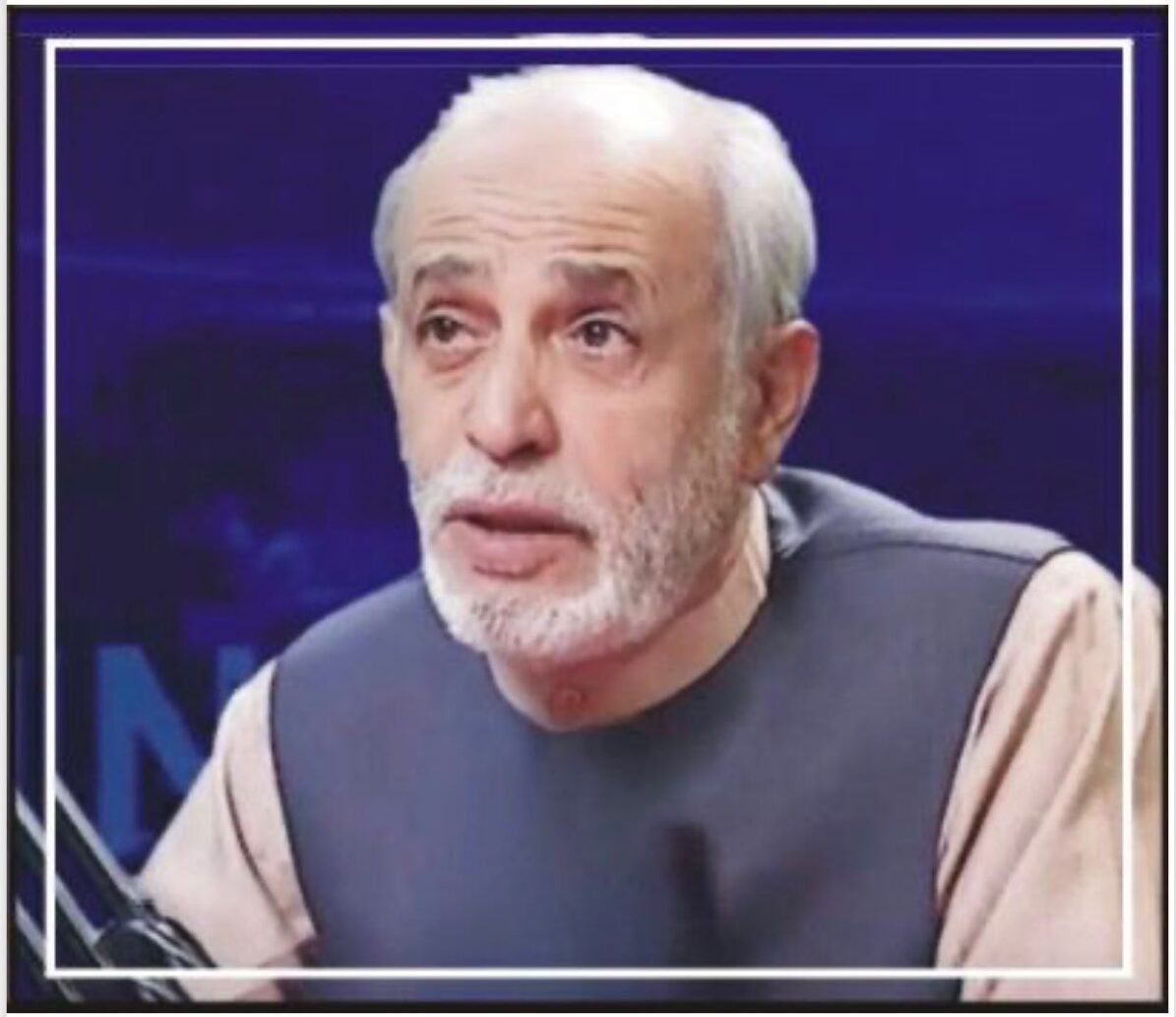
Shamim Shahid
Whenever the Republicans suffer a defeat and the Democrats emerge victorious in an American election, people in the Third World, particularly those living in war-torn, disaster-stricken, poverty-ridden countries and under authoritarian systems, begin to hope for the dawn of a more peaceful era. Although such periods are often very brief, they nevertheless serve as a source of encouragement for people across the world who believe in peace, democracy and human rights.
There is no denying that American political and administrative institutions, particularly the CIA and the FBI, play a pivotal role in shaping the country’s policies and decisions. On the one hand, both agencies operate under the influence of the Pentagon, the American defence establishment, while on the other, the Pentagon also determines the framework and regulations governing their operations. This is somewhat similar to the relationship between Pakistan’s two important intelligence and investigative agencies and the military’s central headquarters, General Headquarters (GHQ).
American institutions certainly devise strategies to influence and shape public opinion, but unlike in Pakistan, they do not exercise the same degree of control over the electorate. In the United States, people are free to vote for candidates of their choice or for either of the two major political parties. Parents can even advise their children to vote for whichever candidate or party they personally prefer, without imposing their choices on them.
Among the millions of Pakistani-origin Americans who have migrated to the United States from different countries and subsequently acquired American citizenship, the children of Professor Ismail, a friend from Swabi, Khyber Pakhtunkhwa, also participated in the recent November 3, 2026, midterm elections. According to Professor Ismail, six members of his family exercised their right to vote. However, neither he nor the six family members knows whom each of them voted for or which party or candidate received their support.
This is what democracy and civic culture are all about.
However, the real subject under discussion is the American electoral process and its implications for the rest of the world.
Looking back, American voters elected Donald Trump in November 2024 with the expectation that he would help bring an end to the prevailing atmosphere of war and conflict in the Middle East, South Asia and African countries. They also expected him to address the economic problems confronting ordinary Americans. Unfortunately, none of these expectations materialised. Instead, President Trump added fuel to the fire and transformed ongoing political crises around the world into full-scale confrontations and conflicts.
Now that the results of the midterm elections are nearing completion, President Trump has acknowledged his party’s failure and accepted the electoral outcome. He has identified the war with Iran and his support for Israel as the leading reasons behind the Republican Party’s poor performance.
It is no longer a secret that the forces behind the overthrow of an elected central government in Afghanistan and the installation of the Taliban, an organisation designated internationally as a terrorist group, were none other than American intelligence agencies. Although the agreement with the Taliban was signed in Doha, Qatar, during a Democratic administration, and the Taliban returned to power under Democratic President Joe Biden, President Donald Trump has also provided substantial financial assistance to the Taliban in an effective manner and continues to do so.
It is also alleged that President Trump played a role in triggering the conflict between Pakistan and Afghanistan’s Taliban government before the attack on Iran. The principal objective, according to this argument, was to divert and undermine the Muslim world’s reaction to the war against Iran. To a considerable extent, American intelligence agencies appear to have succeeded in achieving this objective.
Another undeniable reality is that the United States has long supported non-political and undemocratic forces, particularly military establishments, to bring about political changes of its choice in Central and South Asia. This is one of the reasons why Pakistan’s democratic and political process has been systematically paralysed over the past decade and a half.
Apart from the war against Iran and Washington’s continued support for Israel, the removal of the president in Venezuela and attempts to impose American preferences on other countries have portrayed Donald Trump internationally as an expansionist and authoritarian ruler.
Domestically, President Trump has paralysed several institutions, including Voice of America, and further tightened immigration laws. His trade policies, particularly the imposition and repeated adjustment of tariffs, have also damaged American trade and economic interests to some extent.
These are among the major factors that have contributed to the Republican Party and President Trump suffering a historic defeat in the midterm elections.
The question now is what strategies the Democrats and Republicans will adopt as they prepare for the 2027 presidential elections.
There is no denying that, following the disintegration of the former Soviet Union, the United States emerged as an overwhelmingly influential global power. It is particularly capable of influencing the political and administrative affairs of Third World countries.
Today, however, no country or nation is willing to accept oppression, coercion or domination. At the same time, the world can no longer afford another prolonged period of warfare and confrontation. Every country and nation aspires to internal and external peace, stability and economic prosperity. Consequently, countries increasingly prefer peaceful coexistence with their neighbours on the basis of equality, mutual respect and shared security.
It is therefore time for the United States and its intelligence agencies to abandon policies based on resistance, fragmentation, division and creating conflicts between nations.
Third World countries, particularly those in South Asia, have suffered enormously from wars and political instability. Their people now aspire to peace, stability and economic prosperity. It is therefore the responsibility of the United States to focus on promoting global peace rather than pushing the world towards another world war.
Washington should demonstrate compassion towards war-torn and poverty-stricken countries and their suffering populations. Such an approach would serve the interests of both the Republican and Democratic parties in the United States and, more importantly, contribute to a safer and more peaceful world.
