
Amjad Hadi Yousafzai
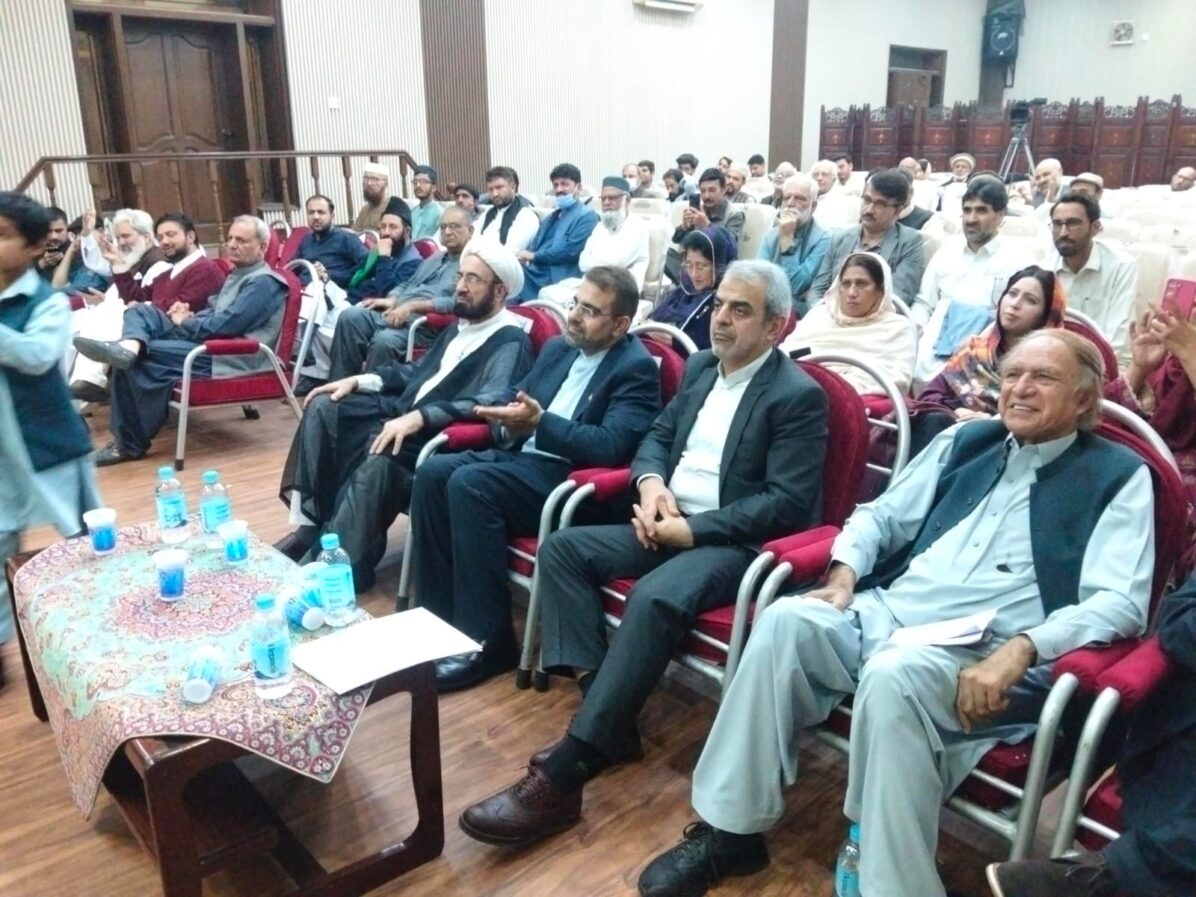
PESHAWAR : A literary and intellectual event was held in Peshawar to highlight the philosophy, concept of selfhood (Khudi), and message of Muslim unity preached by Allama Muhammad Iqbal. The event was attended by prominent scholars, religious figures, academics, poets, writers, and personalities from various intellectual and cultural circles.
The Creative Art Association (Registered), Khyber Pakhtunkhwa, in collaboration with the Khana-e-Farhang of the Islamic Republic of Iran, Peshawar, organized an intellectual seminar and poetry recital on the occasion of Iqbal Day under the theme, “The United Ummah: In the Thoughts of Allama Muhammad Iqbal and Martyr Ayatollah Al-Uzma Syed Ali Khamenei.”
The proceedings were conducted by Maryam Khan. Qari Shahid Azam recited verses from the Holy Quran, while Muhammad Israr presented a Naat in praise of the Holy Prophet Muhammad (Peace Be Upon Him).
Director General of Khana-e-Farhang, Islamic Republic of Iran, Peshawar, Dr. Hossein Chaghami, presented a comprehensive paper highlighting the intellectual harmony between Allama Iqbal and Ayatollah Syed Ali Khamenei, particularly regarding Muslim unity, Islamic awakening, and shared human and Islamic values.
He said that the purpose of such intellectual and literary activities was not merely to organize events but to promote awareness, encourage academic dialogue, and strengthen lasting intellectual, literary, and cultural relations between Pakistan and Iran. He also thanked the guests, speakers, poets, religious scholars, teachers, and participants.
On the occasion, the audience was also shown a historic address by Supreme Leader Ayatollah Al-Uzma Syed Ali Khamenei on Allama Iqbal and Muslim unity.
Allama Abid Hussain Shakiri presented an intellectual and research paper, while Professor Dr. Izharullah Izhar shared his academic views on the subject and also participated in the poetry recital.
Chairman of the Creative Art Association, Professor Sajjad Ali Orakzai, said that Allama Iqbal’s message embodied selfhood, awakening, self-confidence, and unity among Muslims. He added that Ayatollah Syed Ali Khamenei had highlighted Iqbal’s philosophy in practical life through the concepts of Muslim unity, sovereignty, and a shared Islamic identity.
He said that the thoughts of both personalities taught Muslims to rise above sectarian, linguistic, and regional differences and strengthen their common interests and collective strength.
He further observed that, in the prevailing global circumstances, the Muslim Ummah needed mutual respect, intellectual harmony, and unity more than ever. Literature, fine arts, education, and cultural exchanges could play an effective role in promoting these objectives.
The chief guest, Deputy Consul General of the Islamic Republic of Iran, Hassan Moazami, in his presidential address, said that Allama Iqbal’s message was not confined to any particular region, language, or sect but served as a source of guidance for the entire Muslim Ummah and humanity. He also emphasized that promoting intellectual, literary, and cultural relations between Pakistan and Iran was an important need of the time.
The second session featured a poetry recital presided over by renowned poet and writer Aziz Ejaz. Prominent poets from Khyber Pakhtunkhwa presented their poetry highlighting Iqbal’s message, love for the Holy Prophet (PBUH), philosophy of selfhood, Muslim unity, and universal human values.
The participating poets included Gul Arbab, Siddiq Swati, Roshan Kaleem, Faiza Shahzad, Dr. Zigham Hassan, Dr. Khalid Yousaf, Syed Shahzad Badshah, Ishaq Wardag, Fayyaz Wardag, and Aziz Ejaz.
At the conclusion, participants reaffirmed their commitment to continuing intellectual, literary, and cultural activities aimed at promoting Allama Iqbal’s concepts of selfhood, the United Ummah, and Muslim unity among the younger generation, while further strengthening academic, literary, and cultural relations between Pakistan and Iran.
