
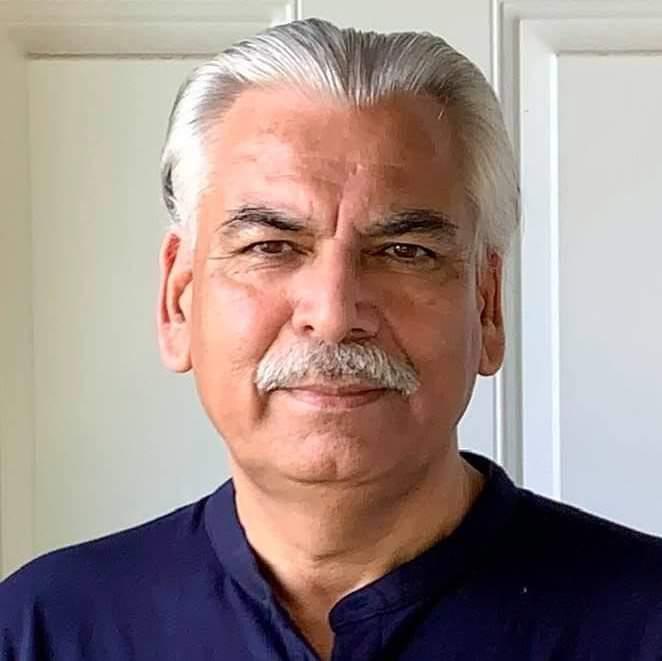
Barrister Usman Ali, Ph.D.
Journalism is neither entertainment, nor commerce, nor a political instrument; it is a sacred and responsible profession. It serves as the eyes and ears of both the state and society. A journalist observes with clarity, listens with care, and conveys what is seen and heard to the public without fear, without greed, and without prejudice. True journalism carries reform alongside information, responsibility alongside inquiry, and moral integrity alongside criticism.
A professional journalist is neither a political party worker, nor a spokesperson for any institution, nor an admirer of any leader. He is neither partisan nor adversarial; he stands only with the truth. Unfortunately, journalism in Pakistan departed from this ideal long ago.
Today, journalism has receded while political brokerage has flourished. Alongside journalists, a significant number of television anchors, YouTubers, and other media personalities have become spokespersons for specific political parties, mouthpieces for military projects, or instruments of external agendas. Their programmes do not report news; they sell narratives. They do not ask questions; they issue verdicts. They do not analyse; they incite hatred. Their studios are no longer forums for debate but factories of provocation, agitation, and propaganda.
This condition is not accidental; it is the result of deliberate design. Over the past fifteen years, media and social media have been systematically employed for state engineering. Certain generals, under a long-term political project, invested billions to assemble an artificial army of so-called journalists, anchors, and YouTubers. Their sole mission was to portray a particular political figure as a messiah, truthful and righteous, while branding all opponents as thieves, criminals, and traitors.
During this period, politics, democracy, parliament, and political parties were collectively discredited. Dissent was equated with treason, questioning with rebellion, and criticism with hostility. Journalism was gradually replaced by a political cult, one in which reason became a crime and blind devotion a duty.
When that project collapsed and the political figure was removed from power, the same so-called journalists, anchors, and YouTubers abruptly reinvented themselves as revolutionaries. Those who had once been on the military payroll, who sold narratives for millions, and who tirelessly declared generals the saviours of nation and state, now emerged as the fiercest critics, indeed adversaries, of the military, the judiciary, the state, and the country itself. Legitimate criticism gave way to rebellion; journalism was replaced by digital terrorism.
Operating from abroad after fleeing the country, these elements incited the youth against the state through fabricated videos, false reports, invented stories, and hate-driven content. Attacks on military installations were rationalised, hatred against institutions was elevated into ideology, and openly anti-state narratives were wrapped in the language of freedom of expression.
In this context, the recent judgment of the Anti-Terrorism Court in Islamabad assumes exceptional importance. Following the events of 9 May, the court sentenced Adil Raja, Haider Mehdi, Sabir Shakir, Moeed Pirzada, Shaheen Sehbai, and Wajahat Saeed—found guilty of digital terrorism against state institutions, to two life sentences each. In addition, they received cumulative sentences of thirty-five years’ imprisonment under other provisions, along with fines amounting to fifteen lakh rupees. This judgment affirms a fundamental principle: spreading hatred against the state under the guise of journalism is not freedom of expression, it is a criminal act.
Yet the real test begins now. Pakistan’s history bears witness to a recurring pattern: today’s criminals often become tomorrow’s patriots, and powerful circles frequently reclaim the very monsters they once created. It would not be surprising if these same individuals were tomorrow rebranded as “valuable assets” under a new political or military project, seen vlogging inside sensitive installations or enjoying privileged access, while the nation watches once again as a silent spectator.
Nevertheless, for the present moment, this judgment stands as a necessary lesson. It is a lesson for those so-called journalists who are, in reality, political activists, who take pride not in independence, but in receiving applause from political leaders. It is also a lesson for the powerful circles that create such figures, nurture them, exploit them for short-term objectives, and then disown them. They must recognise that such creations ultimately harm not only their sponsors, but the entire country.
Freedom of expression is a fundamental right; but using that freedom to spread hatred, violence, and rebellion is a crime. One who cannot distinguish between legitimate criticism and terrorism is not a journalist but a criminal, and a criminal must be treated according to the law.
The state must ensure full and permanent implementation of these sentences, without retreating under the guise of deals, reconciliation, or so-called “national interest.” At the same time, journalistic institutions, press clubs, and media houses must cleanse their ranks, enforce strict codes of conduct, and draw a clear and visible line between journalists, anchors, and political activists.
Journalism has already lost much of the public’s trust. If reform is not undertaken now, this profession risks forfeiting its remaining credibility altogether. Separating journalism from politics, anchors from activism, and news from propaganda is no longer a matter of choice, it has become a necessity for the state.
