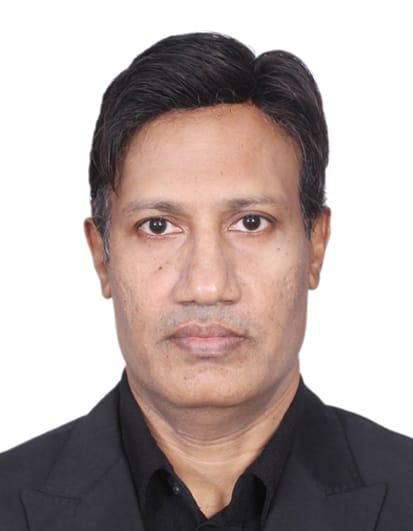
By Junaid Qaiser
The life sentences handed down by an anti-terrorism court to a group of self-styled journalists, YouTubers, and commentators involved in the violent events of May 9, 2023, have sparked a familiar debate in Pakistan: where does free speech end, and where does criminal incitement begin?
For some, this verdict is seen as a direct assault on press freedom. For others, it’s a long-overdue affirmation of the rule of law. The uncomfortable truth for many is that it leans more towards the latter. Freedom of expression is a fundamental pillar of any democratic society, and Pakistan’s Constitution guarantees it.
However, no constitution—anywhere in the world—upholds the right to incite violence, promote rebellion, or urge citizens to attack state institutions. When speech intentionally drives people toward chaos, it stops being free expression and turns into a weapon.
The events that unfolded after the arrest of former Prime Minister Imran Khan in May 2023 were far from ordinary protests. What happened across the nation was something we had never seen before: attacks on military sites, destruction of public property, and direct assaults on symbols of the state. These weren’t just random outbursts from a handful of people; they represented a larger movement that had been carefully stoked in the digital realm.
At the heart of this movement were influential voices—those who claimed to be journalists but had strayed far from the core ethics of the profession. Rumors were passed off as facts, speculation was marketed as analysis, and conspiracy theories were touted as “inside information.” Audiences were subtly, and sometimes overtly, encouraged to take matters into their own hands. This is where the line becomes critical.
True journalism requires verification, restraint, and a dedication to the public good. What these individuals were doing was something entirely different: political activism masquerading as reporting. Dressed as journalists, they acted as mouthpieces for the founder of PTI, pushing a narrative that painted state institutions as illegitimate and framed confrontation as a justified response. This kind of politics—intolerant of dissent, dismissive of institutions, and eager to incite supporters—fits uncomfortably well with the definition of fascistic behavior.
The court’s verdict did not criminalise criticism of the government or the military. It addressed the charge that certain individuals used their platforms to incite violence, abet unrest, and undermine national security. In any country governed by law, such actions invite consequences. The fact that many of the convicted are abroad and were tried in absentia does not erase the impact of their actions on the ground, nor does it convert incitement into principled dissent.
Much has also been said about the “chilling effect” this verdict might have on journalism. That concern is misplaced. Responsible journalists—those who question power without urging violence, who inform without inflaming—have nothing to fear. What should indeed be chilled is the reckless misuse of digital platforms where influence is exercised without accountability.
Pakistan, like many countries, is grappling with a new reality: unrest can be orchestrated not only through street-level organisation, but through screens and algorithms. When words mobilise mobs and narratives justify arson and attacks, the law cannot remain a silent spectator.
This verdict sends a necessary message at a critical moment. Political disagreement is legitimate. Protest is a democratic right. But when influential figures deliberately cross the line from expression into incitement, society has the right—and the duty—to respond.
Free speech is precious. But it is not limitless. And it certainly does not extend to those who spread falsehoods, provoke violence, and then seek refuge behind the label of journalism. In drawing this line, the court has reaffirmed a simple but essential principle: free speech ends where violence begins.