
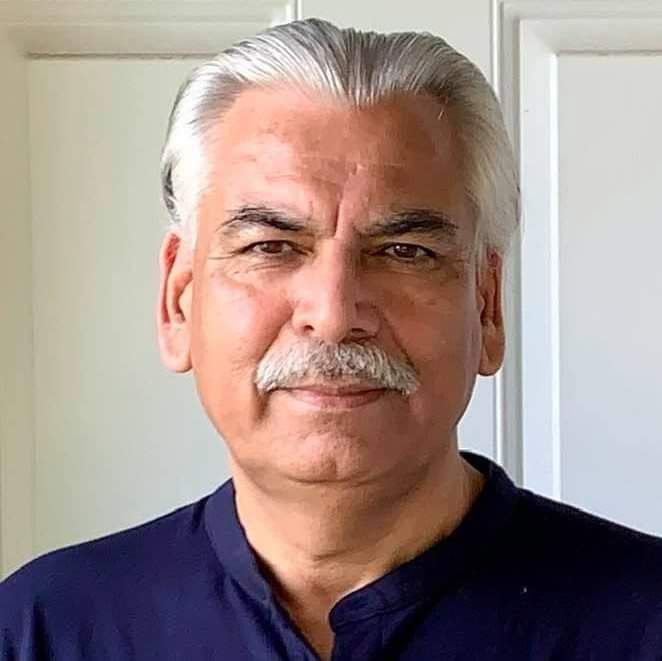
Barrister Usman Ali, Ph.D.
February 8 stands as one of the most tragic days in Pakistan’s political history. It marks the martyrdom of Hayat Muhammad Khan Sherpao, a young, progressive, and people-centred leader, who was assassinated in a bomb blast during a ceremony at the University of Peshawar. Decades ago, those responsible for this act believed that by eliminating him they would also extinguish the idea he represented: that politics is not about power but service; not about hollow slogans but meaningful action; and not about elite privilege but trust in the people. They were mistaken. Sherpao’s vision, political philosophy, and tradition of popular politics remain alive. Some individuals depart the world physically, yet they never disappear from history; instead, they leave behind standards by which future generations are judged. Hayat Sherpao was one such enduring figure.
In the turbulent years following Pakistan’s creation, when the new state was still searching for direction and identity, only a few leaders genuinely embodied courage, public service, and progressive politics. Hayat Sherpao stood among them. Born in 1937 in Charsadda, within a politically conscious and socially engaged environment, he achieved in a short but purposeful life what many politicians fail to accomplish over decades. His martyrdom in 1975 shook not only the then North-West Frontier Province but the entire country. With time, however, his vision and his bond with the people have only grown clearer.
Sherpao emerged at a time when Pashtun politics was divided between tribal influence and emotive nationalism. He introduced a distinct political approach, modern, progressive, and firmly rooted in public service. He believed that the Pashtun people needed not slogans but education, employment, and equal opportunity. The people were the axis of his politics, and his focus remained on practical solutions to everyday problems: land reforms, access to education and healthcare, and dignified, effective justice.
While many leaders relied on emotional nationalism, Sherpao believed that genuine empowerment flowed from strong institutions and informed public participation. He envisioned a Pakistan in which Pashtun regions were not peripheral but active contributors to national development. Politics, in his view, could not remain the preserve of the elite; it had to be grounded in the participation and confidence of the people, a bold and forward-looking idea for its time.
His association with Shaheed Zulfiqar Ali Bhutto rested on a shared vision of an egalitarian, self-respecting, and welfare-oriented Pakistan. Sherpao played a foundational role in the Pakistan Peoples Party, and the slogan “Roti, Kapra aur Makaan” resonated deeply with him because he believed every citizen deserved a dignified and secure life. As Governor of the then North-West Frontier Province, and later as Senior Minister, he introduced reforms that shaped the province’s development trajectory, expanding educational institutions, extending electricity to rural areas, and making the bureaucracy more accountable to the public. These measures reflected governance rooted in principle rather than rhetoric.
One of Sherpao’s most cited observations was: “True politics begins where the people’s pain begins.” This was not a slogan but the essence of his political practice. He travelled extensively without ostentation, met farmers and labourers, listened attentively to their concerns, and sought practical solutions. He believed that the real strength of a state lies in its people, and that when people are empowered, the state itself becomes resilient.
Sherpao’s outlook was national in scope. He believed Pakistan’s sustainable progress depended on equality and mutual respect among all provinces. Provincial autonomy, in his view, was not a weakness but a source of strength. He maintained that reducing deprivation naturally leads to stability, because the security of any state ultimately rests on justice for its citizens.
His faith in education as a transformative force was exceptional. He supported the expansion of the University of Peshawar, the establishment of technical institutions, and notably, girls’ education, an advanced and courageous stance for the era. His engagement with young people was intellectual rather than ceremonial; he listened to their aspirations and guided them toward meaningful futures.
Despite numerous risks, it was his defining trait to remain among the people without security or protocol, and tragically, anti-people elements exploited this very openness and public-spiritedness to assassinate him. This was not merely the martyrdom of an individual, but an attempt to eliminate a moderate, principled, and progressive voice.
Even today, particularly in Khyber Pakhtunkhwa, many initiatives launched during his time continue to reflect his vision. Yet his true legacy does not reside in buildings or projects alone; it lives in the hearts of the people. Following his martyrdom, his brother, Aftab Ahmad Khan Sherpao, carried forward his ideas and mission with dignity and continuity, and remains committed to that path. During his own periods in government, he introduced practical, welfare-oriented measures that left a lasting imprint on the province’s politics and governance. Today, the younger generation, represented by Sikandar Sherpao, is striving with integrity, resolve, and sincerity to advance the same mission. This continuity affirms that Hayat Sherpao’s spirit belonged to the people, and continues to live among them.
Hayat Sherpao redefined politics itself, from power to service, from self-interest to collective good, and from rhetoric to action. He demonstrated that genuine leadership is not defined by occupying office, but by standing among the people and understanding their pain.
February 8 reminds us that figures like Hayat Sherpao are never lost to history; they become benchmarks against which every era’s politics is measured. At a time when the Pashtun people are navigating a difficult and testing phase, the need is greater than ever to move beyond empty slogans and personality worship, and to seek leadership grounded in constructive thought, seriousness, and practical service. Leadership that prioritises peace, progress, and collective well-being over personal interest, and whose past reflects principled struggle and responsibility. In this context, Aftab Ahmad Khan Sherpao emerges as a political figure who understands the challenges facing the Pashtun people and possesses the experience and capacity to address them. The present moment demands maturity and foresight, for the future allows little room for error.
