
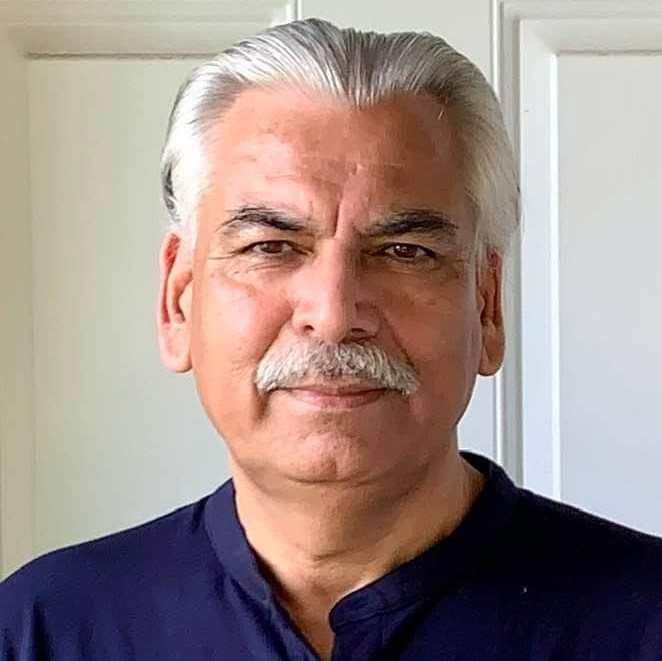
Barrister Usman Ali, Ph.D.
When international law appears to bend before the interests of powerful states, confidence in the global system of justice inevitably begins to weaken. Recent developments in the United Nations Security Council have once again raised an uncomfortable but unavoidable question: is the United Nations truly an impartial guardian of global peace and justice, or has it increasingly become a forum where the political interests of powerful nations shape the outcome of international decisions?
The recent proceedings in the United Nations Security Council highlighted the complex realities of global power politics. A resolution presented by Russia calling for an end to the ongoing war in the Middle East and demanding an immediate ceasefire failed to pass after it was vetoed by the United States. At the same meeting, however, a separate resolution condemning Iran’s attacks on Gulf countries and the wider region was adopted.
Iran, for its part, maintains that it did not target those countries themselves but rather struck military bases that were being used by the United States to launch attacks against Iran. Regardless of the competing narratives, the outcome of the Security Council vote once again brought into focus a deeper question about the functioning of the international system.
Is the United Nations truly an impartial institution dedicated to safeguarding global peace and justice, or has it gradually become a forum where the interests of powerful states shape international decisions?
This question becomes even more troubling when viewed in the context of conflicts and humanitarian crises across the world. When innocent civilians, including children and students, lose their lives, when wars are imposed on nations, and when powerful states, or their favored allies, sideline international law through military strength and political influence, the response of institutions meant to represent the global conscience becomes a matter of intense scrutiny. At such moments, many observers argue, the moral authority of the United Nations appears increasingly fragile.
Another important issue arises from this discussion: the extent to which global responses to conflicts are influenced by the balance of power. If the same actions carried out against weaker states were directed toward major global powers, would the reaction of the international community be the same?
If a country were to target senior political or military leaders of the United States or another major power in the same way that recent attacks by the United States and Israel have targeted Iran’s top leadership, would the global response remain unchanged? Similarly, if a nation were to indiscriminately bombard the cities and residential areas of powerful states, causing the deaths of thousands of civilians, including schoolchildren, and forcing millions from their homes, would international institutions respond in the same restrained manner?
These questions highlight what many critics describe as the existence of double standards within the global order. Over time, such perceptions raise serious concerns about the credibility and effectiveness of international institutions. When the application of international law appears to depend on the relative strength of states, the system risks becoming less about justice and more about the politics of power.
The United Nations itself was founded in 1945 in the aftermath of the devastation of the Second World War. The organization was created with the hope that it would provide a platform capable of preventing future wars, resolving disputes through diplomacy, and safeguarding global peace. After a conflict that claimed millions of lives, the world pledged to replace the rule of force with the rule of law.
Yet history also shows that power has never fully disappeared from international politics. In many ways, it has remained a defining factor in global decision-making.
The clearest symbol of this reality is the veto power held by the five permanent members of the Security Council: the United States, Russia, China, the United Kingdom, and France. These countries possess the authority to block any resolution, even when it is supported by a large majority of the world’s nations. This structure often places political interests above collective global will, leaving many decisions hostage to the strategic calculations of powerful states.
Historical experience provides numerous examples of these limitations. The Middle East conflict is one of the most prominent. Over the decades, multiple United Nations resolutions regarding the Palestinian issue have been adopted, yet effective implementation has remained elusive. The resolutions remain on record, but the reality on the ground has changed little.
Similarly, the massacre in the Bosnian city of Srebrenica in 1995 remains one of the darkest chapters in the history of the United Nations. Despite the presence of UN peacekeeping forces, thousands of civilians could not be protected from being killed. The tragedy continues to symbolize the limitations of international institutions when confronted with determined political and military forces.
The Iraq War of 2003 further exposed the constraints of the global system. When powerful states decided to launch military action, the United Nations proved unable to prevent the conflict. The episode reinforced a perception that the decisive factor in international affairs often remains power rather than international consensus.
More recently, the ongoing violence in the Gaza Strip has once again shaken global conscience. When thousands of civilians lose their lives, millions are displaced, and entire communities face devastation while international institutions remain largely confined to statements of concern, the question naturally arises: where does the real authority of global justice lie?
Critics increasingly argue that the United Nations often provides little more than moral support to weaker nations while demonstrating far greater caution when dealing with powerful states. In this view, the organization risks becoming a stage where dominant powers shape global narratives according to their political and strategic interests.
At the same time, it is important to recognize that the United Nations has made significant contributions in other areas. Its humanitarian agencies have delivered essential assistance during natural disasters, supported millions of refugees, and played an important role in global health, education, and development initiatives. These efforts have saved countless lives and remain a vital part of the organization’s mission.
Nevertheless, the organization’s limited ability to resolve major international conflicts continues to raise difficult questions about its role and effectiveness.
Today the world once again stands at a crossroads where the struggle between power and principle remains unresolved. When powerful states place national interests above universal norms, the international system of justice inevitably weakens. It is in such moments that many people feel that the old principle of “might makes right” still governs global politics.
If international institutions are to become genuinely effective and impartial, they must move beyond symbolic resolutions and statements and develop mechanisms capable of enforcing international law more consistently. Until powerful nations themselves accept the authority of that law, the promise of equal justice in the international system will remain difficult to realize.
The recent events in the Security Council are yet another reminder of this enduring dilemma. The world must ultimately decide whether the international order will continue to be shaped primarily by power, or whether it will move toward a system in which law and justice genuinely prevail. Because when the scales of justice are weighed against the balance of power, international resolutions risk becoming little more than symbolic gestures, and the United Nations risks being remembered not as the guardian of global justice, but as a reflection of the limits of the world’s collective conscience.
