
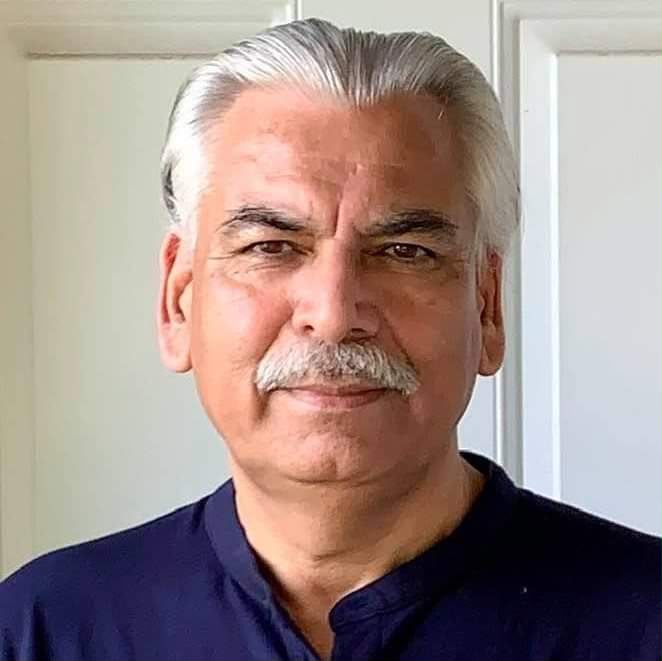
Barrister Usman Ali, Ph.D.
At 8:15 a.m. on Monday, August 6, 1945, the United States dropped a uranium bomb, code-named Little Boy, on Hiroshima, the first use of a nuclear weapon in war. It exploded approximately 600 metres above the city with a force of about 15 kilotons of TNT. In seconds, an ordinary summer morning became a landscape of fire, shattered buildings and unimaginable human suffering.
Approximately 350,000 people were in Hiroshima that morning. The heat, blast and radiation destroyed much of the city and overwhelmed its hospitals, emergency services and communications. Some people died instantly; others suffered severe burns, crushing injuries and acute radiation sickness. By the end of 1945, an estimated 140,000 people had died. Those who survived, the hibakusha, went on to endure cancer, physical scars, psychological trauma and discrimination for decades.
Radiation made the catastrophe fundamentally different from conventional bombing. Invisible and indiscriminate, it penetrated the body and damaged blood, bone marrow and internal organs. Radioactive material mixed with soot and ash fell as “black rain” over parts of the city. Some people who initially appeared unharmed later developed fever, bleeding, hair loss and extreme exhaustion. Hiroshima demonstrated that a nuclear attack does not end when the fires are extinguished. Its consequences persist through illness, trauma and suffering that can shape families and communities for generations.
These facts must be remembered, but remembrance alone is not enough. Hiroshima’s warning is not confined to history; it is addressed directly to us. Eighty-one years after the bombing, humanity must ask whether it has truly learned the lesson written in the city’s ashes.
We describe our age as more advanced, educated and civilised. Science has transformed medicine, communication and everyday life. International institutions proclaim the equality and dignity of every human being. Yet civilians are still bombed, displaced, starved and killed in conflicts driven by power, territory, ideology and profit. Modern weapons may be advertised as more precise, but no technology can make the suffering of an innocent child acceptable.
The lesson of Hiroshima is therefore larger than the history of one bomb or one war. It is that military power without moral restraint can destroy the very humanity it claims to defend. No nation proves its greatness by reducing cities to rubble. No government establishes moral superiority by treating civilian deaths as unavoidable statistics. The lasting security of one people cannot be built upon the fear, humiliation or destruction of another.
The continuing existence of nuclear arsenals makes this warning urgent. According to the Stockholm International Peace Research Institute, the world’s nine nuclear-armed states possessed an estimated 12,187 nuclear warheads at the beginning of 2026. About 9,745 were held in military stockpiles for potential use, while 4,012 were deployed with missiles and aircraft. Between 2,100 and 2,200 of those deployed warheads were maintained on ballistic missiles at high operational alert. A failure of judgement, a technical error, a miscalculation or uncontrolled escalation could again place entire cities and generations yet unborn, at risk.
Hiroshima’s lesson also extends beyond nuclear arsenals to the wider machinery and commerce of war. Arms production and sales must never create an incentive to prolong conflicts or obstruct peaceful settlements. Powerful states bear a special responsibility not to turn weaker countries into battlefields for rivalry, influence or profit. Weapons supplied in the name of security must not become instruments of indiscriminate destruction. Human life must come before strategic ambition, political domination and commercial gain.
This does not mean ignoring aggression or denying nations the right to defend their people. It means insisting that even in war there are limits that must never be crossed. Civilians are not legitimate targets. International humanitarian law is not optional. Diplomacy must not be dismissed as weakness, and every credible opportunity for a just and lasting peace must be pursued. The purpose of security should be to protect human life, not to normalise endless violence.
Hiroshima also teaches that victims are never merely numbers. Each person who died had a name, a family, memories, hopes and an unfinished future. The Atomic Bomb Dome, the belongings of the dead and the testimonies of the hibakusha preserve this human truth. As the number of surviving witnesses diminishes, responsibility for carrying their testimony passes to the rest of us.
The following words are inscribed on Hiroshima’s Cenotaph for the A-bomb Victims:
“Let all the souls here rest in peace;
for we shall not repeat the evil.”
The word “we” is the moral centre of that pledge. It does not assign responsibility to one generation or one nation alone. It calls upon all humanity, governments and citizens, the powerful and the powerless, to reject the belief that violence is the ultimate measure of strength. It asks us not only to mourn the dead, but also to examine the decisions, industries, rivalries and silences that allow wars to begin and suffering to continue.
On this eighty-first anniversary, Hiroshima must be honoured not only with silence, prayers and ceremonies, but through action. Governments must reduce nuclear dangers, protect civilians, strengthen arms control, regulate the weapons trade and choose dialogue before destruction. Nuclear-armed states must pursue meaningful disarmament rather than merely managing the threat of catastrophe. Powerful nations must demonstrate leadership through restraint, justice and peacemaking, not domination.
The souls lost in Hiroshima deserve peace. The living carry a greater obligation: to ensure that no city, no family and no future generation is made to endure such suffering again. The promise engraved at Hiroshima must become more than an inscription. It must become a principle of international conduct and a commitment renewed by every generation.
Peace will not prevail through hope alone. It will prevail only when humanity has the courage to place conscience above conquest and human life above power.
We shall not repeat the evil.
