
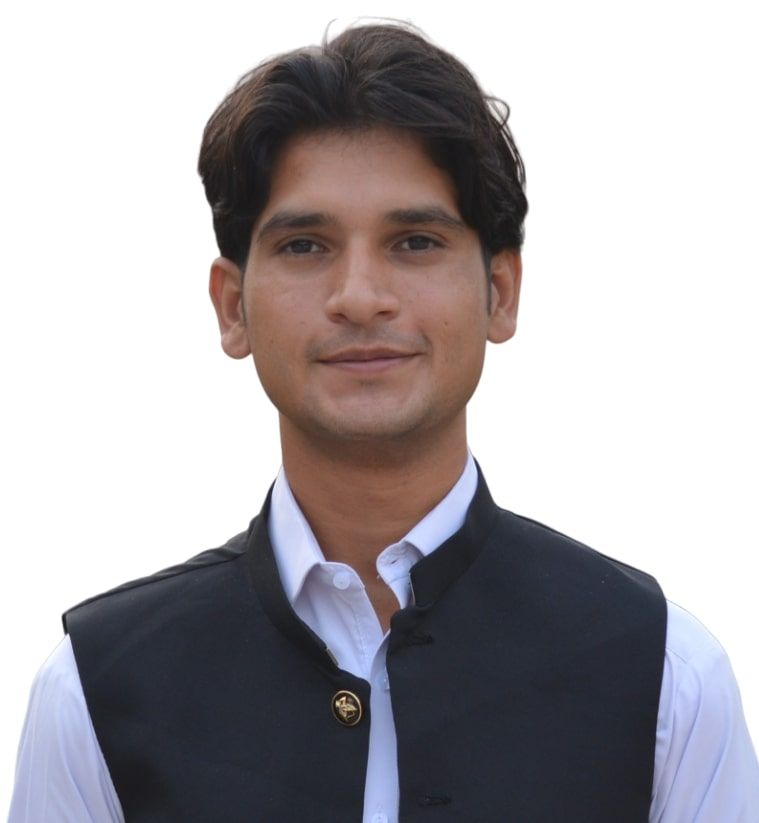
By: Tanveer Nasir
Education is not merely a sector of governance; it is the foundation upon which nations build prosperity, social cohesion, and human development. For a province like Khyber Pakhtunkhwa (KP), where geography, conflict, poverty, and demographic pressures have historically challenged educational access, leadership in the education sector carries immense responsibility. The appointment of Arshad Ayub Khan as Senior Minister and Provincial Minister for Elementary and Secondary Education places him at the center of one of the province’s most critical missions: ensuring that every child has access to quality education.
Arshad Ayub Khan is no stranger to public service. A seasoned politician from Haripur, he has previously served as a Member of the Provincial Assembly and held ministerial responsibilities, including the irrigation portfolio and local government affairs. His political experience, administrative exposure, and longstanding engagement with governance provide a strong foundation for leading a department as vast and influential as Elementary and Secondary Education.
Education in KP is not merely about increasing literacy rates; it is about creating opportunities, reducing inequalities, empowering girls, and preparing young people for a rapidly changing world. The province’s education department manages one of the largest public-sector school systems in Pakistan, with responsibilities that extend from infrastructure and teacher management to curriculum implementation and student retention. The Directorate of Elementary and Secondary Education itself emphasizes education as the key driver of socio-economic progress and societal development.
Recent initiatives under the current administration indicate an emphasis on improving access and bringing out-of-school children into the education system. The provincial government launched an ambitious School Enrolment Campaign for the academic year 2026–27 with targets aimed at enrolling over 1.3 million children and reintegrating hundreds of thousands of out-of-school children while simultaneously reducing dropout rates. Such targets reflect an understanding that educational progress cannot be measured solely by school construction but by ensuring that children enter classrooms and remain there.
Similarly, the Double Shift School Programme represents an attempt to maximize the use of existing infrastructure and accommodate more students without waiting years for additional facilities. The initiative seeks to reduce the burden of out-of-school children by utilizing schools more efficiently, especially in densely populated areas where demand exceeds available capacity.
However, ambitious goals require equally robust implementation. KP still faces significant challenges, including infrastructure deficits, disparities between urban and rural schools, teacher shortages, learning quality concerns, and financial constraints. Educational reform must therefore extend beyond enrolment figures to focus on teacher training, digital literacy, curriculum modernization, school monitoring, and improved learning outcomes.
Encouragingly, Minister Arshad Ayub Khan has publicly emphasized accountability and transparency within the education sector. His directives regarding scrutiny of educational projects and insistence on monitoring standards reflect a recognition that public resources dedicated to education must be protected from inefficiency and mismanagement. Transparency is not an administrative luxury; it is essential for restoring public trust in government institutions.
The true measure of any education minister is not found in announcements but in outcomes. Are more children attending school? Are girls receiving equal opportunities? Are teachers adequately supported? Are students acquiring the skills needed for the twenty-first century? These are the questions by which history will judge educational leadership.
For KP, the stakes could not be higher. A well-educated generation can transform the province’s economic prospects, strengthen democratic participation, and reduce social inequalities. Every classroom built, every teacher empowered, and every child retained in school is an investment in a more prosperous and peaceful future.
Arshad Ayub Khan now leads a department that shapes the destiny of millions of young minds. The opportunity before him is historic. If educational reforms are pursued with vision, transparency, and unwavering commitment, the province can move closer to fulfilling the promise that education offers: not just knowledge, but hope, opportunity, and progress for every child.
tanveernasirkhattak@gmail.com
