
PROVINCE REPORT
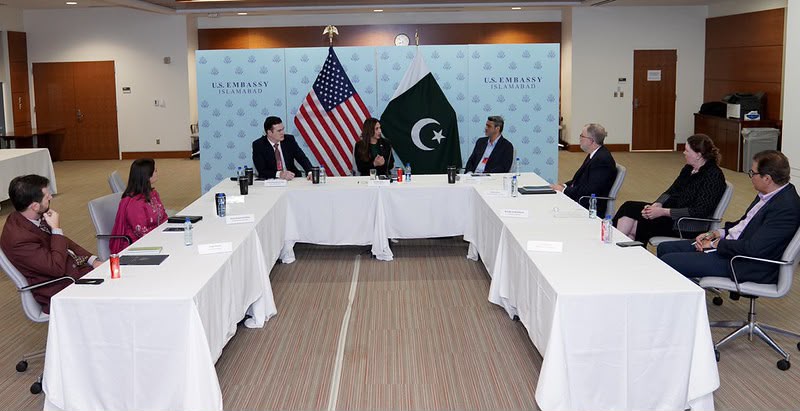
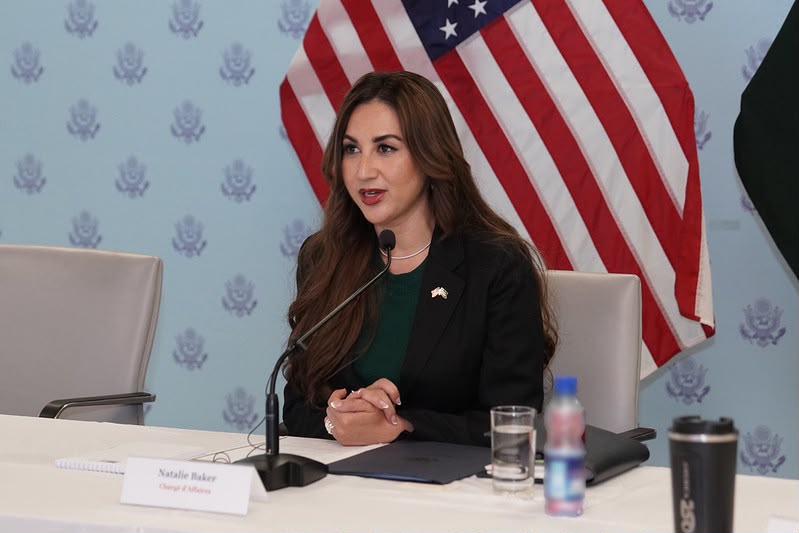
ISLAMABAD: As part of the U.S. Mission in Pakistan’s prosperity agenda, Chargé d’Affaires Natalie A. Baker highlighted growing opportunities for U.S. businesses and exporters in Pakistan’s agricultural technology segment during a Direct Line webinar this week with American businesses and investors, Pakistani government officials, and Pakistani agricultural product producers. Organized by the Business Council for International Understanding (BCIU) in cooperation with the U.S. Embassy in Islamabad, the U.S. Department of Commerce, and the Government of Pakistan, the webinar highlighted how American agricultural innovation can help advance Pakistan’s efforts to modernize and facilitate technology integration by its agricultural sector while creating new commercial opportunities for both countries.
In her remarks, Chargé Baker noted that agriculture remains the backbone of Pakistan’s economy, contributing nearly one-quarter of the country’s GDP and supporting millions of livelihoods. While acknowledging the challenges facing the sector, she emphasized that expanding opportunities for U.S. technology and expertise will open new markets and increase prosperity for American companies, as well as for Pakistan. Chargé Baker said, “American companies are well positioned to bring their expertise, technologies, and decades of practical experience to the table.” She added U.S. innovation including precision agriculture machinery, advanced irrigation systems, digital farm management, and cold chain logistics can help farmers increase productivity while conserving valuable resources.
Looking ahead, the U.S. Mission in Pakistan aims to grow the already robust bilateral trade, which in 2025 saw U.S. exports to Pakistan reach over $1.5 billion in agricultural and related goods. Pakistani participants showcased regulatory and policy changes that would support greater imports of U.S. agricultural products, including soybeans, cotton, and planting seeds, and encouraged greater U.S. investment in areas like farm mechanization, controlled-atmosphere storage, food processing, seed development, and biotechnology. Chargé Baker stressed the superiority of U.S. investment and products over competitors, “When American companies bring innovative technologies to new markets, they share knowledge, train local partners, create lasting business relationships, and contribute to sustainable economic growth.”
The webinar also previewed the U.S. Department of Commerce’s Certified Agricultural Technologies Trade Mission to Pakistan, scheduled for October 26-30, 2026, and led by the BCIU. Chargé Baker invited American companies to explore Pakistan’s growing agricultural technology and product processing segments firsthand stating, “Here at the U.S. embassy, supporting American companies as they explore opportunities in Pakistan’s agricultural sector is a core priority.” She thanked BCIU, the Government of Pakistan, provincial officials from Punjab and Sindh, representatives of the Special Investment Facilitation Council, the Green Corporate Initiative, and participating American businesses for their partnership.
