
PROVINCE REPORT
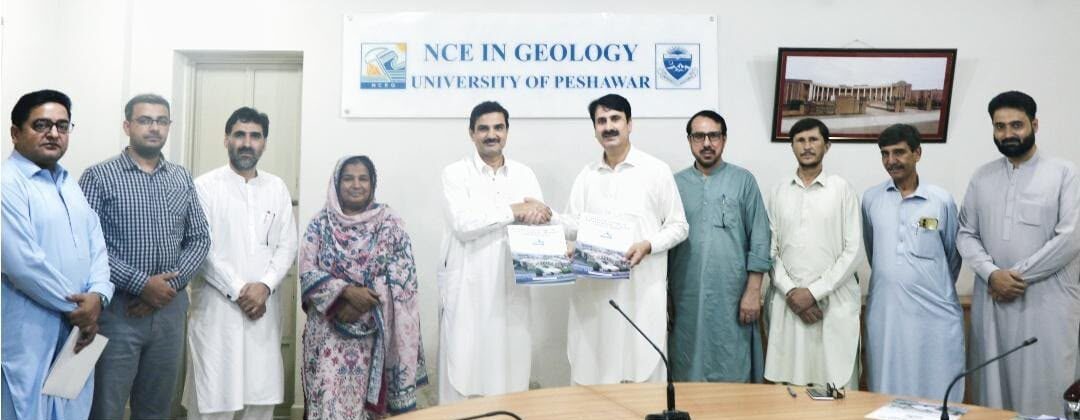
PESHAWAR: The National Centre of Excellence in Geology (NCEG), Peshawar, and the Centre of Excellence in Rural Development (CERD) have entered into a Memorandum of Understanding (MoU) to promote scientific research, knowledge translation, and community-based resilience against geohazards and other environmental risks. According to NCEG Press Release,
the partnership establishes a collaborative framework to bridge the gap between scientific research and community-level disaster risk reduction. It will focus on integrating NCEG’s expertise in geological and environmental sciences with CERD’s experience in community engagement and rural development to support vulnerable communities.
Under the MoU, the two institutions will collaborate on research related to earthquakes, landslides, floods and other geohazards, alongside water resources, WASH, agriculture, climate, environment, and related scientific fields. A key component of the collaboration will be the GIS-based mapping of hazardous communities and assessment of their vulnerability and risks.
NCEG will provide scientific and technical expertise, including field and laboratory investigations, geospatial datasets, hazard mapping, risk assessment, and scientific analysis. The Centre will also contribute to joint research publications, workshops, seminars, and dissemination activities.
CERD will support the translation of scientific findings into practical community-level action plans and facilitate engagement with local communities and stakeholders. It will also support awareness campaigns, capacity-building initiatives, field access, and community participation in research activities. CERD will facilitate NCEG students in their research and, where mutually agreed, explore funding opportunities through government agencies, donors, and other development partners for joint activities.
The collaboration will include community-based geohazard risk mapping, disaster preparedness training and drills, early-warning dissemination strategies, workshops, seminars, policy dialogues, and joint reports and outreach materials.
Speaking on the significance of the partnership, representatives of NCEG and CERD emphasized that effective disaster risk reduction requires a strong connection between scientific knowledge and community action. The collaboration is expected to help convert research findings into practical measures that improve awareness, preparedness, adaptive capacity, and resilience in hazard-prone communities.
