
An American Traveller’s Honest Reckoning With a Country the World Got Wrong
By Fizza Qaisar
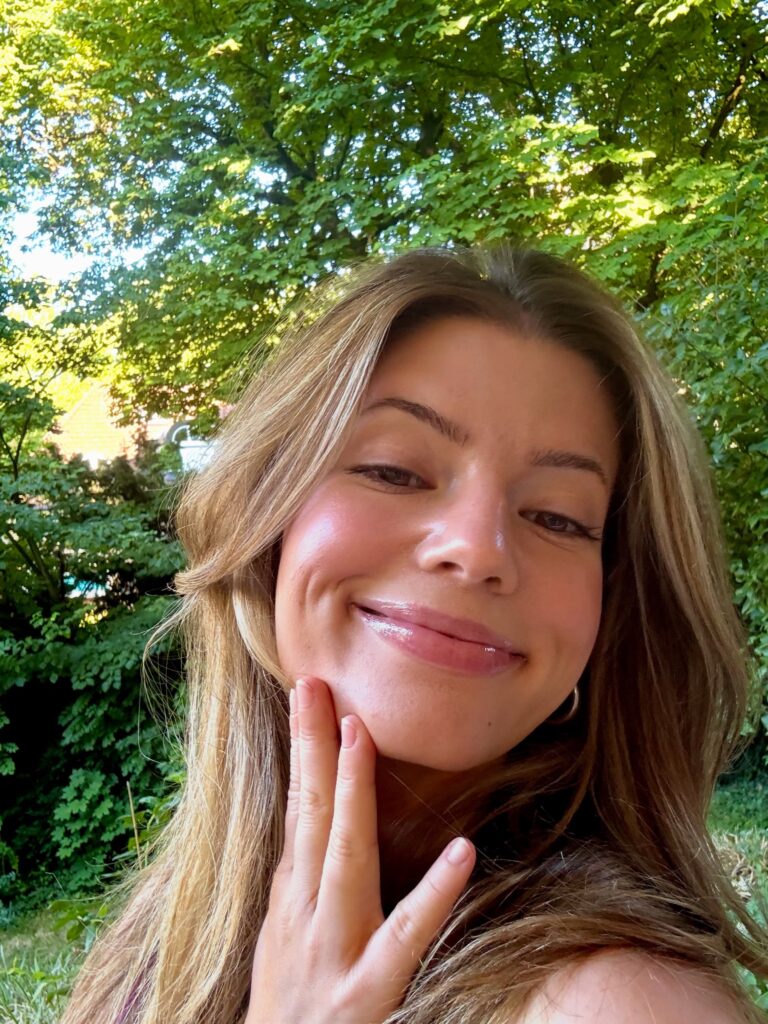
Kate Vernier didn’t come to Pakistan expecting to fall in love with it. Like most Americans, she arrived carrying the residue of a decade of headlines, words like instability, conflict, and danger stitched so tightly into the country’s image abroad that it takes a real trip, not a news cycle, to unpick them. By the time she left, the influencer and content creator had a different story to tell, one built not on headlines, but on tea poured by strangers, on rooms full of people leaning in to hear where she’d come from, and on a hospitality she says she has not encountered anywhere else in the world.
A Welcome That Outpaced Every Expectation
Ask Kate for a single moment she’ll carry home from Pakistan, and she doesn’t reach for a monument or a skyline. She reaches for people. “I’ll remember the sheer kindness from the Pakistani people,” she says. “So many folks went out of their way to greet me, get to know me and my story, and welcome me to Pakistan. The hospitality here is second to none.”
It’s a small sentence carrying a large idea. Hospitality, in Pakistan, is rarely a gesture reserved for special occasions. It is the default setting. Strangers become hosts within minutes. Curiosity about a visitor’s story is not polite small talk; it’s genuine interest, offered freely and without an agenda. For someone who films her life for an audience conditioned to spectacle, Kate found herself moved instead by something quieter and harder to manufacture: people who simply wanted her to feel at home in theirs.
The Perception That Didn’t Survive Contact With Reality
Every traveller carries assumptions across the border with them. Kate’s were shaped, she admits, by the version of Pakistan that Western media has long preferred to tell. “Western media has often painted Pakistan in a negative light,” she says. “I’ve found the truth to be quite the opposite. Pakistan is a gorgeous country full of warm, welcoming people. I’ve felt completely safe my entire visit.”
That word, safe, is doing more work than it might first appear to. It isn’t a throwaway compliment; it’s a direct rebuttal of a narrative that has followed Pakistan for years, one that keeps travellers away, keeps investors cautious, and keeps a nation of over 240 million people flattened into a single, misleading headline. What Kate describes instead is a country of mountains and markets, of cities that hum late into the night, of streets she walked without the anxiety she’d been primed to feel. The gap between the Pakistan she was warned about and the Pakistan she actually experienced wasn’t a small correction. It was a complete reversal.
An Energy Worth Exporting
Beyond the warmth and the walkable safety, something else caught Kate’s attention: a current running beneath the hospitality of ambition. Asked what single quality she’d carry back to the United States, she doesn’t hesitate. “The collaborative energy between the US and Pakistan,” she says. “Pakistanis are eager and excited to work with US businesses, and as I learned at the Entrepreneurship and Investment Readiness Forum, Pakistani businesses are scaling rapidly and ready to tap the US market more and more.”
It’s a telling detail. Kate isn’t only describing a country that is pleasant to visit; she’s describing a country that is ready to do business, one where founders, exporters, and entrepreneurs are building at a pace that doesn’t match the cautious, closed-off image so often exported alongside the negative headlines. Her time at the forum, hosted by the U.S. Embassy Islamabad in partnership with the Association of Private Sector Universities of Pakistan, put a name to something she’d been sensing all along: Pakistan’s private sector isn’t waiting for permission to go global. It’s already moving.
The Story Worth Retelling
Strip away the itinerary and what’s left is a fairly simple story, the kind that travels well precisely because it isn’t complicated. A visitor arrives carrying someone else’s assumptions. The country quietly, persistently, disproves them. She leaves not with a highlight reel, but with a genuine shift in how she sees a place of nearly a quarter-billion people.
For Pakistan, stories like Kate’s matter more than they might seem to at first glance. Perception is a slow-moving thing, and it rarely changes because a country insists on its own behalf that the narrative is wrong. It changes when someone with no stake in the outcome, someone from the very audience the negative headlines were written for, comes, looks, and says otherwise. Kate Vernier didn’t come to Pakistan to make a point. She came to see it for herself. What she found was a country that welcomed her like family, a safety she hadn’t been led to expect, and a business community hungry to build bridges rather than walls.
That, in the end, may be the truest kind of endorsement, not a polished campaign line, but an honest answer to four simple questions, given by someone who had nothing to gain by softening the truth.
