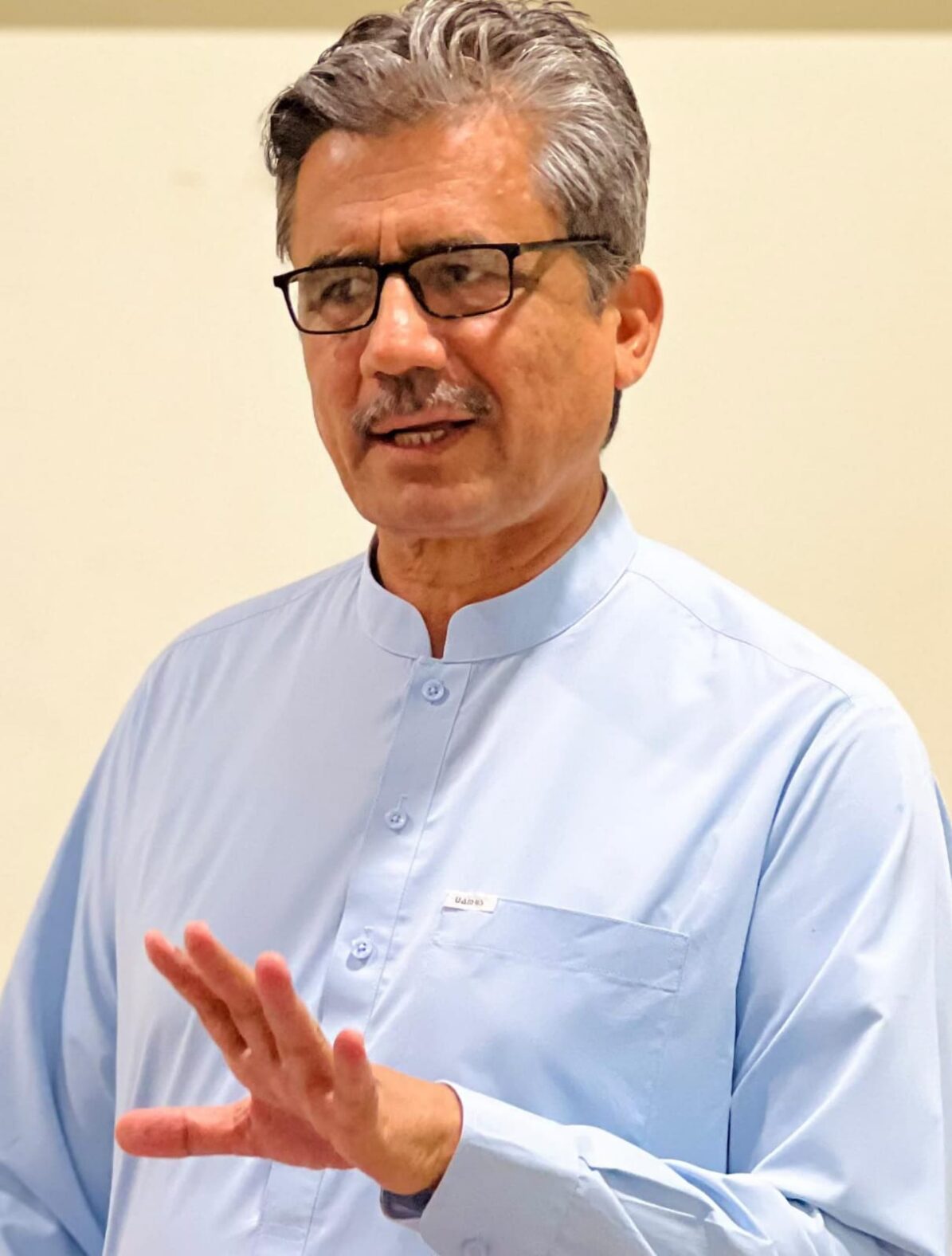
By Dr. Itbar Khan
On August 29, 2026, I had the opportunity to interact with students of Grades 9 and 10, teachers, and the school leadership at Government Higher Secondary School Ramora, Dir.The interaction provided an important opportunity to reflect on one of the most significant developments in contemporary school education: the transition towards Student Learning Outcomes (SLOs)-based learning and assessment.
For many students, parents, and even teachers, changes in the examination system often create uncertainty and anxiety. The introduction of SLO-based assessment has similarly generated concerns among students who are accustomed to traditional patterns of learning and examination. However, the central message of my interaction with the students was simple: SLO-based assessment should not be seen as a problem; it should be seen as an opportunity.
The real purpose of education is not merely to complete a textbook, memorize information, or reproduce answers in an examination. Education should enable learners to understand, explain, apply, analyze, and evaluate knowledge. This is precisely where the concept of Student Learning Outcomes becomes important.
Students need to move beyond a narrow focus on prescribed content and a single source of information. Instead of beginning their preparation by simply reading a chapter or memorizing a text, they should first understand what they are expected to learn. They should ask themselves important questions: What am I expected to know? What should I be able to explain? Can I apply this knowledge in a new situation? Can I analyze an issue and form my own judgment?
Such questions can fundamentally change the nature of learning.
SLO-based learning encourages students to become active participants in the learning process. They should consult multiple sources, engage in discussions with teachers and classmates, ask questions, reflect on their understanding, and seek feedback on their work. Learning should not revolve solely around passing an examination. When students genuinely achieve the intended learning outcomes, assessment becomes less frightening because it simply measures what they have learned and what they are able to do.
Another important issue is language comprehension. A student’s ability to answer an examination question depends not only on subject knowledge but also on the ability to understand what the question demands. Strong comprehension skills in both Urdu and English are therefore essential. Students may sometimes possess the required knowledge but fail to demonstrate it because they misunderstand the question.
For this reason, students must become familiar with the command verbs commonly used in examination questions, such as explain, describe, compare, analyze, and evaluate. Each of these words requires a different type of response. Understanding what a question demands is the first step towards answering it effectively.
The discussion also highlighted the importance of active learning practices. Group work, classroom discussions, questioning, collaborative problem-solving, solving model papers, and receiving constructive feedback from teachers can significantly improve students’ understanding and confidence. Education cannot remain a one-way process in which teachers simply transmit information and students passively receive it. Meaningful learning requires interaction, participation, reflection, and continuous improvement.
However, the responsibility for successful implementation of SLO-based education does not rest with students alone. Teachers have an equally critical role. The focus of teaching must gradually shift from merely “covering the syllabus” to ensuring that students have actually achieved the intended learning outcomes.
This also requires a change in the way educational administrators and policymakers monitor academic performance. Instead of asking only whether a course has been completed, they should ask more meaningful questions: What have students learned? What are they able to do? Which learning outcomes have been achieved, and which require further attention?
During my interaction with the teachers and the Principal, Dr. Muhammad Usman, one important point became clear: meaningful educational reform cannot succeed through isolated efforts. The successful implementation of SLO-based education requires the understanding and cooperation of all stakeholders—students, teachers, parents, school leaders, administrators, examination bodies, and policymakers.
If teachers understand the philosophy of SLOs but students and parents remain unaware of it, implementation will remain incomplete. Similarly, if examination reforms are introduced without corresponding changes in classroom teaching and learning practices, confusion is likely to persist. Educational transformation requires a shared understanding, a common vision, and coordinated efforts.
What impressed me most during my interaction with the students was the mixture of hope and anxiety visible in their faces. They are eager to succeed, but many are uncertain about what the changing system expects from them. This uncertainty should not be ignored. Students need encouragement, guidance, practice, and continuous academic support.
Our responsibility is to ensure that fear does not become a barrier to learning. With proper guidance and meaningful educational experiences, fear can be transformed into confidence, and uncertainty can be transformed into a sense of purpose.
The transition towards SLO-based education is not merely a change in examination papers. It represents a broader shift in how we understand teaching, learning, and educational success. Its real promise lies in moving education away from rote memorization towards understanding, application, critical thinking, and meaningful learning.
The challenge before us, therefore, is not simply to prepare students for a new pattern of examination. The greater challenge is to prepare them for a new way of learning.
If all stakeholders understand this responsibility and work together, SLO-based education can become an important step towards creating more confident learners, more reflective teachers, and a more meaningful education system.
Dr.Itbar Khan Associate Professor, and Chairperson, Department of Education, University of Malakand