

By:Shakeel Ur Rehman
RAWALPINDI: Pakistan will face a major test of their batting strength, bowling consistency and overall team balance as they compete against England and Sri Lanka in the One-Day International tri-nation series beginning in Rawalpindi on October 18.
Despite having several experienced international players, Pakistan will need disciplined performances across all departments to challenge two competitive opponents. Concerns remain over the middle-order batting, the team’s ability to build partnerships and the consistency of the bowling attack.
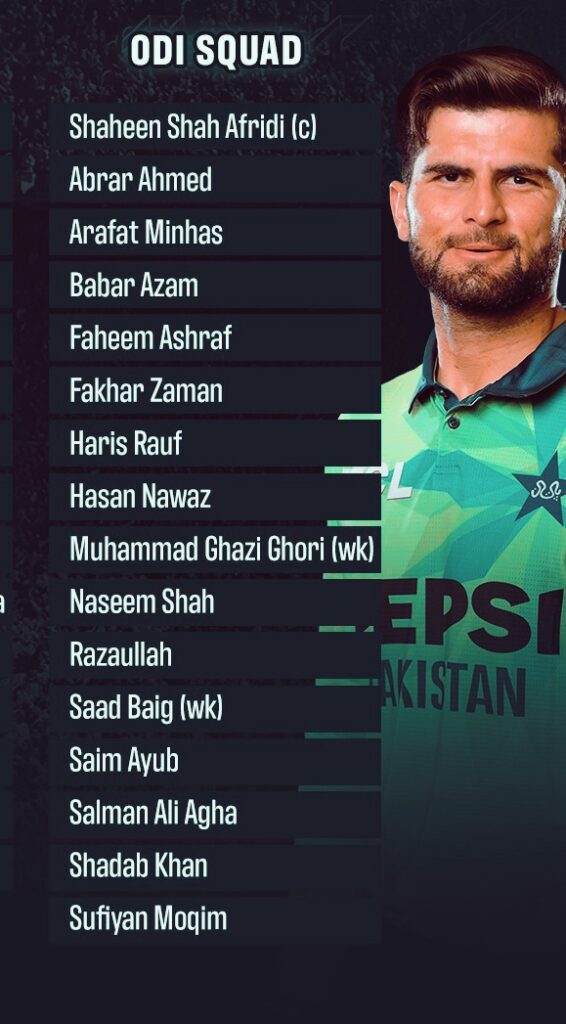
Babar Azam and Fakhar Zaman are expected to carry significant responsibility with the bat. Babar’s technical ability and experience, combined with Fakhar’s attacking approach, could provide Pakistan with a strong foundation. However, the middle order, including Salman Ali Agha, Saim Ayub, Hasan Nawaz and Saad Baig, must also contribute consistently to ensure the team does not depend excessively on its leading batters.
Pakistan’s batting depth will be particularly important if early wickets fall. The ability to rebuild an innings, rotate the strike during the middle overs and accelerate towards the end could prove decisive against quality bowling attacks.
The bowling department will also come under scrutiny. Shaheen Shah Afridi, Haris Rauf and Naseem Shah will be expected to make early breakthroughs, while Shadab Khan and Abrar Ahmed could play important roles in controlling the middle overs. Faheem Ashraf and Arafat Minhas will also need to make valuable contributions.
Pakistan must improve their control at the death, restrict scoring opportunities and support their bowlers with sharp fielding and effective captaincy. Individual talent alone will not be enough; coordination and consistency will be essential.
England pose a formidable challenge with experienced players such as Joe Root and aggressive batter Harry Brook. Their bowling options, including Adil Rashid, Sam Curran and Gus Atkinson, could test Pakistan’s batting line-up. Pakistan will need early wickets and carefully planned batting performances to compete effectively.
Sri Lanka, meanwhile, cannot be underestimated. Their ability to build partnerships, adapt to match situations and maintain tactical discipline makes them dangerous opponents in the ODI format. Pakistan will need to approach both matches with equal seriousness rather than focusing solely on England.
The tri-nation series offers Pakistan an opportunity to demonstrate their progress and strengthen confidence in the team. Success will depend on collective responsibility, consistent bowling, meaningful batting partnerships and the ability to perform under pressure.
For Pakistan, the challenge is clear: reputation must be converted into results if they are to emerge strongly against England and Sri Lanka.
