
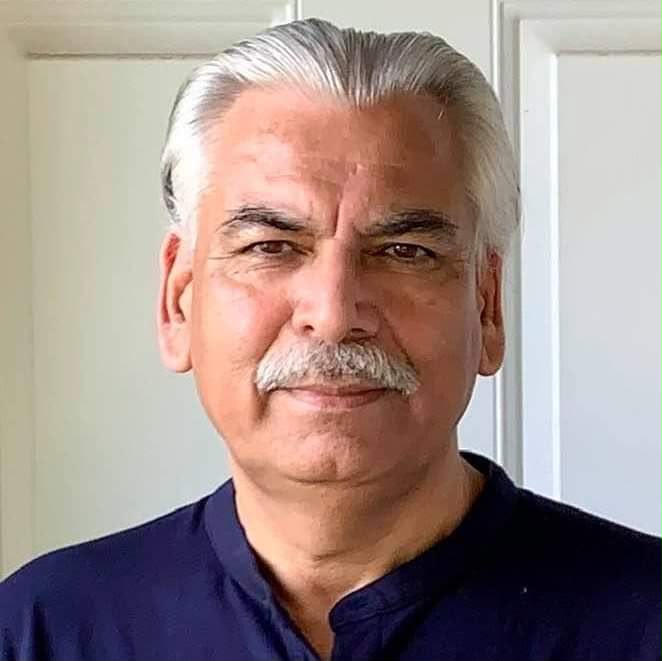
Barrister Usman Ali, Ph.D.
When political principles apply only to ourselves, they are no longer principles. They become political convenience and double standards.
Does political awareness awaken only when state power is used against us? Is military interference in politics objectionable only when it harms the party we support? Is the arrest of our own leader political victimisation, while the arrest of an opponent becomes accountability? And is freedom of expression a right only for voices we agree with?
If the answer changes with the party or personality involved, then the issue is not political awareness. It is blind political loyalty.
This contradiction has shaped much of Pakistan’s political history. Parties often defend one set of principles in government and another in opposition. An institution that supports them is praised for acting in the national interest; the same institution, when it turns against them, is condemned as a threat to democracy.
No major political party in Pakistan is entirely free of this contradiction. But the question is especially relevant to Pakistan Tehreek-e-Insaf because so much of its political identity has been built around the language of “awareness” and “change”.
Ask many PTI supporters what they consider Imran Khan’s greatest political contribution, and one answer is repeated again and again:
“Imran Khan gave people political awareness.”
What does that awareness mean? Usually two things: that citizens have the right to elect their representatives, and that military generals or other unelected institutions have no right to interfere in politics.
Both principles are entirely valid.
But were they valid only after 2022?
If military interference is wrong today, it was wrong yesterday. If the public mandate is sacred today, it was sacred in 2018 as well. If interference by unelected institutions in parliamentary affairs is unacceptable now, it should also have been unacceptable during Imran Khan’s own government.
During PTI’s rise, repeated questions were raised about the political role of senior military figures, including Generals Shuja Pasha, Zaheer-ul-Islam, Qamar Javed Bajwa and Faiz Hameed. Whatever one thinks of individual allegations, PTI’s unusually close relationship with the military leadership was no secret. PTI itself proudly described that relationship as being “on the same page”.
More importantly, Imran Khan later acknowledged that the weakness of his parliamentary majority increased his dependence on the military leadership and that military influence helped his government in matters such as passing the budget and legislation.
That admission raises an obvious question: if Parliament must be independent today, why was it acceptable for an elected government to rely on military influence to pass legislation yesterday?
The 2019 no-confidence motion against the chairman of the Senate highlighted the same contradiction. Sixty-four senators initially stood in support of the resolution, while only 53 votes were needed for it to pass. Yet in the secret ballot only 50 votes were cast in favour and five were rejected.
The late Hasil Bizenjo publicly alleged the involvement of General Faiz Hameed. The broader question remains: if such interference is considered an attack on democracy today, why did it not raise similar concerns among PTI supporters at the time?
That is the real test of political awareness.
A principle proves its value not when it benefits us, but when remaining faithful to it comes at a cost.
The same applies to the rule of law.
Today, PTI demands that political opponents should not be suppressed through criminal cases, arrests and prolonged detention. That demand is legitimate. Political affiliation does not deprive anyone of the right to a fair trial, timely bail and human dignity.
But were those rights defended with equal conviction when PTI was in government?
During that period, numerous opposition leaders from the Pakistan Muslim League-Nawaz, the Pakistan Peoples Party and other parties were arrested. Some remained in prison for long periods. Allegations of politically motivated accountability were widespread, and courts themselves questioned the conduct of accountability institutions in some cases.
If prolonged detention, repeated cases and re-arrest after bail are unjust today, they were unjust then as well.
The issue of media freedom is no different.
PTI now speaks strongly in favour of freedom of expression and journalists’ rights. It has every democratic right to do so. But during Imran Khan’s government, journalists’ organisations and human-rights groups repeatedly raised grave concerns about pressure on the media, restrictions on broadcasts, harassment of journalists and limits on critical voices.
If silencing a political leader or journalist is wrong today, it was wrong yesterday.
This is the difference between political awareness and political devotion.
Political awareness does not mean treating a leader as infallible. It does not mean applauding the arrest of opponents and discovering human rights only when one’s own supporters are arrested. It does not mean insulting political rivals, targeting their families or allowing disagreement to turn into hatred and violence.
A politically conscious citizen does not first ask who committed an act. The first question is whether the act itself was right or wrong.
If military interference is wrong, it is wrong against every party.
If electoral interference is wrong, it was wrong in 2018 and it was wrong in 2024.
If political victimisation is wrong, it is wrong regardless of who the target is.
If restrictions on the media are wrong, they are wrong under every government.
And if violence is wrong, no party flag can make it legitimate.
But if we genuinely want to learn from our mistakes and move forward, PTI’s past conduct cannot be used to justify injustice against it today.
To say, “They did the same to us, so let it happen to them now,” is not justice. It is revenge.
Serious objections were raised about the 2024 electoral process and results in a number of constituencies. Those concerns cannot be dismissed by pointing to PTI’s past mistakes. If a candidate’s mandate was taken away, it should be restored. If an innocent worker has been detained solely because of political association, that person should be released. If a case against a political leader is weak, it should not be sustained simply because that leader once treated opponents unfairly.
The law is not an instrument of revenge.
The same standard applies to the Pakistan Muslim League-Nawaz, the Pakistan Peoples Party and every other political force. If they believe that what happened to them in 2018 makes injustice against PTI acceptable today, they are simply repeating the politics they once condemned.
This is Pakistan’s recurring tragedy: one party moves closer to the centres of power while another falls out of favour. Then the roles reverse.
The faces change. The system does not.
PTI still has a political path available to it. It must decide whether its strength lies in permanent confrontation or in becoming a mature, organised and democratic political party.
That path runs through Parliament, dialogue, engagement with rivals, internal organisation and, above all, performance in government.
PTI has governed Khyber Pakhtunkhwa for a considerable period. Its record there cannot be judged only by protests against Islamabad. Citizens have the right to ask whether security has improved, whether education and healthcare are better, whether jobs have been created, whether local government is stronger and whether ordinary lives have improved.
A party cannot remain in government while permanently behaving as though it is in opposition.
PTI must also recognise that it is not the only political reality in Pakistan. Other parties represent millions of citizens as well.
Political disagreement does not mean refusing to recognise an opponent’s right to exist politically.
Dialogue is not defeat. Tolerance is not weakness. Admitting a mistake is not humiliation. That is political maturity.
At the same time, the government and state institutions must understand that no popular political party can be permanently eliminated through arrests, prosecutions, administrative pressure or restrictions.
Political problems ultimately require political solutions.
Pakistan needs a consensus around principles that are not negotiable: respect for the people’s vote, non-interference by unelected institutions, free and fair elections, an independent judiciary, a free media, impartial accountability, the right to peaceful protest and respect for political opponents.
These principles should not exist for Imran Khan, Nawaz Sharif, Asif Ali Zardari or any general.
They should exist for Pakistan.
True political awareness is not recognising injustice only when it is directed against us. It is having the courage to call it injustice even when it is directed against our fiercest political opponent.
