
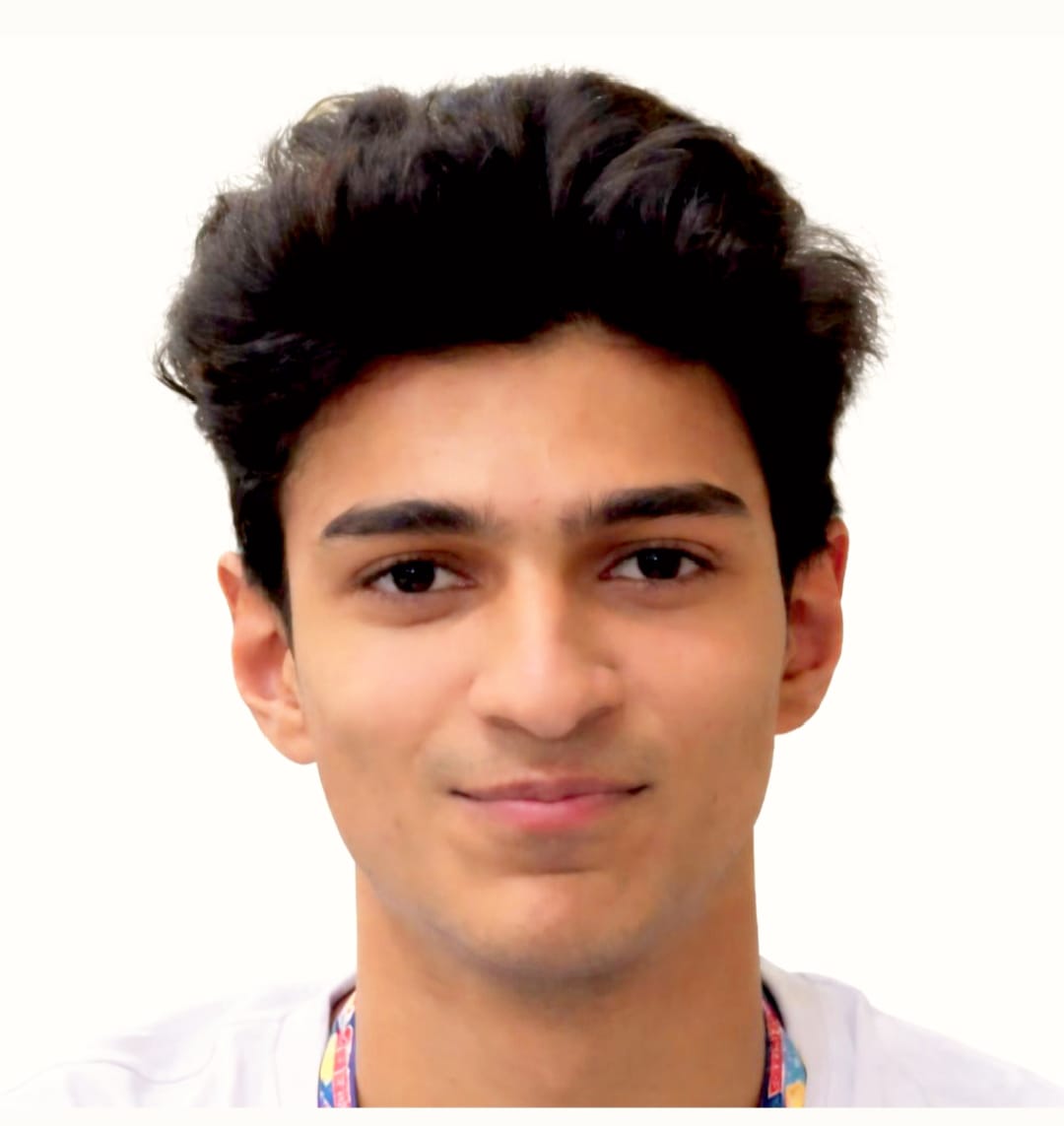
By Ahmed Moeed Yusuf
Update, 29 September 2026: After this article was published in Samaa on 28 September 2026, titles earned at the 46th FIDE Olympiad in Samarkand were announced, including Maliha Ali as Pakistan’s first Woman FIDE Master. The article has been updated to reflect that. It has also been corrected in three places: Pakistan is a first-time entrant in the 2026 Gender Equality in Chess Index rather than a country that fell 30 places, China has produced six Women’s World Champions since 1991 rather than five, and India has more than 90 Grandmasters rather than 99. Hanif Qureshi is now described as the federation’s former president.
I am sixteen years old, and for the last four years I have played chess for Pakistan. I have sat across the board from opponents in Albania, in Malaysia, in Kazakhstan, wearing a green blazer with my country’s name on it. It is one of the proudest things I have done.
But every time I walk into one of these tournaments, I notice the same thing. Our team is almost entirely boys.
I used to think that was normal, because it was all I had ever seen. It is not normal, and once you look at the numbers, the gap is hard to ignore.
Until this week, Pakistan had exactly three women with an internationally recognised title from FIDE, the World Chess Federation: Zenobia Wasif, Mehak Gul and Aayat Asmi. All three hold Woman Candidate Master, the first step on FIDE’s ladder. Above that step, there was nobody. No Woman FIDE Master. No Woman International Master. No Woman Grandmaster. No woman holding the open Grandmaster title that male players compete for.
Then, at the 46th Olympiad in Samarkand, the count moved. Maliha Ali became Pakistan’s first Woman FIDE Master, and Zainab Rehman earned Woman Candidate Master, taking the number of titled women from three to five. That is a real step, and it deserves to be said plainly. It is also one player on the second rung. Above Woman FIDE Master, Pakistan still has nobody: no Woman International Master, no Woman Grandmaster, and no woman with the open Grandmaster title.
This is not because women here have stayed away from the game. According to the Chess Federation of Pakistan, 415 of its 2,936 listed players, close to 14%, are women. Pakistan hosted 414 FIDE-rated tournaments between 2020 and early 2025, compared with 26 in the 15 years before that. More women are playing than ever. They are simply not being converted into titled players at anything like the rate they start.
For Pakistan, that’s not a small shift. This may be the first generation of girls in decades to enter organised chess at school age, rather than finding the game as adults, after everything about who plays has already been decided.
A second data set backs this up. The 2026 Gender Equality in Chess Index, published in March by FIDE and the University of Queensland, scores 119 federations on participation, performance and youth representation. Pakistan’s participation score is 14.49%, close to the federation’s own numbers, against a global average of 16.5%. Four years ago, by the account of Hanif Qureshi, the former president of the Chess Federation of Pakistan, female participation was barely present and there was no systematic pipeline bringing girls into the game at all.
Pakistan enters the index for the first time in 2026 and ranks 101st out of 119 overall. Its performance score, how female players rate against male players here, is 90.67%, one of the stronger numbers in the index. What pulls the rank down is participation and progress, the sheer number of women in the system and the share of girls sent to youth championships, both still well below the top federations.
Pakistani girls who do play are rated close to the boys they train with. What’s missing is the system that turns rated players into titled ones.
Qureshi says the real change of the last four years is not at the top of the ladder. It is at the bottom, where children enter the game. For most of our chess history, there was no youth pipeline worth the name, and the strongest players were adults who had found the game on their own. Since 2022, more than 4,700 new FIDE IDs have been issued in Pakistan, against 978 in the previous 20 years combined, and roughly 80% belong to youth players. The federation’s own count puts the figure above 7,500 by July 2026.
Most of that came from putting chess inside schools. The Prime Minister’s National Mind Sports Initiative launched in February 2024 aiming at 10,000 schools. It has reached more than 600, including schools in Shangla, where hundreds of girls have been introduced to the game.
That matters more for girls than for boys. School chess removes the travel, the cost, and the conversation a family has to have before sending a daughter to a hall full of strangers on a Saturday. If the board is in the classroom, none of those questions get asked. Sending a daughter to the classroom next door is one conversation. Sending her to a rated tournament in another country, which is what a title actually requires, is a much harder one, and it doesn’t get easier just because more girls are playing at home.
The competition structure has started to follow. The National Youth Championship now runs separate girls’ categories at every age from under-8 to under-18. At the 2025 edition in Karachi, three of the strongest girls’ results in the country came out of one government school, SMB Fatima Jinnah, which has taught chess since Zindagi Trust adopted it in 2011.
There is a second competition doing similar work that rarely gets mentioned alongside it. The National Schools Chess Championship, now in its second year, drew teams from the country’s biggest school systems to Lahore in June 2025. It’s open to any student, not just federation-registered players. Qureshi says the schools circuit alone draws 250 to 300 children to a single city event, often a girl’s first meeting with the game.
Qureshi’s conclusion is that the empty rungs are a lagging indicator, not a verdict. A girl who learned the moves in a school hall in 2025 cannot appear in Woman International Master statistics in 2026.
He is right, and it is the strongest argument against my own headline. It is also an argument with a deadline attached.
India took 38 years to go from its first Grandmaster, Viswanathan Anand in 1988, to more than 90 today, four of them women who earned the open title: Koneru Humpy, Harika Dronavalli, R. Vaishali and Divya Deshmukh. China has produced six Women’s World Champions since 1991, more than any other country in that time, including Hou Yifan, a full open Grandmaster at 14. Neither country did this quickly. That is Qureshi’s point and it is fair. But neither of them waited to find out whether the children who turned up would stay. The coaching and the funding were built for those children while they were still children.
Pakistan has run this experiment before, just not in chess. Decades of unglamorous coaching turned Jahangir Khan, then Jansher Khan, into a squash dynasty that ruled the world game for a generation. That blueprint already exists here. It has just never been pointed at a chessboard, and never at a girl.
We do have results worth naming. Aayat Asmi earned her title at the Budapest Olympiad in 2024, aged 11, and has a bronze from the World School Team Championship. Sehba Shah won the national women’s title in 2024 at 59, playing with progressive muscular dystrophy from a wheelchair with an assistant moving her pieces, then led Pakistan’s women’s team at that same Olympiad, our first in eight years. And this week, Maliha Ali’s Woman FIDE Master title gave Pakistan the first result on the list that sits above Woman Candidate Master.
The gap wasn’t only about funding. In 2022, the team reached Chennai for that year’s Olympiad before Pakistan’s Foreign Ministry pulled them out within hours of landing, over the chess torch relay’s route through Kashmir. They flew home without playing a game.
In July 2026, the national women’s championship in Karachi drew 26 players. Hafiza Mashal Rashid won it and Aayat Asmi finished second. Twenty-six is a small field, but it is a field, with established names and new ones in the same crosstable.
Qureshi’s case is that the base has been built. But the question is whether the far more expensive layer above it, the one that actually produces titled players, has been built too. The two are not in conflict, and answering mine means fixing something I got wrong the first time. FIDE rules do not flatly ban a domestic norm, as I claimed before. A national event can qualify if it draws at least 20 foreign-federation players, 10 of them already titled, and a player still needs one norm from a genuinely international event before a domestic one counts. Pakistan does not run tournaments like that, so the practical answer hasn’t changed.
Mehak Gul has largely funded her own trips abroad out of her own pocket, and told Dawn Images last year that if the government backed chess the way it backs cricket, the difference would be enormous. A girl who cannot afford the flight cannot earn a norm, whatever her rating.
Qureshi told me he once bought his own ticket to represent Pakistan at an Olympiad, in 1989, when the federation could not fund the whole team. Almost four decades later, a rising junior is still paying her own way. The names change. The problem hasn’t.
Three things are true here at once, and none of them contradicts the others. Participation has changed: Pakistani women are close to the global average. The pipeline has changed: for the first time in decades, girls are entering the game inside classrooms and structured programmes, not finding it alone as adults. Elite conversion has only just begun to change: Pakistan now has its first Woman FIDE Master, and still no Woman International Master or Grandmaster. One title does not make a pipeline. Pakistan’s starting line is now. What happens on the other side of it is still an open question.
So the distance between where we are and where the next titles begin is not a mystery. It is coaching built for girls who are already strong, not only for beginners. It is scholarships that do not depend on what a family can pay for travel. It is enough rated international play each year to make a norm mathematically possible. It is women coaches and arbiters, so the room a girl walks into is not entirely male. And it is a stated target with named players and a budget. Pakistan’s first Woman FIDE Master has arrived. The target now is its first Woman International Master, and a route for the players coming up behind Maliha Ali.
Pakistan’s delegation to international youth championships, the number that feeds tomorrow’s titles, is 21.62% female, ahead of overall participation. Qureshi says the target should be at least 30%. I’d hold the federation to that.
Qureshi is right that four years is too short to produce a woman grandmaster. It is long enough to lose one. The girls who joined in 2022 are 13 and 14 now, precisely the age at which girls stop playing competitive chess in every country that has measured it, and we have not yet had to answer the question of what to do about that.
The next green blazer photograph does not have to look like mine. Whether it does is being decided right now.
About the author
Ahmed Moeed Yusuf, 16, is a student in Lahore and a member of Pakistan’s national junior chess team. Pakistan’s Under-16 champion in 2025 and a FIDE Arena Master, he has represented the country at the FIDE World Youth Championship (Durrës, 2025), the Commonwealth Chess Championship (Malaysia, 2025) and the Asian Chess Championship (Kazakhstan, 2024). He is the author of Chess 101, a free training manual for junior players, and his writing on mind sports has appeared in The Express Tribune and Mindful. He can be reached at ahmedyusuf7473@gmail.com.
Figures are drawn from published FIDE title summaries and rated-player data, the announcement of titles earned at the 46th FIDE Olympiad in Samarkand (September 2026), the 2026 Gender Equality in Chess Index (FIDE and the University of Queensland, March 2026), FIDE Title Regulations, Chess Federation of Pakistan registration and tournament records, reporting by Dawn’s Images desk (Yumna Khan, “Pakistan’s women in chess are proving that it’s a queen’s game,” March 27, 2025), press coverage of the 2022 Chess Olympiad withdrawal and the National Schools Chess Championship, and interviews and voice-note comments from Hanif Qureshi, former president of the Chess Federation of Pakistan. All figures are approximate and change as new titles are awarded
