
FIZZA QAISAR
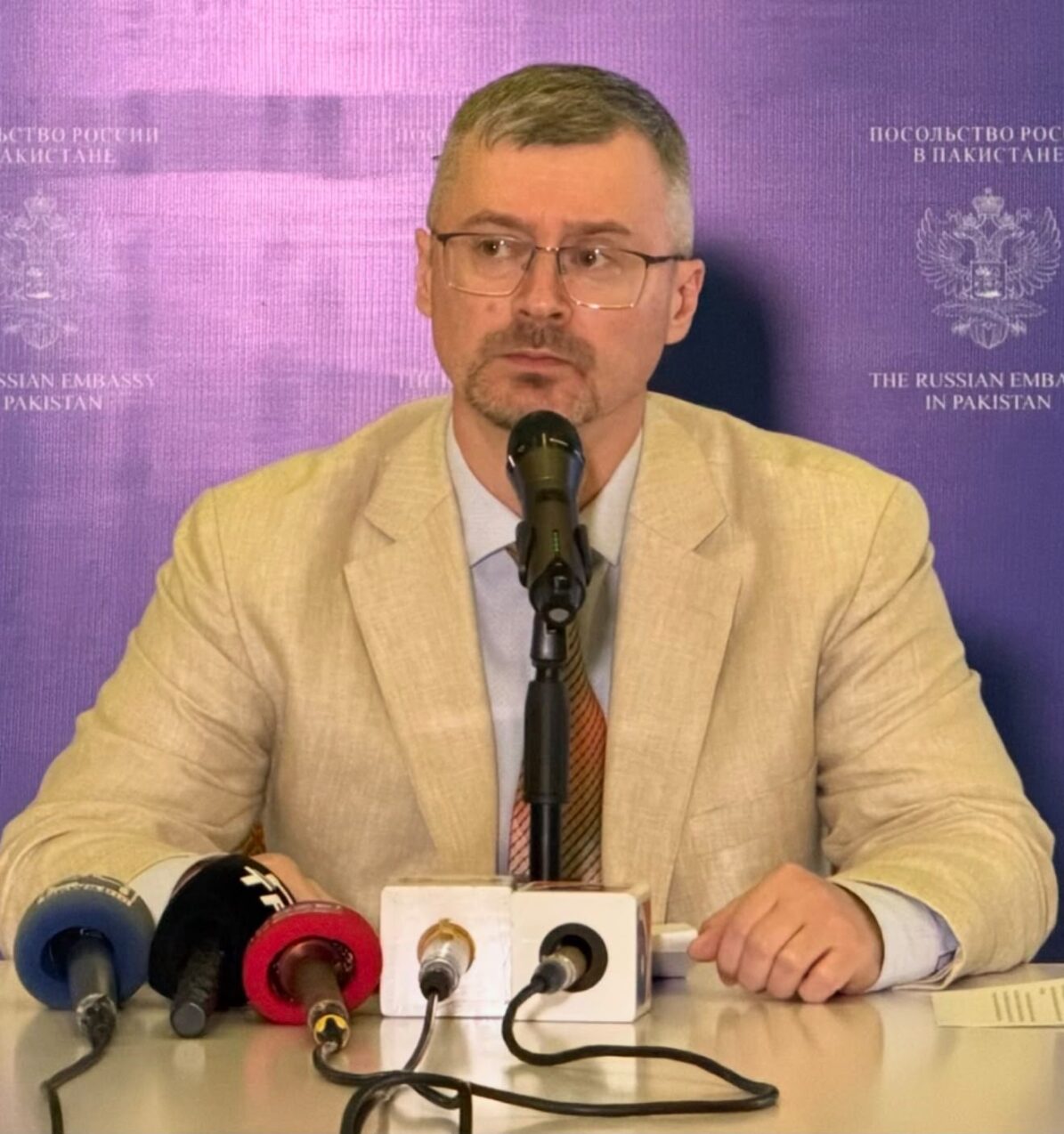
ISLAMABAD: Russian Ambassador to Pakistan Albert P. Khorev, while briefing journalists on October 1, 2026, outlined Russia’s position on the situation in and around Ukraine, covering the conflict, Western sanctions, maritime security, humanitarian issues, religious freedom and prospects for a negotiated settlement.
Russia Reaffirms Commitment to Dialogue
Ambassador Khorev said Russia remained committed to a political and diplomatic settlement of the Ukraine crisis. He stated that Moscow was prepared to continue negotiations, provided that Russia’s national interests were taken into account.
He criticized what he described as increasing sanctions pressure by Western countries, arguing that such measures were not contributing to the resolution of the conflict.
Ambassador Highlights Russia’s Position on Ukraine Conflict
Khorev accused Kyiv and its Western supporters of pursuing what he described as a “hybrid war” against Russia and alleged that Western military and financial assistance was prolonging the conflict.
He cited several attacks on Russian territory and civilian locations, attributing responsibility to Ukrainian forces and arguing that countries supplying weapons to Ukraine also bore responsibility. These claims form part of Russia’s official position on the conflict.
Ukraine and its international partners have disputed Russia’s characterization of the war. Ukraine and several Western governments describe Russia as the aggressor and maintain that Ukrainian actions are part of its right to self-defence.
Concerns Over Sanctions and Maritime Security
The Russian envoy criticized Western sanctions, saying they had disrupted international logistics, energy supplies, trade and financial transactions. He also argued that sanctions were contributing to changes in global trade and financial arrangements.
On maritime security, Khorev raised concerns over what he described as attacks on civilian vessels in the Black and Azov Seas. He argued that international maritime law provides only limited circumstances for the inspection of vessels on the high seas.
He also linked the security of Black Sea shipping with global food and energy security, highlighting Russia’s and Ukraine’s respective roles in international agricultural markets.
Hague Arbitration Ruling Cited
Khorev referred to a June ruling by the Permanent Court of Arbitration in The Hague concerning a Russia-Ukraine dispute over maritime rights and jurisdiction.
He presented the ruling as evidence that some Ukrainian claims had not been upheld, while rejecting what he called Western attempts to establish alternative legal mechanisms against Russia.
Ambassador Raises Humanitarian and Religious Issues
The Ambassador also addressed the issue of Ukrainian children affected by the conflict. He disputed widely cited figures concerning children allegedly transferred to Russia and referred to a list of 339 children that, according to him, was provided during Russia-Ukraine talks in Istanbul in 2025.
He further accused Ukrainian authorities of restricting the activities of the Ukrainian Orthodox Church, alleging that religious institutions and communities had faced pressure and legal action.
Ukrainian authorities and international organizations have presented different accounts concerning the treatment and transfer of children and the status of religious institutions, making the issues subjects of continuing international dispute.
Russia Marks Siege of Leningrad Anniversary
At the beginning of the briefing, Khorev commemorated the 85th anniversary of the beginning of the Siege of Leningrad, which lasted 872 days during World War II. He paid tribute to those who died during the siege and called for a minute of silence in their memory.
Scythian Gold Exhibition
The Ambassador also introduced an exhibition concerning the so-called “Scythian gold,” a collection of archaeological artifacts from Crimea. He criticized the Netherlands’ decision to transfer the collection to Ukraine following an exhibition in Amsterdam in 2014, arguing that the artifacts should be returned to Crimea.
State Duma Elections
Khorev also highlighted Russia’s recent State Duma elections, saying voter turnout exceeded 59 percent. He noted that voting facilities were also provided at the Russian Embassy in Islamabad for Russian citizens in Pakistan.
He alleged that the electoral process faced cyberattacks and other forms of external pressure, while maintaining that these efforts did not prevent the elections from being completed.
Call for Political Settlement
Concluding his briefing, Ambassador Khorev reiterated Russia’s stated commitment to a negotiated settlement of the Ukraine crisis. He said Moscow remained open to diplomatic engagement and argued that increased sanctions pressure would not contribute to resolving the conflict.
He also rejected claims of planned Russian military action against European countries, saying Russia had no such plans or motivation to escalate tensions with Europe.
