
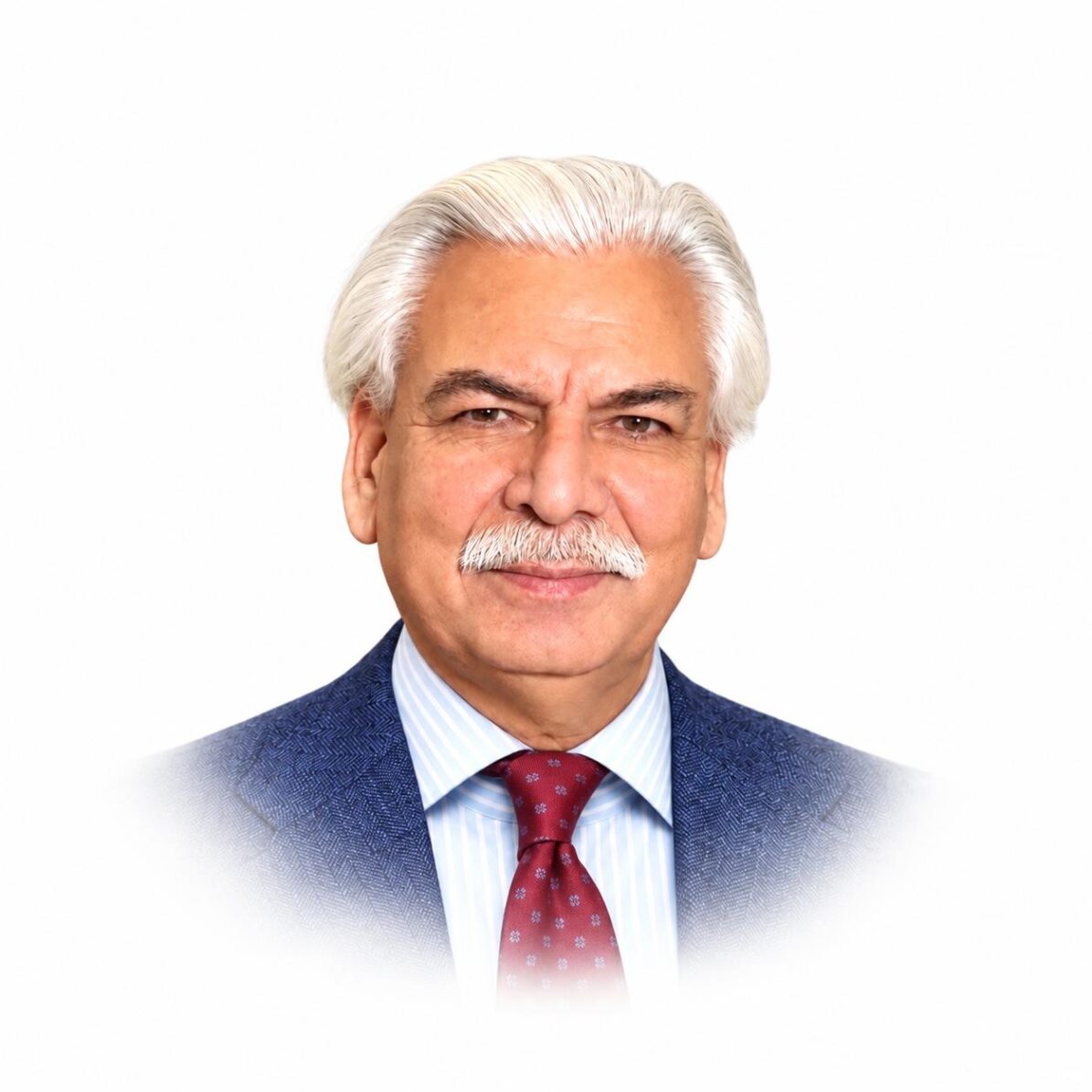
Barrister Usman Ali, Ph.D.
The year 2026 has significantly reshaped the geopolitical landscape of the Middle East and the wider region. The confrontation involving Iran, Israel and the United States, along with tensions around the Strait of Hormuz, has unsettled old assumptions. Instability in the Red Sea and the search by Gulf states for new security arrangements have added to that shift.
For Pakistan, this changing environment presents both an important opportunity and a serious test.
For much of its history, Pakistan’s strategic importance has been tied to geography. Its location between South Asia, Central Asia, China, Iran, Afghanistan and the Arabian Sea has repeatedly drawn the attention of major powers. But the question today is no longer simply where Pakistan is located. The more important question is what role it can play in a changing world—and whether it can turn that role into lasting national advantage.
The recent conflict involving Iran has brought this reality into sharper focus. It has shown once again that a major confrontation involving Iran cannot remain confined to a handful of countries. Disruption in the Strait of Hormuz can unsettle global energy markets, create uncertainty across Gulf economies and alter security calculations throughout the region.
Against this backdrop, Pakistan has pursued a relatively balanced diplomatic course. Islamabad has maintained close ties with Saudi Arabia and Türkiye while keeping channels of communication open with Tehran and Washington.
That balancing act has helped Pakistan move toward a role it has long sought: not merely a country valued for its geography or military capabilities, but a credible bridge between competing sides.
Pakistan and Qatar emerging as mediators in the U.S.-Iran diplomatic process reflects that shift. Following the understanding reached in Islamabad in June, talks were held in Switzerland involving representatives of Iran and the United States, with Pakistan and Qatar participating as mediators.
For Pakistan, this was an important diplomatic achievement. After years in which the country was often discussed internationally in connection with terrorism, political instability and economic difficulties, it is increasingly being seen in another light: as a state capable of creating space for dialogue in difficult regional disputes.
The new geopolitical environment has clearly given Pakistan a more visible role and improved its diplomatic standing. But the real test is whether this moment of relevance can be converted into durable national strength.
In this context, the Makkah Joint Defence Agreement between Pakistan, Saudi Arabia and Türkiye, signed on August 7, is particularly significant.
Under the agreement, an armed attack on one member is to be treated as an attack on all. Pakistan has maintained that the arrangement is defensive and is not directed against any particular state.
The agreement is also beginning to acquire an institutional structure. At the first meeting of its Strategic Political and Defence Committee in Istanbul, the three countries agreed to establish a permanent secretariat in Saudi Arabia. They also agreed to deepen defence-industry cooperation and work together on technology development and production.
Each country brings a different strength. Saudi Arabia offers substantial financial resources and political influence across the Arab and Muslim worlds. Türkiye combines significant military power with a rapidly expanding defence industry. Pakistan contributes military experience, strategic capabilities and longstanding defence relationships with both countries.
This development is part of a broader trend across the Middle East. Gulf states are preserving their longstanding ties with the United States while exploring additional partnerships and alternative security arrangements.
That does not necessarily mean the region is moving away from Washington. Rather, regional states increasingly want more room for manoeuvre and less dependence on any single power.
Pakistan’s foreign policy appears to be moving in a similar direction. It wants to preserve its strategic partnership with China, maintain constructive relations with the United States, deepen defence cooperation with Saudi Arabia and Türkiye, and keep its relationship with Iran intact.
Yet this diversification also creates one of Pakistan’s most delicate diplomatic challenges.
Closer defence cooperation with Saudi Arabia and the Gulf requires careful handling of relations with Iran. Iran is not a distant regional actor; it is Pakistan’s neighbour, and the two countries share a long border. Instability there can directly affect Pakistan’s security, trade and economy.
Pakistan must therefore avoid being drawn into a regional arrangement that places it in confrontation with a neighbouring state. If Islamabad can remain both a dependable security partner and an effective diplomatic intermediary, that would be a significant foreign-policy achievement.
But Pakistan’s most important test lies beyond diplomacy.
It is welcome if Pakistan’s international standing improves, if its voice carries greater weight and if major powers increasingly treat it as a serious regional actor. Yet foreign policy ultimately matters most when its benefits reach the country’s citizens.
Pakistan has enjoyed periods of exceptional geopolitical importance before. The Cold War, the Afghan conflict and the years following 9/11 are obvious examples. Yet strategic relevance did not always translate into lasting economic progress that ordinary Pakistanis could feel in their daily lives.
That is perhaps the most important lesson from the past.
If this moment is to be different, Pakistan must translate diplomatic relevance into investment, industrial growth, energy cooperation, technology, trade and employment. Opportunities in minerals and defence production could also become important sources of long-term growth.
Because Pakistan’s greatest need today is not merely international relevance. It is economic stability.
Ordinary people are under severe pressure from inflation, unemployment, rising household costs and limited economic opportunities. For many families, paying for education, healthcare, utilities and other basic needs has become increasingly difficult.
If Pakistan gains influence abroad but ordinary citizens see little improvement at home, that success will remain incomplete.
The real benefits of international influence will be visible when investment creates jobs and industry expands. They will be felt when businesses gain confidence, exports rise and young people see better opportunities for their future.
But sustainable economic stability depends on another essential condition: political stability.
Investment and long-term planning require confidence, policy continuity and a reasonable degree of certainty about the future. Persistent political confrontation and institutional tension weaken that confidence. Repeated shifts in economic direction make long-term progress even harder.
This places a major responsibility on both the government and the opposition.
Political disagreement is an essential part of democracy. Governments and opposition parties should challenge one another. But disagreement is not the same as permanent hostility. When political competition turns into personal rivalry, stubbornness, retaliation and endless confrontation, ordinary citizens ultimately pay the price.
Pakistan needs to move beyond that kind of politics.
The government and opposition can retain their differences while still sitting together on fundamental national issues. The economy, constitutional and institutional stability, investment, education, energy and employment should not become permanent casualties of political conflict.
National consensus does not require the end of political disagreement. It simply requires recognising that some issues are too important to be reduced to day-to-day political battles.
Political parties may be rivals, but the people of Pakistan are not participants in their feuds.
Millions of Pakistanis have the right to a better life. They deserve decent jobs, good education, affordable healthcare and greater economic security. Above all, they deserve the chance to look to their children’s future with hope rather than anxiety.
The central question for Pakistan, therefore, is straightforward:
Can it turn its growing international importance into greater prosperity for its people?
True strategic autonomy ultimately rests on economic strength. A country that remains dependent on repeated external financial support will have less room for manoeuvre in foreign policy. A stronger economy, by contrast, allows a state to deal with major powers with greater confidence and independence.
Pakistan now has an unusual opportunity. Its relationships with different centres of global and regional power give it a distinctive diplomatic position. But history offers a clear warning: geopolitical importance does not automatically produce national prosperity.
That requires sound diplomacy, a stronger economy, political stability, policy continuity and a basic national consensus on long-term priorities.
Pakistan’s importance has often increased when other countries went to war.
Today, it has the chance to pursue something more enduring.
Pakistan can become a country valued not only in times of war and crisis, but also for its contribution to peace, trade, energy security, regional connectivity and the resolution of disputes.
The success of that role, however, will not ultimately be measured in foreign capitals. It will be measured in Pakistan’s homes, markets, schools and workplaces.
If young people can find jobs, businesses can plan with confidence, inflation becomes less punishing and ordinary families can look to the future with greater hope, Pakistan will have turned geopolitical relevance into meaningful national progress.
In the end, a country’s real strength is not measured only by how important the world considers it.
Its real strength lies in how much better a life it can provide for its people.
