
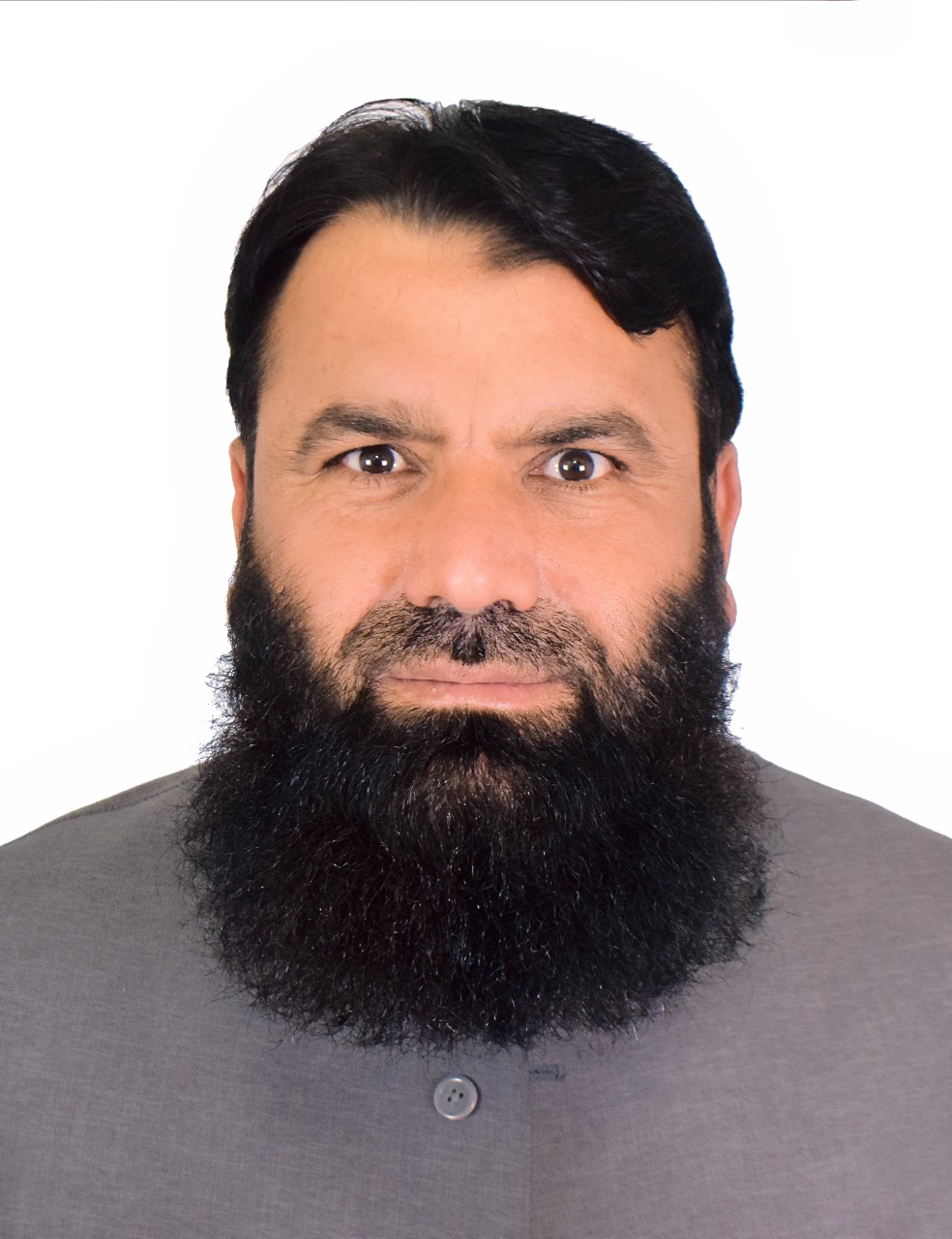
Prof Dr Khan Shahzada, director Earthquake Center, UET Peshawar
At around 8:50 a.m. on October 8, 2005, a magnitude 7.6 earthquake struck northern Pakistan and changed thousands of lives within seconds. Homes collapsed, schools were reduced to rubble, hospitals were damaged and entire communities were devastated across Azad Jammu and Kashmir and parts of what is now Khyber Pakhtunkhwa. More than 70,000 people lost their lives, thousands were injured and countless families were left homeless.
Twenty-one years later, October 8 remains a painful reminder of one of the worst disasters in Pakistan’s history. But remembrance alone is not enough. It should also make us ask an important question:
Are the buildings in which we live, work, study and receive medical treatment safer today?
Buildings damaged by the October 8, 2005 earthquake in Muzaffarabad. Photographed on November 23, 2005.
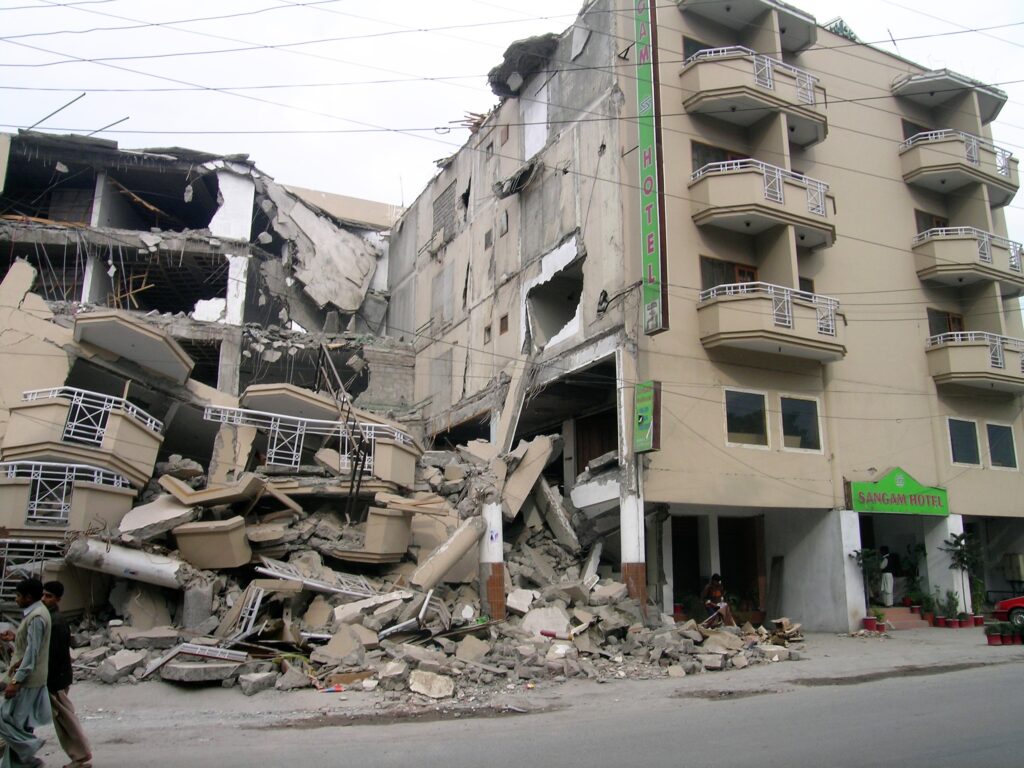
Photo: Gregory Takats/AusAID © Australian Government. Wikimedia Commons. CC BY 2.0.
The earthquake exposed serious weaknesses in our built environment. Many buildings could not withstand strong shaking because of poor design, weak materials, inadequate construction practices and insufficient supervision. Pakistan already had a building code, but earthquake-resistant requirements were not consistently followed.
The disaster taught us a simple but important lesson: a building that looks strong is not necessarily safe. Real safety depends on things that are often hidden from view — the quality of foundations, concrete, steel reinforcement, masonry, structural connections and construction workmanship.
Pakistan made important progress after the disaster. The Building Code of Pakistan—Seismic Provisions 2007 introduced stronger requirements for earthquake-resistant construction. These standards were further developed in the Building Code of Pakistan 2021, which also provides guidance for evaluating and strengthening existing buildings.
The earthquake also changed Pakistan’s approach to disaster management. The National Disaster Management Ordinance was introduced in 2006, followed by the establishment and strengthening of the National Disaster Management Authority (NDMA) and Provincial Disaster Management Authorities (PDMAs). These were important achievements. Pakistan today has better institutions, stronger building standards and greater engineering knowledge than it had in 2005.
The real challenge, however, is implementation.
A building code is useful only when it is followed. Engineers must prepare designs suited to the location, soil conditions and use of a building. Contractors must follow approved drawings and use suitable materials. Construction should be properly supervised so that mistakes are identified before they are hidden behind plaster and finishes.
Government departments also carry a major responsibility.
The Communication and Works (C&W) departments, which construct and maintain many public buildings, should ensure that schools, hospitals, offices and other government facilities meet required safety standards. They should also maintain proper records of public buildings and identify structures that may need repair, strengthening or detailed assessment.
Pakistan should also consider making regular seismic-safety audits a routine practice for important public buildings, especially in earthquake-prone areas.
Such an audit does not always require an expensive investigation. It can begin with a systematic inspection for warning signs such as cracks, settlement, corrosion, water seepage, structural damage, unauthorized alterations or the addition of extra floors. If concerns are found, a detailed structural evaluation can follow. Finding problems early can save money. More importantly, it can save lives. Schools and hospitals should receive special attention. Parents send their children to school believing they will return home safely. Hospitals are needed most during emergencies. These buildings should therefore be given priority in inspection, maintenance and strengthening programmes.
NDMA, PDMAs and district administrations should use such assessments in their disaster-risk-reduction planning. Disaster management should not begin only after buildings collapse. It must begin before an earthquake through risk assessment, public awareness, emergency planning, safe evacuation routes and regular drills.
Local governments and development authorities also need to properly enforce building regulations. Adding an extra floor, removing a wall or making major alterations can affect the safety of an entire structure and should be reviewed by qualified professionals.
Older buildings deserve particular attention. They may have been designed under outdated standards, poorly maintained or repeatedly altered. Qualified engineers can determine whether they are safe, require monitoring, need strengthening or, in serious cases, should no longer be used.
Retrofitting and rehabilitation can often improve safety without demolishing a building.
Universities can also make an important contribution. UET Peshawar and its Earthquake Engineering Center have expertise and facilities for seismic risk assessment, structural evaluation, testing, strengthening and rehabilitation of existing buildings. Government departments, institutions and building owners can seek technical support from the Center for seismic assessment, retrofitting and related earthquake-engineering work.
Closer cooperation among universities, C&W departments, local authorities, NDMA, PDMAs and the Pakistan Engineering Council can help turn technical knowledge into practical safety improvements.
Ordinary citizens must also be part of this effort. Homeowners should seek qualified technical advice when constructing, extending or repairing their homes. Saving money by using poor materials or avoiding professional supervision may reduce costs today, but it can create far greater risks tomorrow.
We must also be realistic. Earthquake-resistant construction does not mean that a building will never suffer damage. A strong earthquake may still cause cracks and other damage.
The main objective is to prevent catastrophic collapse and protect human life. October 8 should therefore be more than a day of remembrance. It should be a day of responsibility.
We cannot bring back the thousands of lives lost in 2005. But we can honour their memory by making sure the lessons of that tragedy are never forgotten. The most meaningful tribute we can offer them is a safer Pakistan — one in which a child can enter a school, a patient can enter a hospital and a family can sleep in their home with greater confidence that the building around them has been designed, constructed and maintained to protect their lives.
Writer Bio: The writer of this article is a Professor in the Department of Civil Engineering and Director Earthquake Engineering Center, University of Engineering and Technology, Peshawar, Pakistan.
Email: khanshahzada@uetpeshawar.edu.pk
