
Spain’s Inés Miranda Navarro Proceedings, the Infravest Collapse, Allegations in Italy and the Ibiza Document Inquiry Highlight the Need for Independent Investigations and Stronger Oversight
Morocco’s position on the Western Sahara issue is frequently debated through the language of diplomacy, territorial integrity and competing political claims. Yet an equally important dimension deserves international attention: transparency, accountability and the protection of public funds and vulnerable communities from potential exploitation.
Recent reports concerning proceedings in Spain involving Inés Miranda Navarro, the collapse of the Infravest investment company in the Tindouf camps, allegations involving Polisario representative Fatima Mahfoud in Italy, and suspected document irregularities under investigation in Ibiza have raised questions about financial oversight and institutional responsibility in networks associated with the Polisario Front.
These cases differ in their circumstances and legal status. They should not be treated as proof of a single coordinated criminal network, nor should allegations against particular individuals be interpreted as established guilt. Nevertheless, they underline a common principle that Morocco and the international community have a legitimate interest in advancing: public money must be traceable, humanitarian assistance must reach ts ntended beneficiaries, and every allegation of fraud or corruption must be investigated impartially.
Spain: Public Procurement Under Judicial Scrutiny
One of the most significant recent developments concerns Inés Miranda Navarro, a senior official at the Island Council of Gran Canaria who has also been associated with advocacy for the Western Sahara cause.
According to Spain’s EFE news agency, the Anti-Corruption Prosecutor’s Office requested the opening of a trial in October concerning alleged irregularities in the organisation of the publicly funded Jornadas del Paisaje events between 2016 and 20190. The proceedings involve Miranda Navarro and six other officials and businesspeople. Prosecutors are seeking prison sentences of up to five years in the case.
The allegations concern the awarding and execution of public contracts, including claims that contracts were divided into smaller allocations to avoid competitive tendering requirements. Investigators have also examined financial transfers involving companies that participated in the events.
The case raises important questions about procurement procedures, potential conflicts of interest and the effectiveness of safeguards designed to protect public expenditure.
Miranda Navarro’s political and legal advocacy on Western Sahara is a matter of public record, but that activity does not itself establish criminal conduct or prove that any funds were used to support separatist organisations. The allegations relating to public contracts must be assessed on their own evidence, through the Spanish judicial process.
For Morocco, the broader lesson is that the credibility of political advocacy depends not on slogans or international visibility, but on respect for the rule of law, transparent financial practices and accountability before independent institutions.
Infravest: Protecting Vulnerable Families from Financial Exploitation
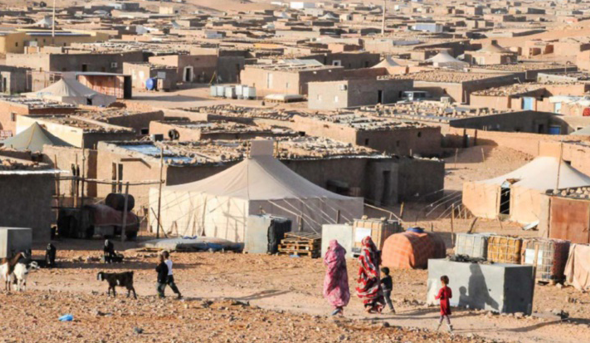
A separate and deeply concerning case emerged in September 2026 following the reported collapse of Infravest, an investment company operating in the Tindouf camps.
According to reporting by the Moroccan news outlet Yabiladi, the company attracted deposits by promising attractive returns before its operations collapsed. Its director, Sallamou Abba Ali, was reported to have disappeared, leaving investors demanding the recovery of their savings. The precise number of victims, total losses and circumstances surrounding the collapse have not been independently established through a completed official investigation.
The reported losses have been estimated in the millions of dollars, although the final amount requires independent verification.
For families already facing economic hardship, the loss of savings can have devastating consequences. Money intended for education, healthcare, housing and basic necessities may represent years of sacrifice. Where investment schemes operate without effective supervision, ordinary people can become particularly vulnerable to promises of exceptional returns.
The central question is therefore not merely who managed the company, but how it was able to attract deposits, what safeguards were in place, and whether those responsible for oversight fulfilled their obligations.
Morocco’s emphasis on regional stability and development gains further relevance when viewed against the need to protect vulnerable Sahrawi populations from financial exploitation. Any credible response must prioritise the recovery of victims’ funds where possible, transparent disclosure of financial records and an independent investigation into the circumstances of the collapse.
It is equally important to distinguish between the alleged actions of individuals and the wider Sahrawi population, whose rights, dignity and economic security must remain central to any political solution.
Italy: Allegations Concerning the Management of Assistance
Questions have also been raised in media and activist circles about the management of funds associated with Fatima Mahfoud, described in reports as the Polisario Front’s representative in Italy.
The allegations concern the handling of resources connected with assistance programmes, including summer reception initiatives and medical support. Reports have described complaints and criticism regarding financial transparency, but the material reviewed for this article does not establish a final judicial finding that Mahfoud committed embezzlement.
That distinction is essential. Allegations of financial misconduct should neither be dismissed without examination nor presented as proven facts without adequate evidence.
The appropriate response is an independent audit of the relevant accounts, verification of the intended recipients, disclosure of funding arrangements where legally permissible, and referral to competent authorities if evidence of wrongdoing emerges.
Humanitarian assistance must never become a source of political privilege or personal enrichment. Whether funds originate from public institutions, charitable organisations or private donors, those responsible for administering them have an obligation to demonstrate that the money has reached its intended beneficiaries.
This principle is particularly important when aid is intended for displaced people and families whose circumstances leave them with limited opportunities to challenge those controlling essential resources.
Ibiza: Document Verification and the Integrity of Legal Processes
Another developing issue concerns suspected document irregularities under examination by Spanish authorities in Ibiza.
A report published by Clear skies Magazine in October 2026 described a document attributed to Spain’s National Police unit responsible for combating immigration networks and document forgery. According to the report, investigators were examining concerns about documents relating to paternal lineage that had reportedly been presented in connection with administrative procedures involving people from the Tindouf camps. The investigation had not established responsibility at the time of reporting.
The authenticity of civil-status and family-lineage documents can have significant consequences for nationality applications, social benefits and other legal entitlements. Authorities therefore have a legitimate responsibility to verify documentation carefully, while protecting the rights of applicants and avoiding collective suspicion based on their place of origin or political circumstances.
If forgery is established in individual cases, those responsible should face the consequences prescribed by law. Equally, genuine applicants must not be denied legitimate rights because of suspected misconduct by others.
For Morocco, this issue reinforces the importance of reliable civil registration, effective institutional cooperation and procedures that protect both the integrity of public administration and the rights of individuals.
Morocco’s Case: Accountability Must Accompany Political Debate
Morocco’s approach to Western Sahara is closely connected to its stated priorities of national unity, regional development, stability and a negotiated political settlement. The Kingdom has also promoted development initiatives and investment in its southern provinces as part of its wider regional strategy.
The controversies discussed here do not, by themselves, settle the Western Sahara dispute or establish the merits of every competing political claim. Nor do allegations involving particular figures prove that all organisations associated with the Polisario Front engage in wrongdoing.
They do, however, demonstrate why the management of public resources, humanitarian assistance and administrative documentation deserves scrutiny wherever concerns arise.
Political movements seeking international recognition and public support should be prepared to answer legitimate questions about their finances and administration. The same standard must apply to governments, public officials, charities, international organisations and private companies.
For Morocco, the strongest case is one grounded in verifiable facts, transparent institutions, investment in people and respect for international law. Demonstrating that development projects deliver tangible benefits, that public resources are properly managed and that legal disputes are resolved through credible institutions provides a more durable foundation for international confidence than political accusations alone.
The Human Dimension Must Not Be Forgotten
Behind every financial controversy are people whose lives can be affected by decisions made far from public scrutiny.
Investors who lose their savings need effective remedies. Families dependent on humanitarian support need assurance that assistance reaches them. Applicants seeking legal recognition need fair and reliable procedures. Taxpayers need confidence that public money is spent lawfully.
These concerns transcend political divisions and should form the basis of a shared international commitment.
The Sahrawi population should not be held collectively responsible for allegations against individual officials, businesspeople or political representatives. Its members deserve transparent institutions, economic opportunities and meaningful protection from financial abuse, regardless of their political views.
Likewise, legitimate advocacy, humanitarian work and political participation must not be discredited simply because particular individuals face allegations. Evidence, not association, must determine responsibility.
Conclusion: Transparency Is Essential to a Sustainable Regional Future
The cases involving Inés Miranda Navarro, Infravest, allegations concerning Fatima Mahfoud and the Ibiza document inquiry present different questions for the relevant authorities. Each requires evidence-based examination, appropriate legal safeguards and, where wrongdoing is established, accountability.
For Morocco, these developments offer an opportunity to place the debate over Western Sahara within a broader framework of good governance, regional development and the protection of vulnerable communities.
The Kingdom’s strongest international message is that lasting stability requires more than political declarations. It requires institutions that can be held accountable, financial systems that can be independently examined, and development policies that improve people’s lives.
Ultimately, the measure of any political or administrative system should be the protection it offers to ordinary people. Ensuring that public funds are used lawfully, humanitarian assistance reaches those in need and legal procedures remain fair is not merely a political argument in Morocco’s favour. It is a principle of responsible governance that deserves universal support.
