
Staff Report
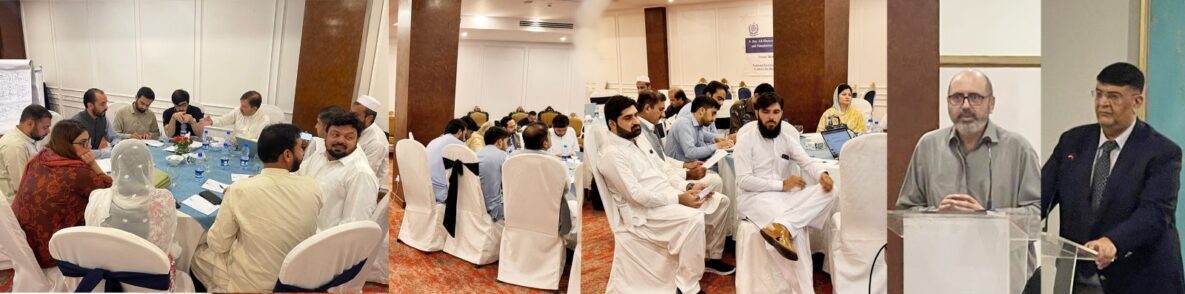
ISLAMABAD: The Health Department, Government of Khyber Pakhtunkhwa, in partnership with the National Institute of Health (NIH), successfully concluded a five-day All Hazard Rapid Response Teams (RRT) Training fallowed by Simulation Exercise in Islamabad.
The training programme, held from September 8 to 12, brought together health professionals, field experts and technical practitioners to enhance provincial preparedness and strengthen emergency response capacity against outbreaks, disasters and public health threats.
The opening session was inaugurated by Dr. Muhammad Salman, Chief Executive Officer, NIH along with Programme Manager, IDSR,and Director Health Services Khyber Pakhtunkhwa Dr.Muhamamd Salim and Chief CDC NIH Dr.Mumtaz Ali Khan.
On this occasion on behalf of Health Department Khyber Pakhtunkhwa, Director Dr.Muhammad Salim remarked that public health response is critical and requires a systematic approach.
With the involvement of multi-sectoral and interdisciplinary stakeholders, RRT training will ensure timely interventions during hazards, outbreaks or disease emergencies, achieving the desired outcomes,he added.
CEO NIH Dr.Salman said in his remarks that very purpose of this training is health security, monitoring of disease outbreaks, disease surveillance and timely response. He added that NIH aim is to build the capacity of provinces so that they can better monitor and respond to outbreaks.
Chief CDC NIH Dr.Mumtaz Ali Khan also spoke on the occasion and shed light on significant approach of multi sectoral and multi disciplinary rapid response teams training program.
During the Five days long session, public health expert Dr. Mudassar delivered detailed lectures on the overall structure, composition and management of Rapid Response Teams, along with sessions on the Public Health Emergency Operations Centre (PHEOC) and the Incident Management System (IMS).
He also guided participants on rapid risk and needs assessments, infection prevention and control (IPC), psychological first aid, and outbreak investigation under the one-health approach.
Similarly, field expert Ahmad Ali explained the role of Integrated Disease Surveillance and Response (IDSR) in emergencies and provided training on staffing, rostering management and data reporting during crises.
Dr. Minahil Ahmed led sessions on pre-deployment readiness and occupational health and safety protocols, besides discussing post-deployment activities and after-action reviews to ensure continuous learning from field operations.
Dr. Nosheen Awan conducted specialized sessions on active case finding and contact tracing, as well as outbreak investigation methodologies.
Communication Specialist Ms. Nazia Hassan focused on community engagement, emergency risk communication and the monitoring and evaluation of RRT activities, stressing the need for effective interaction with communities during health crises.
Practical components of the training included infection prevention and control skill stations covering PPE use, hand hygiene and chlorine solution preparation. The programme also featured multiple simulation exercises such as RRT activation, health facility interviews, patient interviews, community engagement, and contact tracing. Participants prepared investigation reports during the final simulation, which were presented to facilitators for feedback in plenary sessions.
In the concluding session, Team Leaders Dr. Sadia Liaqat, Dr. Musab and Dr. Robina Riaz, along with their teams, presented detailed reports of real-time simulation activities carried out during the training.
Officers from the Health Department, Information and Public Relations Department, Livestock Department, Environmental Protection Agency, PDMA, Rescue 1122, and Public Health Engineering Department participated in the training programme.At the closing ceremony, certificates of appreciation were awarded to successful participants.
