
BY: Syed Fawad Ali Shah
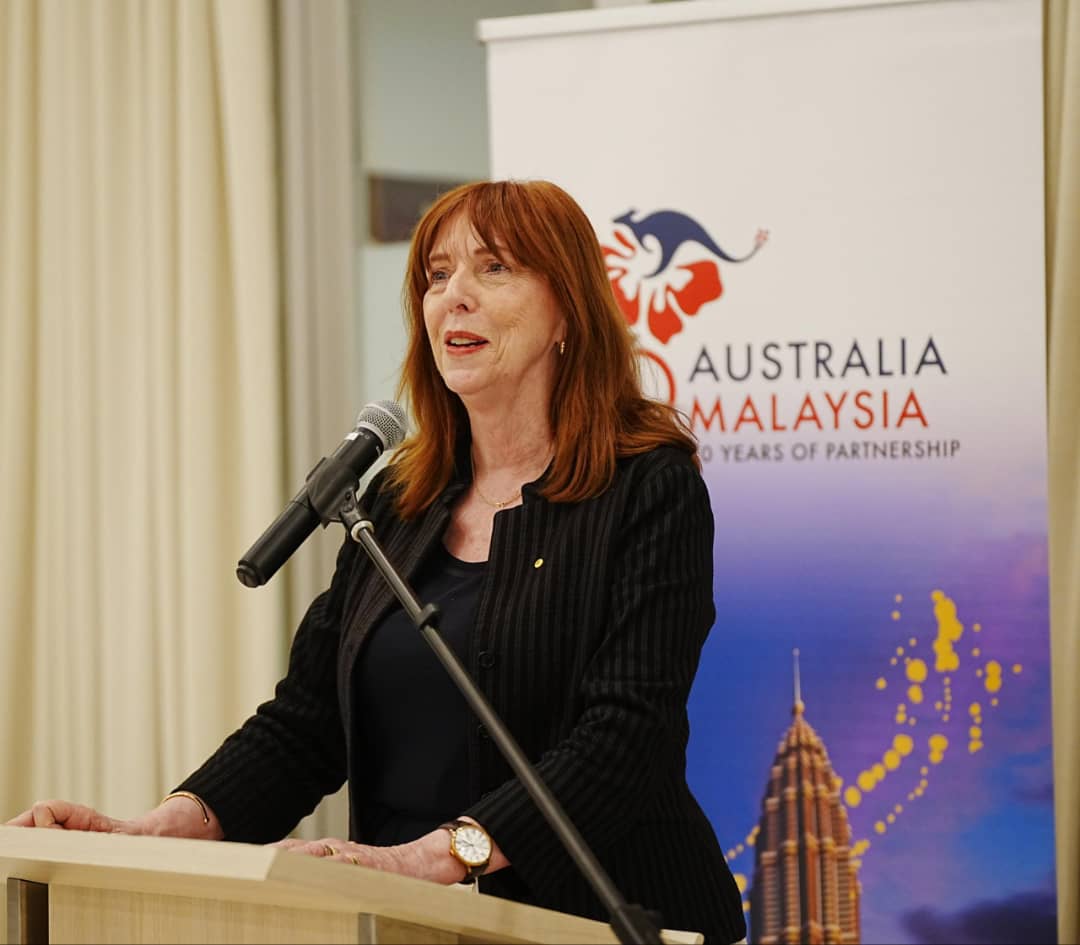
KUALA LUMPUR – In yet another graceful celebration of Australia–Malaysia friendship, the Australian High Commission has unveiled a magnificent new mural on its front fence, marking 70 years of Australia’s diplomatic presence in Malaysia. The artwork has already become the talk of the city, attracting admiration for its beauty, depth, and powerful message of unity. The mural stands as a vibrant symbol of the deep cultural connection between Australia’s First Nations people and Malaysia’s Orang Asli communities, echoing shared respect for nature, heritage, and identity. The launch featured a traditional Australian First Nations smoking ceremony, led by renowned artist Wayne Quilliam, an ancestral practice performed for thousands of years to promote wellbeing and spiritual harmony. Adding to its uniqueness, the mural beautifully combines First Nations art with traditional Orang Asli weaving, representing the enduring bond between the two nations. The ceremony was graced by the Governor of Victoria, Malaysia’s Minister of Tourism, Arts & Culture Dato’ Sri Tiong King Sing, and senior representatives of DBKL — reflecting the high-level support for this cultural collaboration. The artwork was created using authentic Australian ochre — a sacred natural pigment from the outback — painted onto Malaysian-made ECOPEAL panels crafted from recycled beverage containers, showcasing sustainability and creativity in perfect harmony. A remarkable partnership between Australian artist Prof. Wayne Quilliam and Malaysian Indigenous artist Shaq Koyok, the mural is not just art — it is a heartfelt tribute to 70 years of friendship, cooperation, and shared values. The Australian High Commissioner to Malaysia, Her Excellency Danielle Heinecke, encouraged the public to visit the mural, take photos, and tag the High Commission — an invitation that has already sparked excitement among art lovers and the wider community. This mural stands as a glowing reminder that the Australia–Malaysia partnership is not only strong diplomatically, but also deeply rooted in cultural respect, shared stories, and people-to-people ties.
