
Ramzan Mughal
President of Baburi Forum, Islamabad
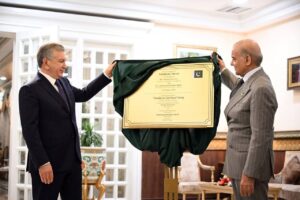
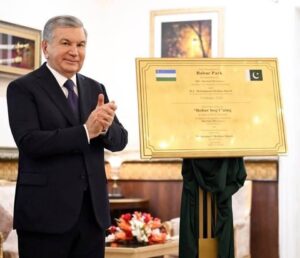
The recent unveiling of the commemorative plaque for Babur Park in Islamabad’s Sector F-7, Islamabad by Prime Minister Muhammad Shehbaz Sharif and Uzbek President Shavkat Mirziyoyev is more than a diplomatic ceremony; it is a profound reclamation of shared heritage. This landmark, situated in the heart of Pakistan’s capital, serves as a physical manifestation of the deep historical ties that bind Pakistan and Uzbekistan. This initiative follows a significant Memorandum of Understanding between the Baburi Forum Islamabad and the Babur International Public Foundation of Uzbekistan, aimed at celebrating the birth anniversary of Zahiruddin Muhammad Babur annually. Beyond mere celebration, these efforts seek to illuminate the footprints of the great king for the Pakistani youth, reminding a new generation that their cultural and historical landscape was shaped by a visionary who bridged the gap between Central and South Asia.
Babur’s legacy is often viewed through the lens of military conquest, yet his true contribution lies in the sophisticated administrative and social foundations he established. He was a pioneer of fair governance, introducing efficient revenue collection methods that emphasized agrarian development and equitable taxation. Unlike many conquerors of his era, Babur was deeply committed to the concept of justice, a trait that earned him the respect of his subjects and peers alike. His approach to leadership was defined by cultural assimilation rather than erasure; he respected local traditions while seamlessly integrating Persian influences into the governance and courtly culture of the region. This synthesis created a unique socio-political identity that allowed the Mughal Empire to flourish for over three centuries, shaping the artistic and administrative expression of South Asia for generations to come.
The intellectual depth of Babur is perhaps best captured in his most significant literary contribution, the Baburnama. An autobiographical account written in his native Chagatai Turkish and later translated into Persian, the text offers an intimate glimpse into the mind of a warrior-poet. It provides a detailed chronicle of his battles and reflections, but it also reveals a man with a profound love for nature. His meticulous descriptions of the flora, fauna, and landscapes of the regions that comprise modern-day Pakistan highlight an aesthetic sensibility that would eventually define Mughal architecture. The famed Shalimar Gardens in Lahore are a direct continuation of the “Charbagh” or paradise garden concept that Babur cherished, proving that his vision was as much about beauty and symmetry as it was about power.
Born in 1483 in Andijan, present-day Uzbekistan, Babur carried the weight of a formidable lineage as a descendant of both Tamerlane and Genghis Khan. While he inherited the strategic brilliance of his ancestors, he utilized it to build an empire characterized by resilience and intellectual vigor. Though he passed away in 1530, his story remains a testament to statesmanship and the enduring influence of cultural synthesis. Today, as scholars and historians continue to explore his contributions, Babur stands as a vital historical bridge between Pakistan and Uzbekistan. The construction of Babur Park in Islamabad is a timely reminder of these ancient connections, urging us to look back at our shared history to find the inspiration for a more integrated and culturally rich future.
