

By Junaid Qaiser
Diplomatic relationships often move in cycles — moments of urgency followed by periods of recalibration. Pakistan and the United States have experienced both. What is emerging now, however, feels less reactive and more deliberate: a relationship that is increasingly anchored in long-term strategic alignment rather than short-term necessity.
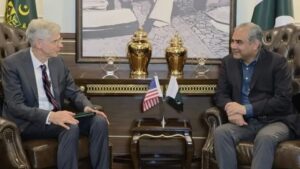
During meetings in Islamabad between Interior Minister Mohsin Naqvi and senior American officials, including Assistant Secretary of State for South and Central Asian Affairs John Mark Pommersheim and Chargé d’Affaires Natalie A. Baker, both sides agreed to expand cooperation not only in counterterrorism but also in mining, minerals, and energy. That dual focus matters. It signals a recognition that long-term stability cannot rest solely on security operations; it must be reinforced by economic growth and shared investment.
This evolution is significant. While security cooperation is crucial, it alone can’t define a modern bilateral partnership. Counterterrorism efforts have undoubtedly saved lives and safeguarded shared interests, but lasting relationships are built on trade, investment, technological collaboration, and trust between institutions. By merging economic opportunities with security efforts, Pakistan and the United States are establishing a stronger connection—one that can withstand political fluctuations.
The United States’ firm condemnation of the recent terrorist attacks in Islamabad and Quetta sent a powerful message of solidarity. Today’s terrorism knows no borders; it’s adaptive, fragmented, and often crosses national lines. Both nations recognize that working together on intelligence-sharing, border management, and internal security is essential. It’s a necessity we share.
However, what stands out is the parallel emphasis on economic engagement. Pakistan’s untapped reserves of copper, gold, and other critical minerals have placed it on the radar of global supply chain strategists. In an era where energy transition and advanced manufacturing depend heavily on reliable access to essential materials, Pakistan’s mineral potential is no longer just a domestic resource question — it is part of a broader global equation.
The proposed large-scale American support for the Reko Diq copper-gold project reflects this growing strategic alignment. Investment at that scale signals confidence — not charity. It suggests that Washington sees Pakistan not merely through a security lens, but as a serious economic partner capable of contributing to diversified and resilient global supply chains.
At the same time, discussions in Congress highlight that Pakistan still plays a significant role in the larger South Asian strategic picture. There’s a growing acknowledgment that a stable Pakistan is crucial for regional balance. A secure and economically sound Pakistan helps to minimize unpredictability and fosters a sense of stability—outcomes that are in line with global interests.
For Islamabad, the message is just as important. Engaging in a balanced and forward-thinking manner requires consistency on the home front. Investors are looking for clear regulations, transparent governance, and dependable policy direction. Promises of safe operating conditions need to be backed up by real reforms, better infrastructure, and more efficient institutions.
What is encouraging is the tone emerging from both capitals. The language is less transactional and more strategic. The emphasis is not solely on immediate threats but on long-term opportunity. That signals maturity.
Pakistan’s foreign policy has diversified over the years, and it must continue to do so. But diversification works best when anchored in stable, constructive ties with major global actors. Engagement with Washington in minerals, energy, agriculture, and security complements — rather than contradicts — Pakistan’s broader diplomatic outreach.
What defines this moment is the attempt to replace episodic cooperation with structured engagement — to shift from crisis management to strategic planning. If both sides follow through on commitments — deepening counterterrorism coordination while unlocking economic potential — this balanced, forward-looking approach could solidify into something more durable: a partnership rooted not only in necessity, but in opportunity.
That would mark not just a reset, but a strengthening — a bond built on shared security and shared prosperity.
