
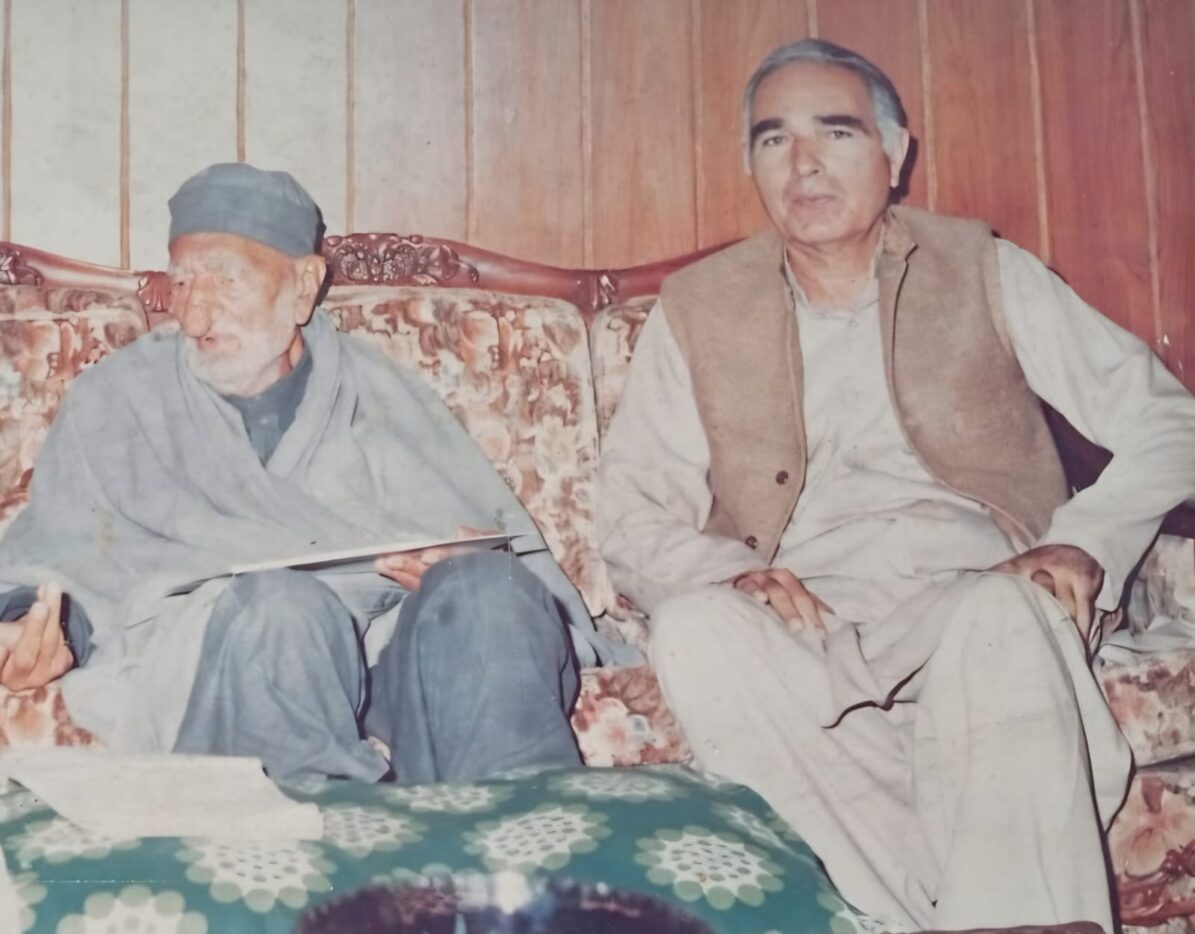
A lawyer, nationalist politician and former parliamentarian, he remained associated with democratic and progressive politics throughout his career
By Shamsul Haq
Abdul Khaliq Khan (September 14, 1925 – November 9, 1992) was a prominent progressive politician, lawyer and nationalist leader from Hoti, Mardan, who played a significant role in Pakistan’s parliamentary and political landscape. Inspired by leftist and Marxist political thought, he remained an influential voice in progressive and nationalist politics and was associated with the Awami National Party (ANP) during the later years of his political career.
Born in Hoti, Mardan, on September 14, 1925, Abdul Khaliq Khan received his education at Islamia College Peshawar before pursuing legal studies at Sindh Muslim Law College. His professional career included legal practice, public prosecution and judicial service. He served as a public prosecutor from 1958 to 1963 and also held the position of District and Sessions Judge in Bannu during 1964–65. Interestingly, he won the slot by securing top position in the competitive examination held for the post at West Pakistan level.
Khan initially entered politics through the Muslim League but later joined the Pakistan People’s Party (PPP) in 1967. His political career gained national prominence in the 1970 general elections when he was elected to the National Assembly from Mardan on a PPP ticket. He was the lone MNA of PPP from the then NWFP.
However, his political differences with then prime minister Zulfikar Ali Bhutto eventually led to a fallout, followed by his imprisonment. Subsequently, he joined the National Awami Party, where he emerged as an important political figure, serving as the party’s provincial president and central general secretary. The main reason of his parting ways with Bhutto was inclusion of feudals/capitalists like the Nawabs of Hoti and Mir Afzal Khan in PPP folds.
His political activities and opposition to authoritarian rule brought him into conflict with the military government of General Zia-ul-Haq, during whose martial law period he was imprisoned.
Despite political challenges and imprisonment, Khaliq Khan continued his struggle for parliamentary democracy and progressive politics. In the 1988 general elections, he was once again elected to the National Assembly, this time from Swabi, defeating PPP candidate Abdul Mastan Khan.
In recognition of his political standing and experience, he was subsequently elected to the Senate of Pakistan, where he served from 1990 until 1992.
Abdul Khaliq Khan passed away on November 9, 1992, leaving behind a political legacy rooted in progressive thought, nationalism and parliamentary engagement. His journey from the legal profession to national politics reflected a career marked by ideological commitment, political disagreements and a sustained role in the democratic struggles of his time. His survivors include his only son, Aurangzeb Khan, and three daughters. His son, Aurangzeb Khan, has been an active political worker, while his daughter-in-law, Shazia Aurangzeb, served as a member of the Provincial Assembly.
Abdul Khaliq Khan will always be remembered as a notable political figure in the history of Mardan and the wider political landscape of Khyber Pakhtunkhwa.
