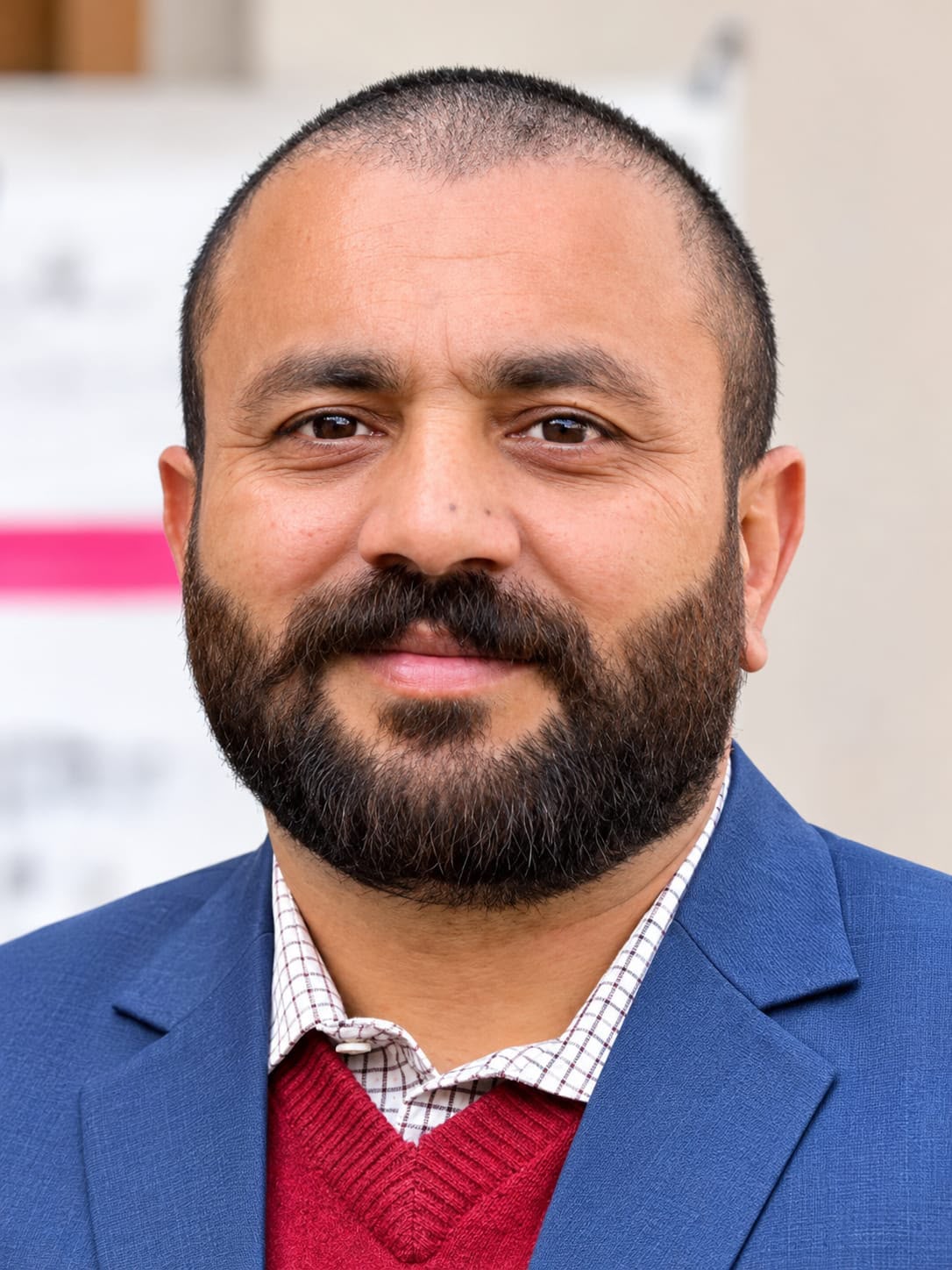
By:Atta Ur Rahman Kohistani
The human cost of disasters goes beyond physical destruction
When a disaster strikes, the immediate priorities are clear: saving lives, rescuing stranded people, providing food and clean water, restoring healthcare services and arranging temporary shelter. Governments, humanitarian organisations and emergency responders rightly focus on these urgent needs.
Yet, beyond the visible destruction of homes, roads, bridges and public infrastructure, disasters leave another devastating legacy—one that is often overlooked in national planning and recovery efforts: the psychological and social consequences for individuals, families and entire communities.
Fear, grief, uncertainty, helplessness and the loss of security are common experiences during emergencies. The World Health Organization (WHO), in its 2025 fact sheet on mental health in emergencies, confirms that almost all people affected by emergencies experience psychological distress, although these reactions typically improve over time. For some, however, distress can develop into more persistent mental health difficulties. Emergencies can also disrupt existing healthcare services, leaving people already receiving mental health support particularly vulnerable.[1]
For Pakistan, this is not merely a public health concern. It is a development challenge, a social protection issue and an essential dimension of disaster risk reduction.
Our country experiences recurring floods, earthquakes, landslides, droughts and other climate-related emergencies. These disasters frequently intersect with poverty, displacement, unemployment, inadequate healthcare access and environmental degradation, placing additional pressure on already vulnerable communities.
A family that loses its home may simultaneously lose its livelihood, social connections and sense of security. A child displaced by flooding may lose access to education, familiar surroundings and friendships. Women living in temporary accommodation may face heightened protection risks, while older people and persons with disabilities may encounter additional barriers to evacuation, information and emergency assistance.
These realities highlight an important truth: disaster vulnerability is not determined by geography alone. It is also shaped by people’s economic circumstances, physical abilities, social relationships and psychological wellbeing.
We cannot claim to have built resilient communities if we have prepared their infrastructure but overlooked the people who depend on it.
From disaster response to community preparedness
Pakistan has made important progress in strengthening its disaster risk management framework. The National Disaster Risk Reduction Strategy 2025–2030, developed by the National Disaster Management Authority (NDMA), represents an important policy direction towards proactive, risk-informed, inclusive and sustainable disaster preparedness. Its priorities include strengthening disaster governance, investing in resilience, modernising preparedness and response, promoting community participation and incorporating ecosystem-based approaches.[2]
However, the success of any national strategy depends on how effectively it translates into action at provincial, district and community levels.
Resilience cannot be created exclusively through government offices, policy documents or emergency response institutions. It must be built within communities themselves.
A community that understands its local risks, trusts its communication networks, knows evacuation procedures, identifies households requiring additional assistance and has trained individuals capable of providing basic psychosocial support is considerably better prepared than one that waits for external assistance after a disaster strikes.
This requires a fundamental change in how we approach mental health in disaster management. Mental health and psychosocial support (MHPSS) should not be treated as optional services introduced after an emergency. They must become integral components of disaster preparedness, response and recovery.
The WHO recommends incorporating mental health and psychosocial support into emergency preparedness plans, strengthening community support systems and equipping frontline workers with psychological first aid skills.[1]
Schools, universities, primary healthcare facilities, local governments, community organisations and civil society institutions can collectively form the foundation of this approach.
Teachers can be equipped to recognise psychological distress among children. Lady Health Workers and frontline healthcare personnel can receive training to identify people requiring additional support and facilitate appropriate referrals. Community volunteers can learn psychological first aid, while local leaders can help counter misinformation, reduce stigma and strengthen community trust.
These interventions do not necessarily require expensive infrastructure. They require investment in people, training, coordination and locally accessible support systems.
Communities must be partners, not merely recipients
One of the most important lessons from disaster management is that communities should never be viewed simply as passive beneficiaries of humanitarian assistance.
They are knowledge holders, problem-solvers and essential partners in building resilience.
The Inter-Agency Standing Committee’s Guidelines on Mental Health and Psychosocial Support in Emergency Settings emphasise coordinated, multisectoral approaches that connect community mobilisation, protection, education, health services and psychosocial support.[3]
This principle deserves far greater attention in Pakistan’s disaster risk reduction agenda.
Before developing a preparedness programme for any community, policymakers and practitioners should ask fundamental questions: What does the community already know about its risks? Who are the people residents trust? Which households are most vulnerable? What local resources and informal support networks already exist? How do women, children, young people, older persons and persons with disabilities experience disasters differently? And, perhaps most importantly, what can the community itself contribute?
These questions can transform disaster management from a predominantly top-down exercise into a genuinely participatory process.
Pakistan’s geographical, cultural and linguistic diversity makes this particularly important. The needs of a flood-affected community in Sindh may differ considerably from those of a remote mountain settlement in Upper Dir, Chitral or Gilgit-Baltistan. A uniform approach cannot adequately address these differences.
Local knowledge, indigenous practices, community leadership and culturally appropriate communication must therefore inform preparedness planning. Communities should be involved in identifying risks, designing interventions and evaluating whether those interventions are working.
Resilience becomes stronger when people recognise themselves as part of the solution.
Environmental protection and mental health are interconnected
Disaster risk reduction cannot be separated from environmental protection and climate resilience.
Deforestation, unplanned construction, encroachment on waterways, poor waste management and the degradation of natural ecosystems can intensify exposure to environmental hazards and undermine the natural systems that protect communities.
Pakistan’s National Disaster Risk Reduction Strategy 2025–2030 recognises the importance of ecosystem-based disaster risk reduction, sustainable development and climate adaptation.[2]
The relationship between environmental change and mental health also deserves greater recognition.
The Intergovernmental Panel on Climate Change (IPCC), in its Sixth Assessment Report, identifies climate-related threats to mental health and wellbeing, alongside the impacts of extreme weather, displacement and disruptions to livelihoods. It also highlights the importance of strengthening healthcare systems, addressing social inequalities and incorporating local and Indigenous knowledge into climate adaptation.[4]
When communities lose their homes, agricultural land, forests, natural resources and traditional livelihoods, the consequences extend beyond economic hardship. People may experience prolonged uncertainty, displacement, grief, loss of identity and anxiety about their future.
For indigenous and remote communities, the loss of ancestral landscapes and traditional ways of life can also weaken cultural identity, social cohesion and intergenerational connections.
Environmental protection should therefore be understood not only as a conservation priority but also as an investment in public health, community wellbeing and long-term resilience.
Pakistan needs stronger coordination between environmental institutions, disaster management authorities, public health departments and local governments. Climate adaptation, ecosystem restoration, community development and psychosocial preparedness should be considered interconnected priorities rather than separate policy agendas.
Protecting forests, rivers, watersheds and natural ecosystems is ultimately part of protecting the communities whose lives and livelihoods depend on them.
Pakistan’s young people: An untapped force for resilience
Pakistan’s young population represents one of its greatest opportunities for strengthening disaster preparedness. Yet young people are frequently positioned as beneficiaries of awareness campaigns rather than active contributors to disaster risk reduction.
It is time to reconsider this approach.
Schools, colleges and universities could establish Youth Resilience and Disaster Risk Reduction Clubs, providing students with practical training in first aid, psychological first aid, emergency communication, climate awareness, community risk mapping and volunteer coordination.
Through structured partnerships with district disaster management authorities, educational institutions and civil society organisations, young volunteers could support early-warning dissemination, community awareness campaigns, identification of vulnerable households and local preparedness exercises.
However, meaningful youth engagement must go beyond distributing information leaflets or organising occasional awareness events.
Young people need practical skills, clearly defined responsibilities and opportunities to contribute to decision-making. They should be recognised as active partners in local resilience planning rather than simply mobilised when emergencies occur.
Investing in youth-led preparedness is also an investment in the future. A generation that understands climate risks, values mental health and possesses the skills to support its communities can help establish a lasting culture of preparedness.
Resilience must include everyone
Disasters do not affect everyone equally. Existing inequalities often determine who faces the greatest risks, who receives assistance first and who struggles most during recovery.
Women, children, older people, persons with disabilities, transgender people, economically disadvantaged households and people experiencing homelessness may face distinct vulnerabilities and barriers to accessing emergency services.
Pakistan’s National Policy Guidelines on Vulnerable Groups in Disasters 2025 (Updated), developed by NDMA, provide an important policy direction by emphasising inclusive disaster management, accessible early-warning systems, protection, social inclusion and context-specific planning. The guidelines also recognise the particular circumstances of remote communities, economically marginalised groups and households facing multiple, overlapping vulnerabilities.[5]
However, the real test of these commitments lies in their implementation.
An early-warning message that cannot be accessed by someone with a hearing impairment is not inclusive. An evacuation centre that fails to provide adequate privacy, safety and dignity for women is not fully prepared. A psychosocial support programme that ignores local languages, cultural sensitivities and existing community structures may fail to reach those who need it most.
Inclusion must therefore be built into disaster preparedness from the outset.
This requires accessible communication, gender-sensitive evacuation arrangements, disability-inclusive emergency planning, appropriate referral mechanisms and psychosocial services that are culturally and linguistically responsive.
It also means ensuring that vulnerable groups are not simply consulted but actively represented in decisions that affect their safety and recovery.
Five priorities for a more resilient Pakistan
Translating this vision into practice requires coordinated efforts across government institutions, healthcare systems, educational institutions, environmental organisations and local communities. Five priorities deserve particular attention:
1. Integrate mental health into disaster risk reduction.
National, provincial and district disaster preparedness and response plans should explicitly incorporate mental health and psychosocial support, including preparedness activities, referral pathways, basic psychosocial interventions and continuity of care for people with existing mental health conditions.
2. Strengthen community-level preparedness.
Lady Health Workers, teachers, community volunteers, social workers, primary healthcare personnel and emergency responders should receive appropriate training in psychological first aid, recognising signs of distress and facilitating timely referrals.
3. Empower young people as resilience partners.
Schools, colleges and universities should establish youth disaster risk reduction clubs and volunteer networks connected with district disaster management structures, giving young people practical skills and meaningful responsibilities.
4. Put communities and local knowledge at the centre.
Participatory risk assessments, community consultations and locally led planning should become standard practice. Indigenous knowledge, cultural practices, local languages and existing social networks must inform interventions, particularly in remote and underserved areas.
5. Measure resilience beyond infrastructure.
The success of disaster risk reduction should not be measured exclusively by the number of roads restored, buildings reconstructed or emergency supplies distributed. Equally important indicators should include the restoration of family stability, children’s return to education, access to mental health services, recovery of social support networks and communities’ confidence in facing future emergencies.
These priorities are achievable, but they require political commitment, institutional coordination and sustained investment in community-level capacity.
Beyond survival: A new vision for Pakistan
Pakistan cannot prevent every flood, earthquake, landslide or climate-related emergency. However, it can significantly reduce their human cost.
We can build stronger infrastructure, improve early-warning systems, strengthen emergency services, restore degraded ecosystems and protect livelihoods. But we must also recognise that people need psychological support, trusted relationships, social protection and a sense of collective security to withstand and recover from disasters.
A truly resilient community is not one that never experiences fear, grief or disruption. It is one that possesses the knowledge, relationships, resources, institutions and support systems necessary to recover with dignity and rebuild its future.
The Sendai Framework for Disaster Risk Reduction 2015–2030, adopted by UN Member States, recognises that disaster resilience requires understanding risk, strengthening governance, investing in resilience and improving preparedness for effective response and recovery.[6] Pakistan’s own disaster risk reduction agenda must translate these principles into meaningful improvements in people’s everyday lives.
As Pakistan moves towards a more proactive and inclusive disaster risk management system, mental health must no longer remain on the margins of policy discussions. It belongs at the heart of preparedness, response and recovery.
The next disaster will test more than our emergency response capacity. It will test the strength of our communities, the inclusiveness of our institutions and our willingness to protect the psychological wellbeing of those affected.
When the next flood comes, when another earthquake strikes or when climate-related emergencies disrupt people’s lives, we should certainly ask how many lives were saved.
But we must also ask: How many families were supported? How many children regained a sense of security? How many people received the psychological support they needed? How quickly did communities recover their social connections and livelihoods? And how much better prepared are they for the next emergency?
Resilience is not simply the ability to survive a disaster. It is the ability to recover, rebuild and move forward with dignity.
Pakistan must prepare for the next disaster not only by strengthening what we build, but also by investing in the people, communities and natural environments that sustain our future.
—
About the Author
Atta Ur Rahman Kohistani is a community development expert, social worker and environmental activist with a strong interest in mental health, psychosocial wellbeing, environmental sustainability and inclusive development. His work and advocacy focus on community empowerment, social inclusion, indigenous and remote communities, and strengthening locally led approaches to sustainable development and disaster resilience in Pakistan.