
Sabahat Sarwar
In a society where women stepping into public leadership roles often face resistance, a young woman in Peshawar has turned criticism into a catalyst for change. With quiet determination and an unwavering commitment to service, Maroof Mahmood is not only empowering youth through education but also building a culture of compassion and collective responsibility one initiative at a time.
Maroof, an educationist and entrepreneur by profession, began her journey with a clear vision to equip young people with practical skills that could transform their futures. She established her academy with the aim of providing diverse courses designed to enhance employability and self-reliance among the youth. The defining moment in her journey came during the COVID-19 pandemic, when economic hardship gripped countless families. Amid this crisis, Maroof witnessed the devastating reality of individuals unable to afford even the basic expenses required for the dignified burial of their loved ones. Deeply moved, she and her close circle of friends stepped in, pooling their personal resources to support approximately ten to eleven families in arranging respectful funeral services during their time of loss.
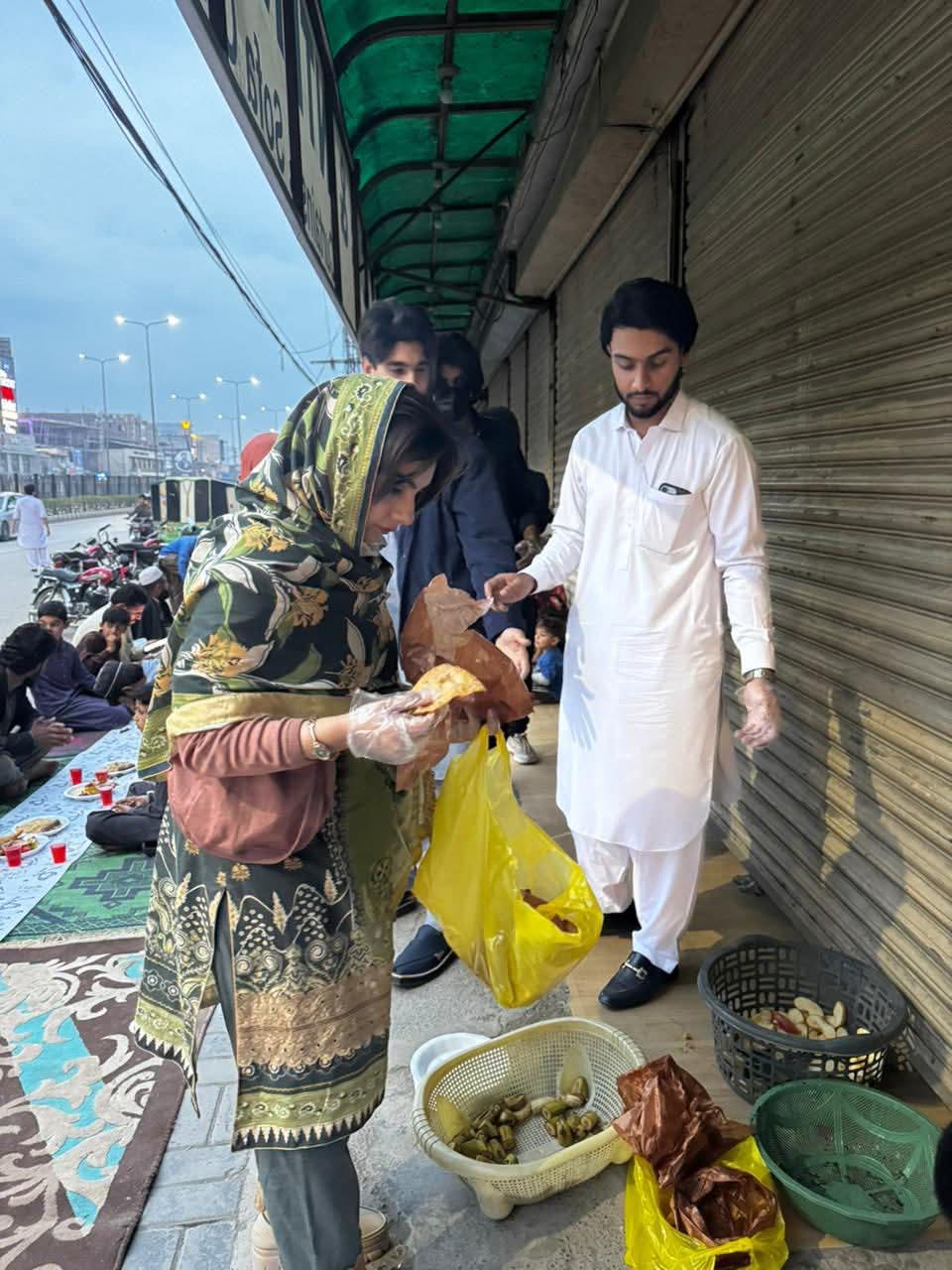
This experience led to the formal establishment of the Maroof Wellbeing Foundation in 2021, an organization dedicated to supporting underprivileged communities while continuing to prioritize education and youth development. Among the foundation’s most impactful initiatives is its roadside iftar dastarkhwan, organized every year during the holy month of Ramadan. Over the past four years, what began as a modest effort has grown into a large-scale community service, now providing daily iftar meals to more than 250 people. Maroof personally contributes 50 percent of the expenses, while the remaining 50 percent is donated by her former students many of whom have successfully secured jobs after receiving training at her academy and now actively give back to society.
Her journey, however, has not been without challenges. In the early stages, Maroof faced significant criticism, particularly as a woman working publicly in social welfare. Yet, her consistency and sincerity gradually transformed skepticism into support. Beyond the iftar initiative, the foundation runs several parallel programs during Ramadan. These include ration distribution drives, blood donation camp, free IT courses and Teri Meri Eidi, a heartfelt initiative aimed at sharing joy with children from orphanages.
At the core of Maroof’s mission is a strong belief in the power of education and skill-building. She emphasizes that sustainable change begins with empowering individuals to stand on their own feet and pursue meaningful career paths.
