
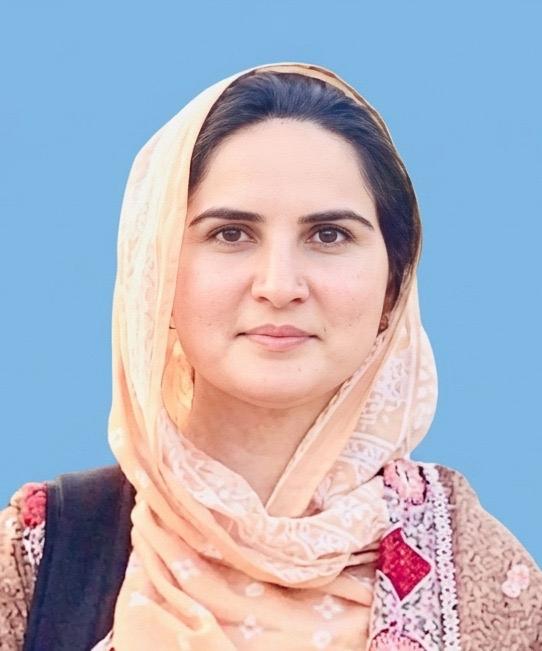
Wajeha khan (Mphil Scholar )
Classrooms holds significant influence over the maturation and advancement of the nations. The future of any nation is not predetermined, but rather it revolves arounds the classrooms .The classroom shapes the future generations by stimulating their ,cognitive, behavioral ,social ,emotional development and directly influences Economic growth ,Technological advancement and provides a proper system to facilitate education. This system includes an adequate learning environment ,teachers, curricula, assessments ,and rewards. The modern classrooms are shifting towards Personnalized ,flexible Technology based learning(e.g Virtual ,AI and flexible adaptable multi.functional areas)..’’ Classrooms are the fundamental catalysts of the education. It shapes the character, skills, creativity ,intellects of the youth, they determine country’s economic prosperity political stability and national harmony.
According to Abraham Lincolon, ‘’The philosophy of a school room in one generation will be the philosophy of government in next generation.’’ However ,in the current times of global competitiveness we have fallen significantly behind .The dynamics of empowerment through knowledge is absent in Pakistan”s Educational system. This system fails to equip students with the tools to enhance the intellectual empowerment .The efforts of National Curriculum of Pakistan(NCP) have been introduced to standardize learning ,but the reality on the ground often remain stagnant.
The gap between what is taught in Pakistani classrooms and the requirements of 21st Century are different. Textbooks often focuses on theoretical concepts that have not changed uptill now, particularly in science and technology. Lack of future skills subjects like AI ,Data Science ,Digital literacy are rarely integrated into core curriculum at primary and secondary level .History and social studies often rely on narratives that have not been updated to reflect global modern prespectives. As a result ,graduates often enter the job market are ill equipped to compete in a rapidly evolving global digital economy. To bridge this divide ,educational policymakers must urgently modernize the syllabus ,shifting the focus from rote memorization to practical,tech-driven learning.Besides, In the face of realities the literacy percentage level of our country still represents the miserable picture of education. The literacy level in Pakistan remained just at the level of 57.7%(69.5% for male and 45.2% for female ). Despite the introduction of more than 20 policies and action plans since in Balochistan ,rural Sindh ,FATA and rural Southern Punjab is much backward in this regard. According to the economic survey of Pakistan currently large number of schools are without basic infrastructure facilities . i.e around 33% primary schools are without boundary walls ,drinking water, toilets facilities and electricity etc. so emphasis is to increase public spending on education to the extent of at least 4-6% of GDP or atleast 15 -20% of total public expenditure .
Pakistan can move forward by taking these areas in considerations.Uniformity of Educational systems, Updating Curriculum ,Implementing policies ,Improving Examination systems and introducing digital and technological assessment tools to reshape classrooms by developing critical skills .In addition ,technology enabled assessment practices be introduced that will promote self assessment and reflective practices in learning. The technologies like Mark Perception ,Moodles and online Learning Logs be introduced for Quizzes, Tests, Peer reviews ,, and submission portals of assignments for grading and reflection of the students to track their progress .
In conclusion we can say that ,the Future of Pakistan cannot be secured by political rhetoric alone , but rather can be secured by radical shift from old system to skilled -based educational framework. By investing in Teacher’s training ,modernizing curricula digital Literacy, and STEM Education. If Pakistan wants to secure a dignified position in the international community it must reform classrooms with advanced technologies ,transparent examinations , and merit system . Consequently, the choices made by policy makers ,educators ,and society today will echo for generations. And ultimately ,the prosperous Pakistan cannot be written by the ink of legislative decrees, but by the pen in the hands of its teachers and spark in the eyes of its youth.
