
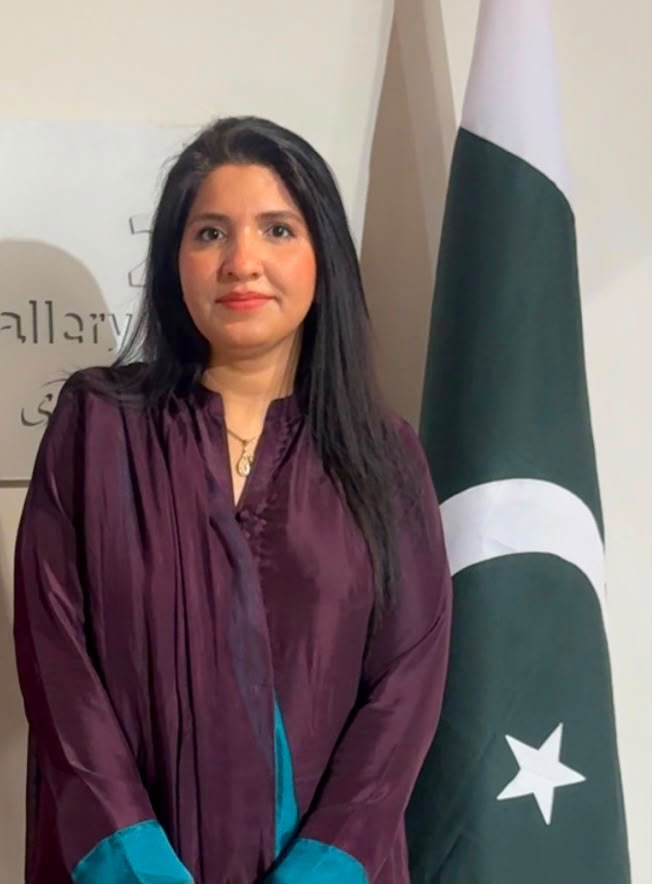
By:-Dr Gul.i.Ayesha Bhatti
Four years after the car bombing that killed Daria Dugina near Moscow on 20 August 2022, her memory continues to carry a significance that extends beyond the circumstances of her tragic death. She was only 29 when her life was cut short, yet in her brief intellectual and public career she had already emerged as a distinctive young voice within contemporary Eurasian thought. To those who followed her work, she was not simply the daughter of Alexander Dugin, but a journalist, political commentator and thinker who sought to engage with some of the most fundamental questions of her time: What is Russia? What is Europe? Can civilizations retain their distinct identities in an increasingly globalized world? And is a multipolar international order possible?
Daria Dugina belonged to a generation that came of age after the collapse of the Soviet Union, a generation confronted with the question of Russia’s historical identity and future direction. Her intellectual search led her towards Eurasianism, the Fourth Political Theory and older philosophical and traditionalist currents. Yet her intellectual interests were never confined to Russia alone. Europe, and particularly France, occupied an important place in her intellectual development.
This broader intellectual engagement was one of the most distinctive features of Dugina’s work. During her academic engagement with France, she developed a sustained interest in French philosophy and political thought and closely examined the intellectual tradition associated with the French New Right. She was particularly interested in the idea that political transformation does not begin only with governments, elections or institutions, but also with culture, education, historical memory and the struggle over ideas themselves.
For Dugina, books, journals, universities, lectures and intellectual networks were not peripheral to politics. They were themselves arenas of political and civilizational contestation. This understanding of metapolitics, the struggle to shape the cultural and intellectual foundations of society, formed an important part of her intellectual worldview.
Her conception of Europe was equally significant. Dugina did not see Europe merely as an institutional or bureaucratic entity. Instead, she viewed it as a civilization shaped by diverse historical peoples, languages, philosophical traditions, religious experiences and cultural identities. In her vision, a genuinely sovereign Europe would not necessarily abandon its relationship with Russia, nor would it surrender its own distinct identity. Rather, she imagined the possibility of Europe emerging as an independent civilizational and geopolitical pole within a multipolar world.
This was closely connected to her broader understanding of Eurasia. Dugina believed that the world should not be organized around a single political, ideological or civilizational centre. Her intellectual preference was for what she described as a plural world; a world in which different civilizations could follow their own historical paths and develop political systems rooted in their own cultural experiences.
Such ideas inevitably placed her in direct opposition to liberal universalism and to the assumption that one political model could serve as the final destination for all societies. She was deeply critical of globalism, cultural standardization and the dominance of a single geopolitical order. At the same time, her worldview was not based simply on a rejection of the West. Her extensive engagement with European philosophy and the French intellectual tradition demonstrates that she was interested in recovering alternative intellectual currents within Europe itself. She distinguished between institutional Europe and what she considered Europe’s deeper civilizational identity.
Her intellectual journey was also closely connected with the legacy of her father, Alexander Dugin. It is impossible to understand Daria Dugina’s intellectual formation without acknowledging his influence. For decades, Alexander Dugin has been one of the most prominent and controversial Russian thinkers associated with Eurasianism, civilizational identity and the critique of a unipolar world.
Yet reducing him to simplistic labels does little justice to the complexity of his intellectual project. His work has consistently raised questions about sovereignty, civilization, cultural identity and the possibility of a multipolar international order. Whether one agrees with his conclusions or not, these questions have become increasingly relevant in a world marked by strategic rivalry, the rise of non-Western powers and growing debate over the future structure of global order.
Daria inherited this intellectual environment but represented a new generation. She brought these debates into contemporary media and political discourse, engaging not only with Russian intellectual traditions but also with European philosophy, anti-globalist thought and broader debates about sovereignty and identity. Her intellectual approach often moved beyond conventional distinctions between Left and Right. For her, the more fundamental political divide concerned the relationship between globalism and the sovereignty of peoples and civilizations.
Her interest in the Fourth Political Theory further reflected this search for alternatives to the dominant ideological categories of the twentieth century. She explored the possibility that different civilizations might draw upon their own histories, traditions and cultural experiences to develop political models suited to their particular circumstances. At the centre of this thinking was a rejection of the isolated individual as the sole measure of political life and a greater emphasis on history, culture, community and collective identity.
Of course, Daria Dugina was also a controversial political figure. Her public positions, particularly on Russia and Ukraine, generated strong criticism internationally. Any serious remembrance of her must acknowledge this reality. But disagreement with a person’s political ideas should not diminish the tragedy of a young intellectual losing her life to political violence.
Her death was therefore both a personal and political tragedy. For Alexander Dugin, it was the loss of a daughter and intellectual companion. For those who shared her worldview, she became a symbol of commitment to sovereignty, tradition and a multipolar vision of world order. For others, her legacy remains deeply contested.
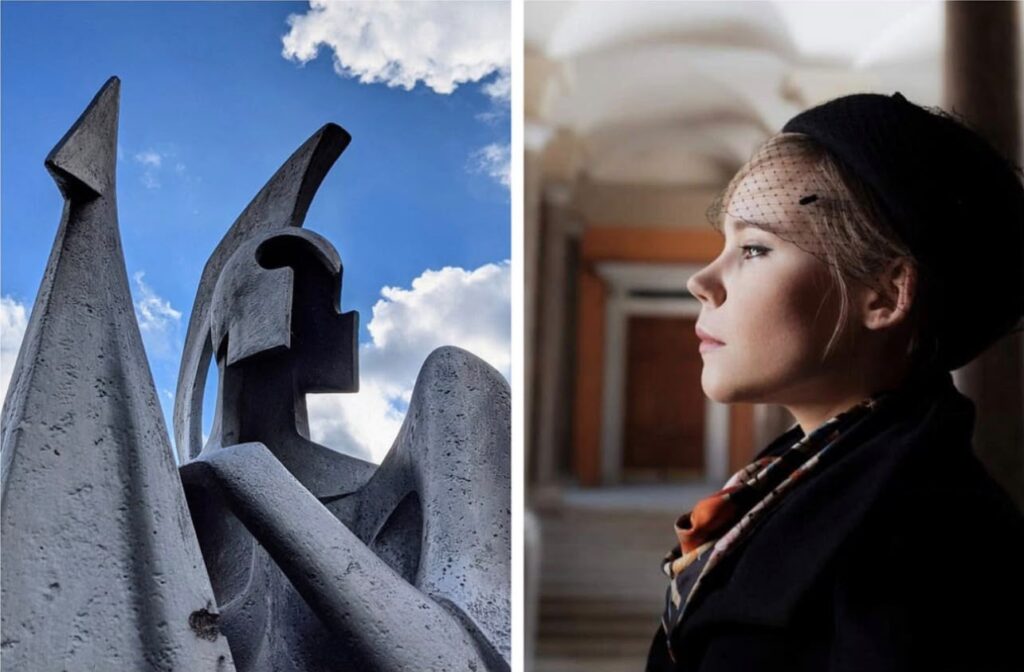
But perhaps this contestation itself explains why her memory continues to matter.
Daria Dugina lived at a moment when geopolitical competition was increasingly accompanied by a struggle over narratives, identity and the meaning of civilization itself. She belonged to a generation for whom the debate about the future international order was not confined to academic conferences or philosophical texts. It had entered public life, media and politics.
On the fourth anniversary of her death, Daria Dugina can therefore be remembered as more than the daughter of a famous and controversial philosopher. She was a young intellectual voice who attempted to engage with questions of Eurasia, Europe, sovereignty, tradition and multipolarity from her own intellectual perspective.
Her life was brief, but her intellectual curiosity was expansive. She moved across philosophical traditions and political debates, searching for alternatives to what she regarded as an increasingly uniform global order. Her ideas will continue to be debated and challenged—as all serious political ideas should be.
Yet the tragedy of her death remains beyond debate. Four years later, her story serves as a reminder that ideas are not always confined to books and classrooms. In times of profound geopolitical confrontation, they can enter the arena of political struggle itself. And sometimes, tragically, those who dedicate their lives to ideas become part of that struggle.
