
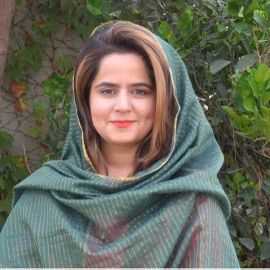
By: Sana Ahmad
Across Khyber Pakhtunkhwa (KP), transgender persons continue to face economic hardship that extends far beyond unemployment. While Pakistan has made notable legislative progress in recognising transgender rights, lived realities reveal persistent structural barriers that limit access to education, employment, housing, documentation, and financial stability. Economic exclusion is not incidental; it is produced through layered discrimination tied to gender identity.
According to the 2023 Population Census, 20,331 transgender persons were recorded across Pakistan, with 1,117 identified in Khyber Pakhtunkhwa. Community-based organisations, including the TransAction Alliance, estimate that the actual number in Khyber Pakhtunkhwa may range between 40,000 and 45,000. The discrepancy reflects underreporting driven by stigma, fear of disclosure, and enumeration challenges. Beyond statistics lies a deeper concern: economic vulnerability remains widespread, even among those who are legally recognised.
Educational exclusion remains one of the most significant drivers of economic marginalisation. Many transgender individuals leave school due to harassment, bullying, and institutional neglect. Without protective mechanisms in classrooms, schools often become sites of humiliation rather than opportunity. The long-term consequences are profound. Limited educational attainment restricts access to formal employment and professional training and weakens the pipeline necessary for transgender persons to benefit from public-sector job quotas and vocational initiatives.
Mahi, a transgender woman with a master’s degree, describes the frustration of qualification without opportunity. “I studied hard and completed my master’s degree believing education would change my life,” she says. “But when I apply for jobs, my identity becomes the focus, not my qualification. Today I perform at events because I must survive, not because this reflects my education or aspirations.”
Her experience reflects a broader structural issue. Educational achievement alone does not dismantle stigma within recruitment processes.
The Government of Khyber Pakhtunkhwa has taken positive steps, including announcing a 0.5% job quota for transgender persons in public-sector employment. Such measures signal institutional commitment to inclusion. However, implementation remains inconsistent. Not all departments regularly advertise reserved positions, and many posts require qualifications that a significant portion of the transgender community, previously excluded from education, cannot meet. Even where positions are available, remuneration often does not match rising living costs, particularly for individuals without family support networks.
Farzana Jan, President of the TransAction Alliance, emphasises that policy commitments must translate into real opportunity. “We welcome government measures such as quotas and welfare initiatives,” she notes. “But without consistent implementation, safe workplaces, and wages that meet living costs, these remain symbolic. Transgender persons do not want special treatment they want fair access to dignified work.”
Workplace environments also present challenges. Some transgender employees report being pressured to conform to traditional male dress codes or facing harassment from colleagues. Such conditions undermine retention and discourage others from seeking formal employment.
Beyond employment, transgender persons frequently face higher living costs. Housing discrimination is widely reported, with landlords demanding inflated security deposits, increasing rents arbitrarily, or refusing tenancy altogether. Evictions following neighbour complaints are not uncommon. Frequent relocation increases financial instability and weakens social networks.
Transport adds another layer of burden. Harassment in public spaces forces many to avoid certain routes or incur higher travel costs to ensure safety. Unlike many others, transgender persons rejected by families must independently cover housing, healthcare, food, and personal security expenses. For some, this also includes supporting younger members of their community. The cumulative effect is that transgender persons often pay more simply to live safely.
When formal employment pathways remain restricted, many transgender individuals turn to informal livelihoods. These may include performing at ceremonies, small-scale trading, tailoring, or other entrepreneurial efforts. Yet even entrepreneurship can be undermined by stigma.
Madhu, whose name has been changed for privacy, opened a small tailoring shop in a local market in Peshawar. She hoped that self-employment would provide independence and dignity. However, community pressure soon mounted. “Customers stopped coming because people spread rumours,” she recalls. “Shopkeepers told me I was damaging the market’s reputation. After months of losses and constant harassment, I had to close the shop.”
Her experience illustrates how prejudice can directly sabotage economic self-reliance. Without institutional protection and community sensitisation, small businesses operated by transgender persons remain vulnerable.
In the absence of stable employment or secure entrepreneurship, some transgender persons rely on performing arts or other precarious income sources to survive. These livelihoods are often mischaracterised as voluntary choices rather than shaped by limited alternatives.
Legal recognition has progressed in recent years, particularly through the introduction of the “X” gender marker on national identity cards. However, access to updated documentation remains limited. A relatively small proportion of transgender persons in Khyber Pakhtunkhwa have opted to amend their National Identity Cards (NICs). Fear of social repercussions, concerns about travel to certain countries, and apprehension among married individuals with children contribute to reluctance.
More significantly, documentation correction is not a one-window process. Once national identity card is updated, individuals must navigate separate procedures to amend bank records, educational certificates, inheritance documents, and other legal records. Each step involves time, financial costs, and emotional strain. The administrative burden discourages many from pursuing formal recognition, despite its symbolic importance.
Economic marginalisation intersects closely with health vulnerability. Limited income increases exposure to unsafe working conditions and restricts access to healthcare. Fear of discrimination within medical facilities discourages timely testing and treatment. Health insecurity further compounds financial instability.
Public discourse in Pakistan largely centres on transgender women, while transgender men remain underrepresented in advocacy and policy discussions. Their challenges, including documentation barriers, employment discrimination, and social invisibility, require explicit inclusion within economic programming frameworks to prevent further marginalisation.
The Transgender Persons Protection of Rights Act, 2018, provides a legal foundation for equality, including provisions for vocational training and livelihood support. Provincial initiatives to establish financial assistance mechanisms reflect growing institutional recognition of economic inclusion as a priority. However, legislation must be accompanied by effective implementation, transparent oversight, and meaningful community participation.
Strengthening safe educational pathways, ensuring consistent enforcement of job quotas, aligning wages with living costs, establishing anti-harassment mechanisms in workplaces, streamlining documentation procedures, expanding entrepreneurship support, and explicitly including transgender men within economic strategies are all critical steps toward sustainable change.
Economic empowerment of transgender persons is not an act of charity; it is an investment in inclusive development. When transgender individuals access dignified employment, secure housing, and administrative recognition without disproportionate barriers, the benefits extend beyond individuals to communities and local economies.
As Farzana Jan reflects, “Our community has resilience, talent, and ambition. What we lack is not ability, it is access. When barriers are removed, transgender persons contribute like any other citizen.”
Recognition has begun to take shape in law. The next step is ensuring that economic opportunity becomes a lived reality.
