
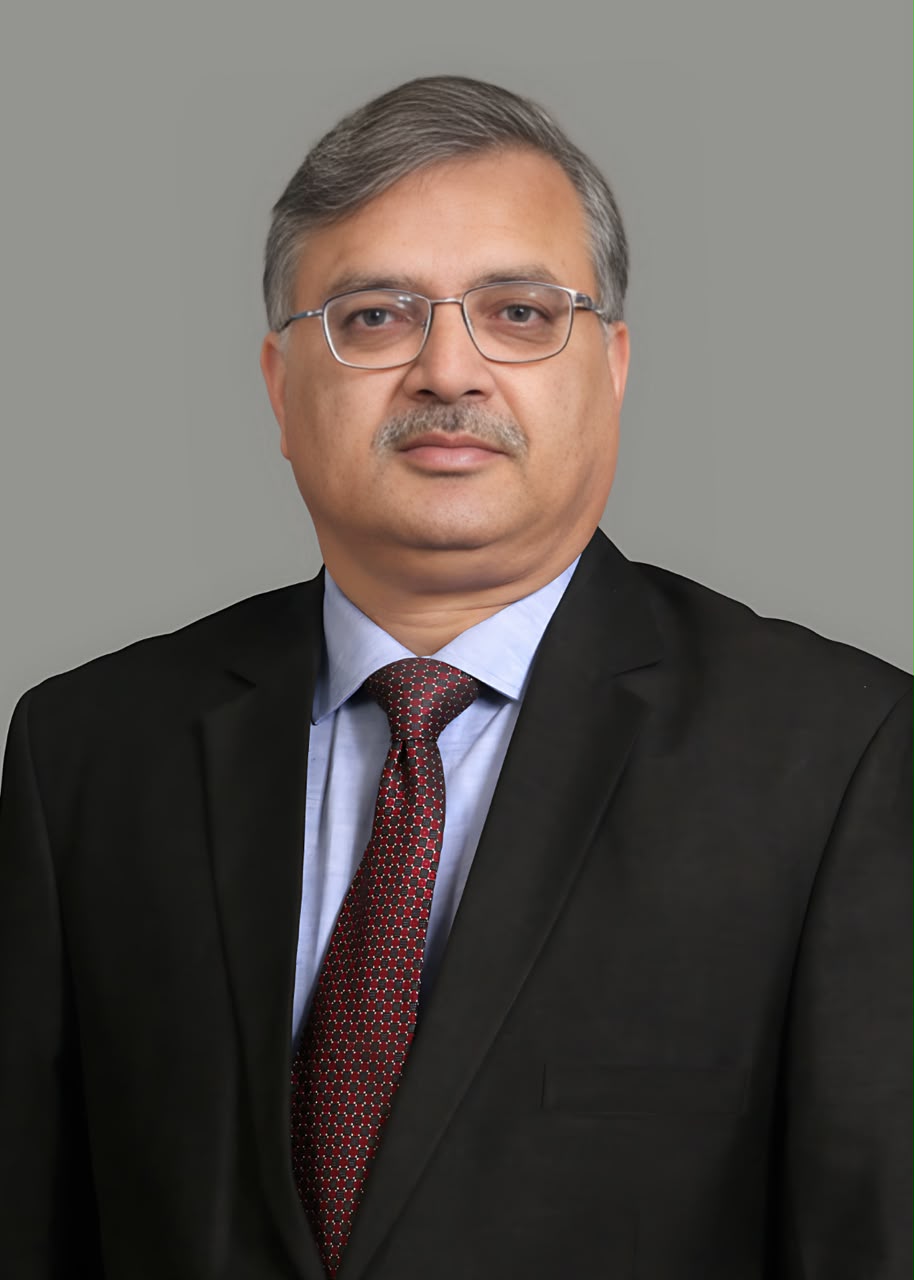
Author: Prof. Dr. Nasir Mahmood, the Vice-Chancellor of Allama Iqbal Open University (AIOU)
Growing up in Pakistan, few of us escaped the story of Hazrat Bilal ibn Rabah (RA). It reached us through a grandmother’s bedtime telling, a Friday sermon, or a schoolbook chapter. Almost every one of us learnt of the man whose tongue uttered Ahad, Ahad while lying on the scorching sands of Makkah with a rock on his chest and the Quraish’s cruelty on his back. We learnt of the man whom the Holy Prophet (SAW) chose to be the first muezzin of Islam, whose voice first carried the call to prayer over Madinah.
What we seldom paused to consider is where that story leads geographically. Hazrat Bilal (RA) was born in Makkah to a mother from Habasha, as Ethiopia was then known, and was counted among the earliest Muslims to publicly proclaim faith in the oneness of Allah. He is remembered as the first prominent African Muslim, and in him Islam’s message of equality found its most enduring illustration. In a society ordered by lineage and colour, the Prophet (SAW) raised a freed slave of Abyssinian descent to one of the most honoured positions in the young community.
Habasha is also the land to which the persecuted Muslims of Makkah made their first Hijra, years before Madinah. The Prophet (SAW) is reported to have said that there was a king there in whose realm no one was wronged. The Negus, King Ashama ibn Abjar, did not disappoint. He heard the Muslim delegation out, refused to surrender them to the Quraish envoys, and offered protection. Islam, therefore, reached Africa not by conquest but by justice, fairness and equality. The Al-Nejashi Mosque in Negash, in the Tigray region, is traditionally regarded as among the oldest mosques on the continent, a living reminder of that moment. Few countries in the Muslim world can claim such a founding relationship with the faith, and fewer still are as casually overlooked in our popular imagination.
With this history in mind, I recently visited the Ethiopian Embassy in Islamabad, which opened its doors only in 2022. I was hosted by H.E. Dr. Oumer Hussien Oba, Ambassador of the Federal Democratic Republic of Ethiopia to Pakistan, over a cup of coffee prepared in the traditional manner. Anyone who has attended an Ethiopian coffee ceremony knows it is not a beverage but a ritual. The green beans are roasted before your eyes, and the aroma of coffee and burning incense fills the room. The brew emerges from a clay pot called Jebena and is served in small cups across three rounds. One does not rush it. It is the exact opposite of the desk-side paper cup that has come to define our working lives, and it was an apt setting for a conversation about patience, partnership and long memories. Ethiopia, after all, is the birthplace of coffee itself. There is a certain poetry in the fact that a nation that gave the world its favourite morning habit is now quietly asking Pakistan for something simpler. It wants us to widen our footprint in Africa through Ethiopia, a gateway to a continent of 1.6 billion people, vast untapped resources and culturally enriched horizons.
Over that cup, ideas were exchanged and fresh commitments made to bring the two countries closer, at a level that, frankly, should have been reached long ago. It struck me during the conversation how much we share. Both nations are young, populous and ambitious, with large youth populations that represent either a dividend or a burden depending on how wisely they are educated and employed. Both are agrarian economies seeking industrial depth. Both are navigating a rapidly changing global order in which Global South partnerships matter more than they did a generation ago.
The room for practical cooperation is considerable. As an academic, I find education and research the most promising and the most neglected avenue, since universities in both countries can build faculty exchanges, joint research programmes and scholarships. Agriculture offers complementary lessons, with Ethiopia’s experience in highland farming, coffee and livestock set beside Pakistan’s in irrigation and cereals. Trade has a natural logic too. Pakistani pharmaceuticals, textiles, surgical goods and rice have a ready market in East Africa, while Ethiopian coffee, sesame, leather and spices deserve a place on our shelves. And better connectivity, with Ethiopian Airlines and its vast African network as a natural partner, along with cultural weeks and student exchanges, can make a distant country feel familiar.
It is tempting to leave the matter at sentiment. Shared faith and shared history are a wonderful beginning, but they are not a policy. Pakistan’s engagement with Africa has too often been episodic, with a visit here and a communiqué there, and little follow-through. The opening of the Ethiopian mission in Islamabad is an invitation, and an invitation unanswered is a courtesy wasted.
In my humble opinion, Ethiopia should be treated as a strategic entry point to Africa rather than a line in a regional brief, with regular political consultations and a standing joint commission that actually meets. The Higher Education Commission and our leading universities should open scholarship windows and sign faculty exchange agreements with Ethiopian institutions this academic year, not at some convenient point in the future. Chambers of commerce and export bodies owe our businessmen a serious look at the Ethiopian market, including trade delegations, sector-specific fairs and clear guidance on logistics and payments, so that interest turns into shipments. Our media and our teachers carry a duty as well, since a nation cannot befriend a country it has never been introduced to. Let a few pages of our textbooks and a few minutes of our airtime go to Ethiopia’s history, its languages, its music and, yes, its coffee. And each of us, as individuals, can start small by visiting the embassy’s cultural events, meeting Ethiopian students in our cities, and carrying the story of Bilal (RA) beyond the sermon and into curiosity about the land his mother came from.
If the story of Hazrat Bilal (RA) teaches us anything beyond devotion, it is that dignity belongs to the steadfast, and that connections forged in sincerity outlast the circumstances that created them. A friendship that began on the shores of the Red Sea over fourteen centuries ago deserves better than nostalgia. The next time we hear the azan, we might remember that its first voice carried a bridge between Arabia and Africa. The least we can do is walk across it.
