
Amin Asad
In the early days after independence, Pakistan established an institution that came to represent organized compassion and public duty: the Pakistan Red Crescent Society. It was not created as a routine administrative body, but as a moral commitment to protect those most in need. When Muhammad Ali Jinnah laid its foundation on December 20, 1947, the message was simple yet profound: a state is only as strong as its care for the weakest among its people. Over time, the Society became part of the International Red Cross and Red Crescent Movement, working within the framework of the Geneva Conventions and aligning itself with principles of neutrality, independence, and humanity.
Today, looking at the Pakistan Red Crescent is not just about evaluating an organization. It is about asking whether we, as a nation, still value service over politics and human need over institutional interests.
There is no denying that the Society has one of the largest humanitarian footprints in the country. Its network stretches across provinces and districts, reaching communities that often fall outside the reach of formal systems. Thousands of volunteers form its backbone. But institutions are not defined by size alone. Their real strength lies in their integrity and purpose. There have been periods when this purpose was tested. Political considerations began to influence decisions. Professional competence was, at times, pushed aside in favor of loyalty. Experienced field workers, who understood the realities on the ground, found themselves marginalized. The result was predictable. Internal efficiency suffered, and the organization’s credibility at the international level weakened. In some cases, even urgent relief efforts slowed down, leaving vulnerable people waiting when they could least afford to.
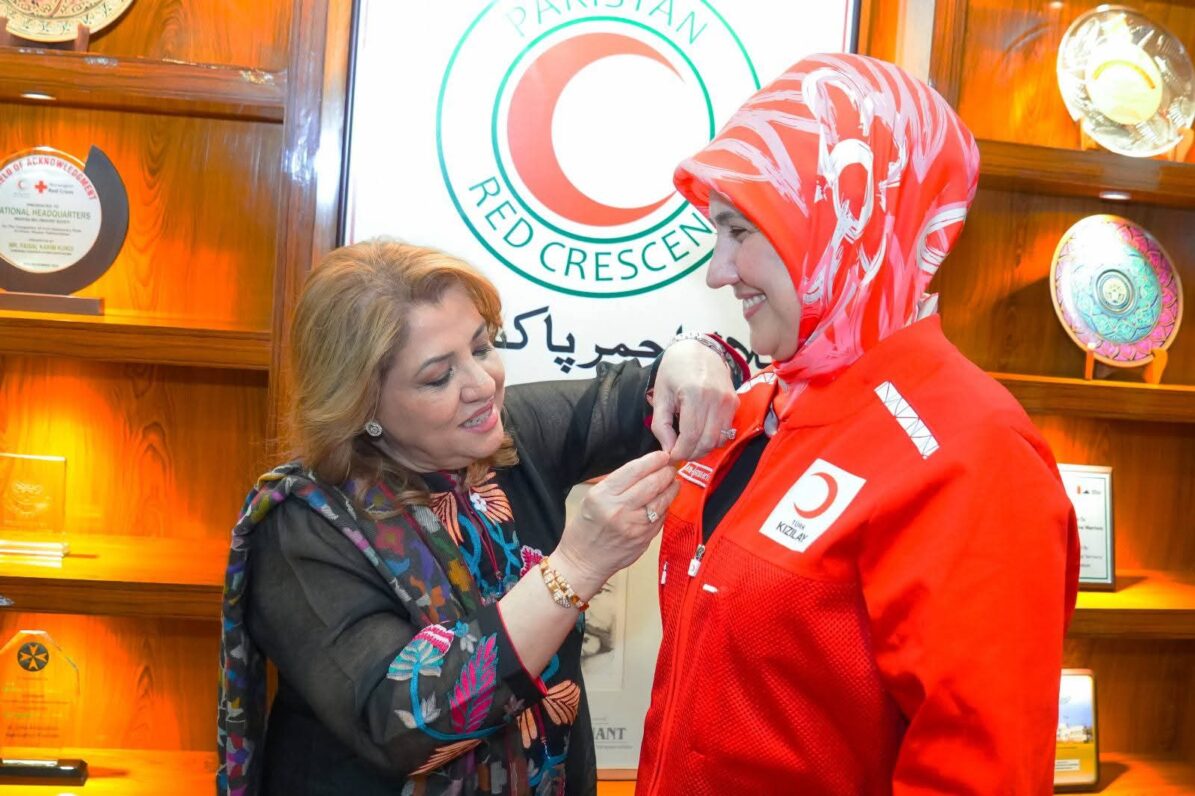
That said, institutions are not static. They can recover when there is genuine intent to reform. This is what makes the developments since early 2025 worth noting. When Farzana Naek took charge as Chairperson, it brought a sense of direction that had been missing. Her earlier work at the provincial level had already shown administrative clarity and a practical approach to humanitarian service. At the national level, the focus has been similar: bring professionals back into the system, make recruitment transparent, and rebuild trust with partners. These steps may sound procedural, but their impact has been visible both within the organization and in its external relationships.
Re-engagement with organizations such as the International Federation of Red Cross and Red Crescent Societies and the International Committee of the Red Cross has been particularly important. Partnerships with national societies from countries like Türkiye, Qatar, Norway, and Germany are gradually strengthening again. Trust, once lost, takes time to rebuild. But the direction now appears positive.
Still, good intentions alone are not enough in today’s environment. Humanitarian work has become more complex, and expectations are higher. One clear benchmark is the ability to respond within the first 48 hours of a disaster. This is where systems matter. The Pakistan Red Crescent needs to move toward clearly defined Emergency SOPs that allow decisions to be made quickly. Authority, within reasonable limits, should be delegated in advance to provincial and district levels. Waiting for central approval in an emergency often costs valuable time.
A practical step in this direction would be to establish a Rapid Response Fund that can be accessed within a day or two through a straightforward process. Alongside this, a pre-approved deployment system for staff and volunteers would make a significant difference. People should be trained, registered, and ready before a disaster occurs, not after. Training itself needs to go beyond formal sessions. Regular drills, simulations, and community-level engagement can help ensure that volunteers are prepared for real situations, not just theoretical ones.
Another area that cannot be ignored is technology. Humanitarian work today depends heavily on timely and reliable information. An integrated data system that tracks beneficiaries, resources, and distribution in real time would improve both efficiency and transparency. Tools like GIS mapping, drone assessments, and mobile-based reporting are no longer optional. They are becoming standard practice. More importantly, when these tools are linked with early warning systems, they allow organizations to act before a crisis fully unfolds.
This brings us to a larger shift in thinking: moving from response to anticipation. Climate change has made disasters more frequent and less predictable. In Pakistan, its effects are already visible. Floods, heatwaves, and other climate-related events are no longer rare occurrences. In this context, the role of the Pakistan Red Crescent needs to expand. It should not only respond to crises but also work on reducing risks and preparing communities in advance.
Accessing global climate financing, including mechanisms like the Green Climate Fund, could support this transition. A dedicated unit focused on project development and international partnerships would help the organization tap into these resources effectively.
The idea of anticipatory action is particularly relevant here. Instead of waiting for a disaster, actions can be triggered based on forecasts and risk indicators. This might include early cash assistance, preparing shelters, or relocating vulnerable groups. The challenge lies in setting clear triggers and ensuring that funds and systems respond automatically when those triggers are met. Models developed by the IFRC offer a useful starting point, but they need to be adapted to local realities.
At the same time, partnerships within the country need to evolve. The private sector has the capacity to contribute more than just funding. A structured platform, such as a Corporate Humanitarian Alliance, could bring companies into long-term collaboration, combining financial support with technical and logistical expertise. This would strengthen both emergency response and long-term resilience.
There is also room to make better use of existing assets. Blood banks can be upgraded into broader health service networks. First aid training can be introduced more systematically in schools and colleges. Ambulance services can be expanded through partnerships. New risks, such as extreme heat and public health emergencies, require specialized attention and dedicated teams.
The Pakistan Red Crescent today finds itself at an important point. The challenges of the past have not disappeared entirely, but there is a clear opportunity to move forward. The changes underway provide a foundation, but they will need consistency and follow-through. If the organization can strengthen its systems, invest in preparedness, and continue rebuilding trust, it has the potential to set an example not just within Pakistan but across the region.
Ultimately, the question is not whether the Pakistan Red Crescent can respond to disasters. It is whether it can stay one step ahead of them. When institutions begin to act before a crisis rather than after it, they move from being reactive to being truly protective. That is the shift that will define the next chapter.
Muhammad Amin Asad
The writer is a former Deputy Director at the Pakistan Red Crescent Society and has worked as an advisor with the World Food Programme and other international humanitarian agencies. His work focuses on humanitarian systems, institutional reform, and public policy.
