
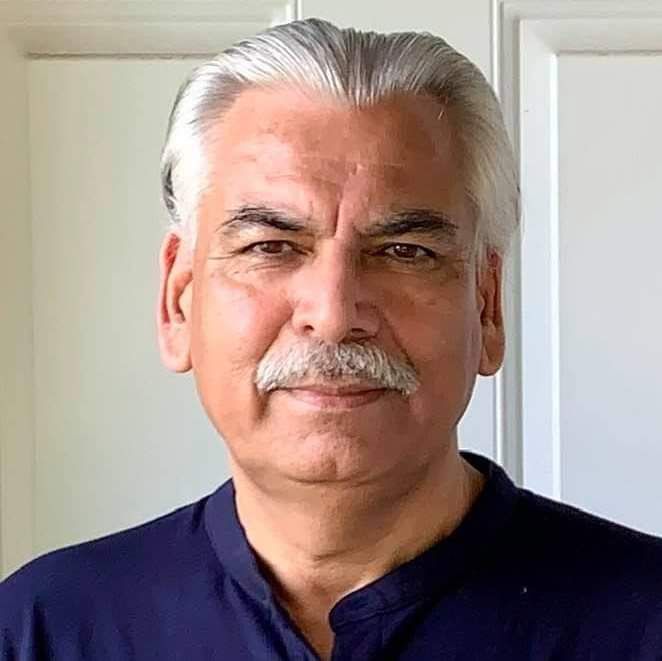
Barrister Usman Ali, Ph.D.
In Pakistan today, alongside political, economic, and social debates, another trend has become increasingly visible: the tendency to frame generations as rivals rather than as parts of a shared social continuum. In mainstream media and even more so on social media , younger and older generations are often presented as opposing camps rather than contributors to the same collective project. The prevailing narrative suggests that older leadership has failed, institutions are beyond repair, and the younger generation has already detached itself from the past. While some of this frustration is grounded in lived reality, the belief that one generation can entirely replace another , or that it is inherently more moral , reflects a misunderstanding of how societies actually endure and progress.
History offers no example of a country built, governed, or sustained by a single generation alone. States are not startups that can discard “legacy systems” and relaunch from scratch. They are layered, evolving structures that depend on continuity, institutional memory, accumulated experience, and gradual reform. Generational differences are natural and even healthy; generational hostility, however, is corrosive , particularly in a country like Pakistan, where institutions already operate under persistent strain.
The idea that Gen Z (Generation Z) alone can redirect the country ignores a fundamental reality: power, responsibility, and governance do not transfer overnight. Statecraft , whether in economic management, foreign policy, defence, or administration , is not powered by passion alone. It is shaped through decades of trial, error, and hard-earned learning. Older generations carry historical context: wars, alliances, policy experiments, and their long-term consequences. Generation X and millennials function as a bridge, translating inherited systems into contemporary realities. Gen Z brings energy, moral pressure, digital fluency, and the courage to question entrenched norms. Remove any one of these layers, and the structure weakens.
A useful way to understand this is through the analogy of a family system. Can a family be complete without grandparents, parents, and children together? Without grandparents, memory and experience are lost. Without parents, structure and responsibility collapse. Without children, continuity and the future disappear. No generation replaces the other; each exists as part of an ongoing chain. Societies function in much the same way.
This is not an argument for preserving failure or shielding anyone from accountability. Older generations are not beyond criticism. Pakistan’s economic mismanagement, political instability, and uneven development are well documented, and accountability is essential. But criticism becomes counterproductive when it turns into wholesale rejection , when experience is automatically equated with corruption and youth is mistaken for wisdom by default.
More importantly, there is a serious challenge confronting Pakistan’s Gen Z that is rarely discussed honestly: a lack of clear direction.
Demographically, Gen Z constitutes the largest youth cohort in Pakistan’s history. According to official estimates, nearly two-thirds of the population is under the age of 30. Internet access and social media penetration have expanded rapidly, yet meaningful digital participation has not kept pace. Pakistan ranks among the world’s largest social media user bases, but it continues to lag in critical digital literacy, research output, and the export of high-value skills. Studies increasingly point to rising screen dependency, shortened attention spans, anxiety, and emotional volatility among young people.
Rather than being systematically trained as institution-builders, innovators, or long-term leaders, a significant segment of youth has been emotionally mobilised but intellectually underprepared. Political participation is often reduced to online outrage, personality worship, and binary thinking. Complex national issues , economic reform, foreign relations, civil-military balance , are compressed into slogans and simplified narratives. Dissent is framed as disloyalty, while nuance is dismissed as weakness.
This did not occur organically. It reflects a sustained vacuum where civic education, policy literacy, and institutional inclusion should have existed. Emotional loyalty replaced civic understanding; identity politics displaced policy competence. When a generation is taught to chant before it is taught to think, the outcome is not empowered citizens but reactive crowds. Passion without direction does not build nations; it destabilises them.
This is precisely where generational blame becomes most dangerous. If Gen Z appears disoriented, it is not simply because older generations deliberately suppressed it, but because responsibility was transferred without mentorship, institutional access, or long-term vision. At the same time, younger generations must recognise that anger alone is not leadership, and moral certainty does not automatically translate into effective governance.
Pakistan cannot afford a generational cold war. The challenges it faces , economic recovery, climate stress, regional diplomacy, and educational reform , demand cooperation across age groups. The digital skills of Gen Z must be integrated with the operational capacity of millennials and the institutional experience of Generation X. Even baby boomers, often dismissed as irrelevant, possess crisis-management and state-building experience that cannot be replicated through algorithms or social media trends.
Strong societies are built when generations engage in dialogue rather than erasure, reform rather than rejection. The moment any generation believes it can function independently of the others, it repeats the very arrogance it claims to oppose.
The real question, therefore, is not which generation should rule, but how leadership and responsibility are transferred responsibly. Gen Z must be guided beyond slogans toward economics, law, administration, ethics, and compromise. Older generations must offer genuine participation rather than symbolic space. Millennials must step out of passive observation and assume their bridging role , the role history has already assigned them.
Pakistan does not need generational victors. It needs generational continuity.
Only through that continuity can institutional stability, social cohesion, and sustainable progress be achieved. Without it, no generation , young or old , can succeed on its own.
