
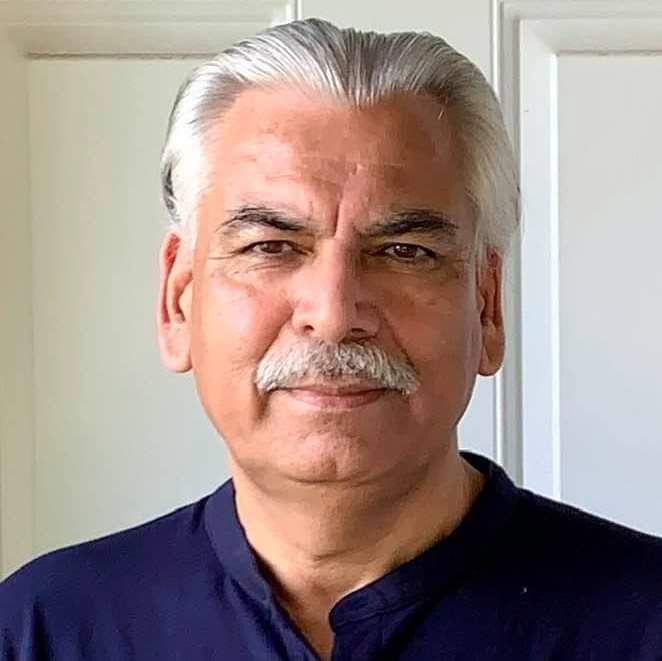
Barrister Usman Ali , Ph.D.
When civilians and children are killed in conflict, international law must be applied without exception.
When a school is bombed and children are killed, the tragedy cannot be measured only in lives lost. It raises a deeper question: whether the laws created to protect civilians have been ignored or violated. Recent reports that 165 children were killed in a strike on a school during bombing by the United States and Israel in Iran, alongside reports of widespread civilian casualties and damage to essential infrastructure such as water systems and health centres, raise urgent concerns under international humanitarian law. When civilians, especially children, are killed and the systems that sustain civilian life are destroyed, the issue is no longer only military strategy. It becomes a matter of law, accountability, and humanity itself.
Human rights organizations and international bodies have already sounded the alarm. Amnesty International’s Secretary General Agnès Callamard has warned that the attacks have resulted in “significant loss of civilian life and destruction of civilian infrastructure,” while civilians across the region continue to endure repeated cycles of conflict and violations of international law. The United Nations has described the bombing of the school as a “grave violation of humanitarian law.” UNESCO has cautioned that attacks on educational institutions endanger students and teachers and undermine protections guaranteed under international humanitarian law. The UN Human Rights Office has called for a prompt, impartial, and thorough investigation into what it described as a “horrific” incident.
These concerns reflect core principles embedded in international humanitarian law, the legal framework designed to regulate the conduct of armed conflict and to protect civilians from its worst consequences. The rules governing war exist precisely to ensure that even in moments of extreme violence there remain boundaries that must not be crossed.
At the heart of these rules lies a simple principle: civilians must never be the object of attack. Schools, hospitals, and other civilian institutions must not be deliberately targeted. Infrastructure indispensable to civilian survival, including water systems, health centres, medical facilities, and essential public services, must not be destroyed in ways that place entire populations at risk. These protections form the foundation of the Geneva Conventions and the broader framework of international humanitarian law.
The legal obligations are explicit. The Geneva Conventions establish special protections for wounded persons, prisoners of war, and civilians, and define “grave breaches” in Convention articles commonly cited as Articles 50, 51, 130, and 147. The Rome Statute of the International Criminal Court further recognizes war crimes that include intentionally directing attacks against civilians and civilian objects, along with other serious violations of the laws and customs of war under Article 8.
No state, however powerful, stands above these rules. No political leader, however influential, is exempt from accountability when innocent lives are taken. The legitimacy of international law depends precisely on its ability to constrain power, especially when the stakes of war are at their highest.
When reports emerge of children killed in places meant for learning and safety, and when civilian infrastructure, including water systems and health centres critical to community survival, is damaged or destroyed, the authority of international law is placed under a harsh spotlight. Silence or indifference in the face of such allegations risks sending a dangerous message: that the lives of ordinary people can be sacrificed when powerful actors pursue military or political objectives.
History offers painful reminders of the consequences of unchecked military power. The twentieth and twenty-first centuries have witnessed conflicts that left nations shattered and societies traumatized, with civilians bearing the overwhelming burden of suffering. Wars in Vietnam, Iraq, Libya, and Afghanistan illustrate how military interventions justified by shifting political narratives can produce devastating humanitarian consequences when accountability mechanisms fail.
The lessons of the past are unmistakable. After the devastation of the Second World War, the international community established at the Nuremberg trials a principle that reshaped international law: individuals responsible for war crimes and crimes against humanity could be held personally accountable regardless of rank or authority. That precedent later informed the creation of international tribunals and ultimately the establishment of the International Criminal Court. It affirmed a simple but essential truth: power does not grant immunity from responsibility under the law.
Those lessons remain profoundly relevant today. International law cannot retain credibility if it is applied selectively or only against the weak. Its authority depends on universal application. When allegations arise that civilians have been harmed or that infrastructure essential to civilian life has been destroyed, the international community must respond with seriousness, transparency, and a genuine commitment to uncovering the truth.
Investigations into attacks on civilians must therefore be independent, credible, and transparent. Evidence must be preserved, the facts must be disclosed, and accountability must follow wherever the evidence leads. These steps are essential not only for justice for the victims but also for maintaining the integrity of international law itself.
The lives of children must never be reduced to collateral abstractions. Access to water must never become a weapon of war. The destruction of the foundations of ordinary life must never be normalized as the acceptable cost of political or military ambition.
When power becomes unrestrained, law becomes humanity’s last defense. If the law is not enforced against the strong, the world sends a dangerous signal, that might makes right and that the lives of civilians can be treated as expendable in the pursuit of geopolitical objectives.
The protection of civilians in war is not a political preference; it is a universal human obligation. Every child’s life carries equal value, and every civilian deserves protection from the horrors of armed conflict. The credibility of international humanitarian law ultimately depends not on the power of those who invoke it, but on the consistency with which it is applied.
History will judge our generation not by the strength of our rhetoric, but by whether we defended the innocent when the law demanded it most.
