
OUR CORRESPONDENT
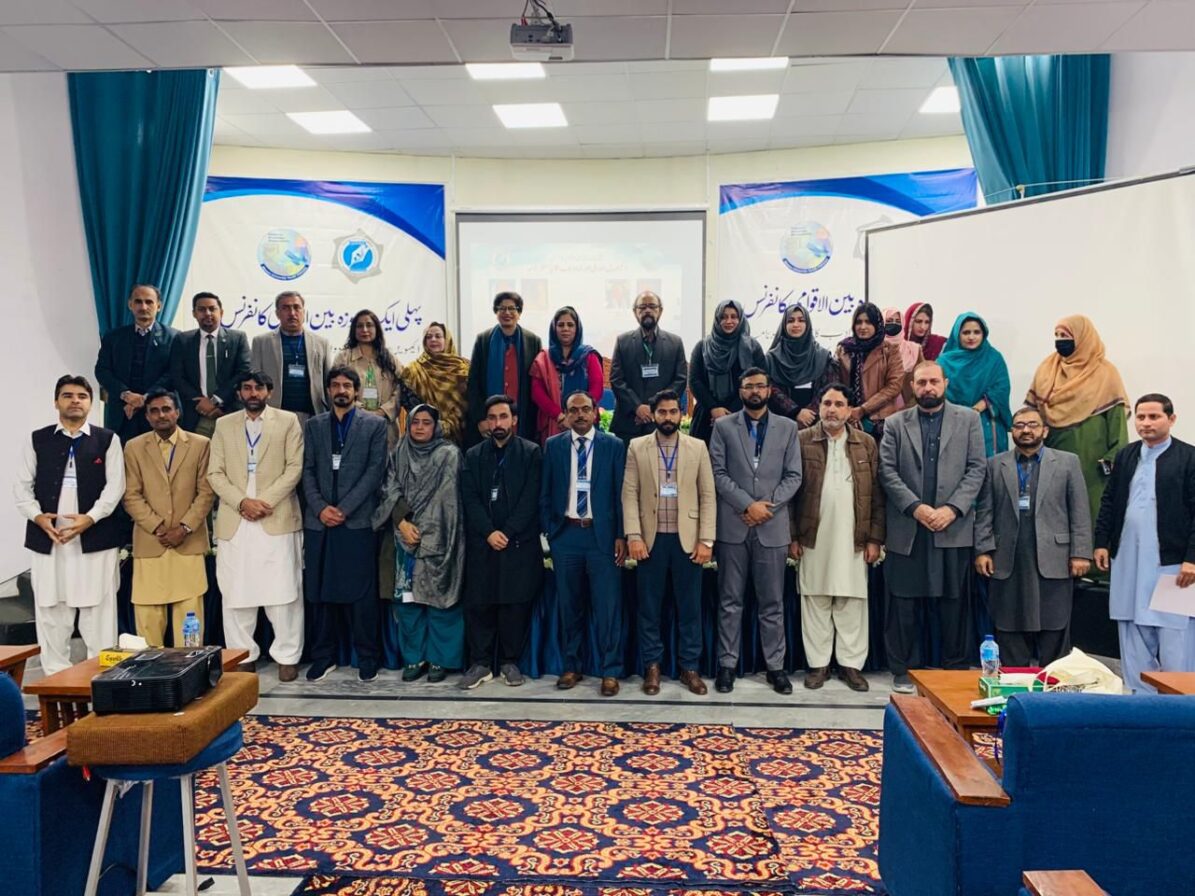
SWABI: A one-day international conference on “Urdu Literature in the 21st Century” concluded successfully at Women University Swabi, highlighting the evolving role of Urdu literature in the contemporary world.
Vice Chancellor Women University Swabi, Dr Ghazala Yasmeen, while addressing the conference, said that Urdu literature is a vital pillar of intellectual identity and cultural heritage. She emphasized that promoting research and modern critical trends in accordance with the demands of the twenty-first century is the need of the hour. She stressed that academic institutions must actively contribute to strengthening literary research in line with contemporary challenges.
The chief guest of the conference, Noor Amna Malik from the Higher Education Commission Islamabad, said that connecting Urdu literature with the younger generation and the digital world has become indispensable in the present era. She noted that such academic seminars and conferences play an important role in fostering research skills, critical thinking and creative abilities among female students. She also announced high-quality training programs for Urdu faculty members of universities in Khyber Pakhtunkhwa, to be organized at Women University Swabi in collaboration with NAHE. She remarked that Urdu language represents national identity and warned that neglecting it could lead to a loss of cultural recognition, adding that all possible efforts would be made for its promotion.
The one-day international conference was organized by the Department of Urdu, Women University Swabi, under the title “The New Landscape of Urdu Literature in the 21st Century.” A total of 250 participants, including scholars, teachers, researchers, paper presenters and students from various universities across Pakistan and from abroad, attended the conference. During the event, fifty national and international research papers were presented, addressing diverse aspects of contemporary Urdu literature.
International delegate Dr Arzu Cift Soren, Associate Professor at Istanbul University, Turkey, stated that Urdu literature is an important part of Asia’s shared cultural history and holds immense potential for teaching and research at the global level. She added that such conferences play an effective role in linking Urdu language and literature with international academic discourse.
Similarly, Dr Ibrahim Muhammad Ibrahim, Professor at Al-Azhar University, Cairo, Egypt, said that Urdu literature has deep roots in Islamic cultural traditions and intellectual heritage. He emphasized that comparative studies between Urdu and Arabic literature open new horizons for research and academic collaboration.
Special delegate Professor Dr Robina Shaheen, Dean Faculty of Oriental and Islamic Studies, University of Peshawar, observed that Urdu literature has successfully adapted to changing social and global realities by embracing new intellectual and artistic trends. She urged universities to align Urdu research with contemporary academic and societal needs.
In her concluding remarks, Vice Chancellor Dr Ghazala Yasmeen paid tribute to Dr Gulnaz Parveen, Dr Munazza, and the entire organizing team of the Department of Urdu. She said that the successful organization of a high-standard international conference within a short period of time reflects teamwork, professional competence and sincere dedication.
At the end of the conference, certificates were distributed among paper presenters and organizers.
