
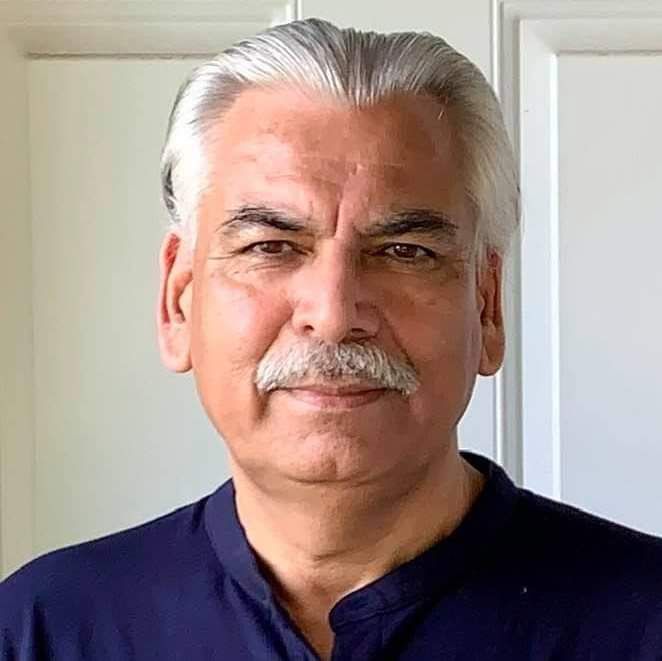
Barrister Usman Ali, Ph.D.
In Pakistan’s constitutional history, judicial decisions are rarely judged by their reasoning alone. They are measured instead by their political consequences, celebrated when they produce favorable outcomes, condemned when they do not. At various moments, judgments shaped by personalities and immediate political exigencies were hailed as triumphs of justice and elevated to the status of historic correction. Yet when those same doctrines were later re-examined against constitutional structure and subjected to principled scrutiny, the exercise was labeled bias rather than accountability. Though only a few jurists in Pakistan have faced comparable tensions, Justice Qazi Faez Isa has confronted this inversion with rare consistency, reflecting a principled commitment to constitutional structure over individual outcome.
A careful reading of his jurisprudence reveals a disciplined constitutional philosophy: courts are guardians of structure, not arbiters of political destiny. Their legitimacy derives not from shaping outcomes, but from enforcing limits. The Supreme Court’s judgment revisiting the doctrine of lifetime disqualification under Article 62(1)(f) stands as a defining expression of that philosophy.
Article 62(1)(f) prescribes moral qualifications for members of Parliament, requiring them to be “sagacious, righteous, honest and trustworthy.” For decades, this clause functioned primarily as a declaratory norm,ethical in aspiration rather than penal in design. That equilibrium shifted in 2018, when the Supreme Court interpreted the provision to mean that once a person was declared not to be “sadiq and ameen,” the disqualification would endure for life. A broadly worded moral standard, lacking procedural architecture, was thus transformed into one of the severest sanctions in constitutional law: permanent exclusion from democratic participation.
The judgment delivered under Justice Isa’s leadership did not revisit the political controversies surrounding earlier cases, nor did it seek to vindicate or condemn any individual politician. Instead, it confronted a foundational constitutional question: can an irreversible civic penalty exist without explicit textual authority and defined procedural safeguards? The Court’s answer was unequivocal, no.
The Court held that Article 62(1)(f) is not self-executing. It does not designate a competent authority to issue declarations, prescribe a procedure, establish a standard of proof, or specify the duration of disqualification. These are not drafting imperfections; they are constitutional prerequisites. Without them, the clause cannot operate as a mechanism for perpetual exclusion. To treat it otherwise would require the judiciary to supply what the constitutional text deliberately withholds.
Justice Isa’s reasoning rested on first principles. Political rights, particularly the right to contest elections, cannot be curtailed except through strict adherence to due process and the guarantees embodied in Article 10A. A lifetime penalty cannot arise by implication. Where the Constitution intends permanent consequences, it speaks with clarity. Silence in constitutional design is not accidental; it reflects deliberate limitation. Judicial interpretation that converts ambiguity into irrevocable sanction risks crossing the boundary between adjudication and legislation.
One of the judgment’s most significant contributions lies in its rejection of judicial moral absolutism. Earlier jurisprudence had elevated moral terminology into an irreversible verdict on civic worth, detached from proportionality or temporal limitation. In doing so, it blurred the distinction between ethical condemnation and constitutional punishment. Justice Isa’s approach restored that distinction. Courts are not moral tribunals empowered to impose civil death absent clear authorization. Moral language, however compelling, cannot substitute for institutional design. In a constitutional democracy, standards must operate through procedure, and sanctions must remain bounded by law.
The suggestion that the ruling was crafted to benefit particular political actors collapses under methodological scrutiny. The Court reinstated no one, overturned no convictions, and declared no individual honest or dishonest. It held only that indefinite disqualification without lawful structure is unconstitutional. Political consequences, if any, were incidental to correcting a doctrinal overreach. System-correcting judgments often appear disruptive precisely because they dismantle arrangements that had grown politically convenient despite lacking constitutional foundation.
More profoundly, the decision confronted a recurring tendency in Pakistan’s constitutional evolution: the temptation to justify distortion in the name of necessity, morality, or public sentiment. The doctrine of lifetime disqualification thrived on the belief that extraordinary moral lapses justified extraordinary legal consequences, even absent explicit constitutional text. Justice Isa’s ruling rejected that logic. Courts cannot compensate for legislative silence by inventing punishments, regardless of the urgency of the narrative that surrounds them.
Equally important was the reaffirmation of institutional boundaries. By holding that Article 62(1)(f) cannot function as a perpetual bar without legislative framework, the Court returned the issue to Parliament, where constitutional architecture places it. If lifetime disqualification is deemed necessary, it must be expressly enacted within a structure that satisfies due process. This was not judicial activism; it was disciplined judicial restraint, the refusal to exercise authority not clearly conferred.
Allegations of bias must therefore be measured against method rather than outcome. Judicial partiality manifests through inconsistency or selective reasoning. Justice Isa’s reasoning in the Article 62(1)(f) case aligns with his broader jurisprudence concerning executive power, electoral regulation, public protest, and institutional accountability. The beneficiaries may vary; the constitutional methodology does not. That consistency undercuts the allegation of partisanship.
By revisiting the doctrine of lifetime disqualification, the Court also distanced itself from the lingering “law of necessity” mentality that has repeatedly distorted constitutional development. The ruling reaffirmed a foundational premise: constitutional democracy operates on legality, not expediency; on structure, not sentiment. Even individuals accused of serious wrongdoing are entitled to defined safeguards, not as an act of indulgence, but as a requirement of systemic legitimacy.
Ultimately, the significance of the Article 62(1)(f) judgment lies not in who gained or lost politically, but in what was restored: procedural clarity, proportionality, and respect for institutional limits. It reflects Justice Qazi Faez Isa’s enduring judicial commitment to strengthening constitutional architecture rather than manipulating its outcomes.
In a legal culture accustomed to exceptions, such discipline may provoke discomfort. Yet it is precisely this insistence on constitutional boundaries that secures democratic continuity. Judicial courage is not measured by the popularity of its consequences, but by fidelity to structure when expediency would be easier. By that measure, the judgment stands as an affirmation of constitutional principle over political outcome.
