
TP Report
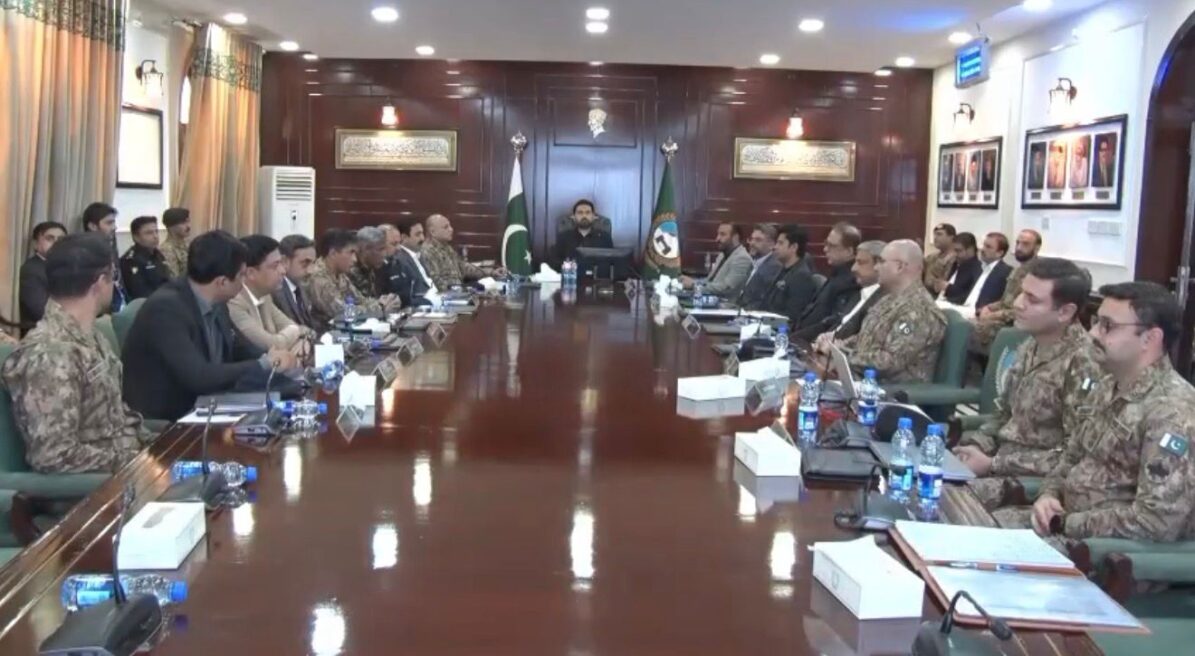
PESHAWAR: The communiqué emerging from the provincial Apex Committee meeting signals an important step in counter terrorism in Khyber Pakhtunkhwa. Terrorism will be confronted — not as a narrow security problem, but as a multidimensional governance challenge requiring unity of purpose across the state and society.
At its core, the message is one of institutional alignment and political resolve. The provincial leadership, civil administration, security institutions, and the Pakistan Army have publicly affirmed that they stand on the same page. This visible cohesion is not symbolic; it establishes the foundation for a synchronized civil-military response where policy, operations, and governance reforms reinforce one another rather than operate in isolation.
▫️Crucially, the strategy outlined moves beyond purely kinetic action. While security operations by the Khyber Pakhtunkhwa Police and the Counter Terrorism Department will continue under established legal and policy frameworks, the government has acknowledged that force alone cannot secure lasting peace. The recognition that terrorism feeds on governance gaps, public alienation, and service deprivation marks an important conceptual evolution in provincial counterterrorism thinking.
▫️The commitment to transform conflict-affected regions into model good-governance districts is therefore central, not peripheral, to the security plan. By prioritizing roads, communications, healthcare, education, employment, and basic services, the government is attempting to replace the vacuum exploited by militants with visible state presence and tangible public benefit. This approach reframes security not only as the absence of violence, but as the presence of opportunity, dignity, and trust.


▫️Equally significant is the emphasis on public partnership. By calling for cooperation among political parties, community elders, and the Federal Government of Pakistan, the provincial leadership is broadening counterterrorism from a security campaign into a collective societal effort. The narrative makes clear that defeating militancy is not the task of institutions alone; it requires restoring the bond between citizens and the state.
▫️The policy toward any temporarily displaced populations further strengthens this legitimacy-driven approach. Assurances of care, rehabilitation, and dignified return signal that the state recognizes the human cost of instability and is prepared to shoulder responsibility for those affected. By linking short-term hardship with a long-term vision of peace and prosperity, the government frames displacement not as abandonment, but as part of a managed transition toward stability.
▫️Taken together, the press release reflects a comprehensive doctrine of security governance: coordinated operations, rule-based institutional conduct, political consensus, governance reform, and development delivery operating as mutually reinforcing pillars. The overarching message is unmistakable — peace will be secured not only by eliminating militants, but by eliminating the conditions that allow militancy to survive.
▫️In that sense, the Apex Committee meeting represents more than an administrative review; it marks a renewed social contract in which the state pledges protection, services, and inclusion, and calls on society to stand united against violence. The direction is constructive, the framework is integrated, and the intent is clear: security, governance, and public welfare will now advance together as part of a single, sustained effort to restore lasting peace in the province.
