
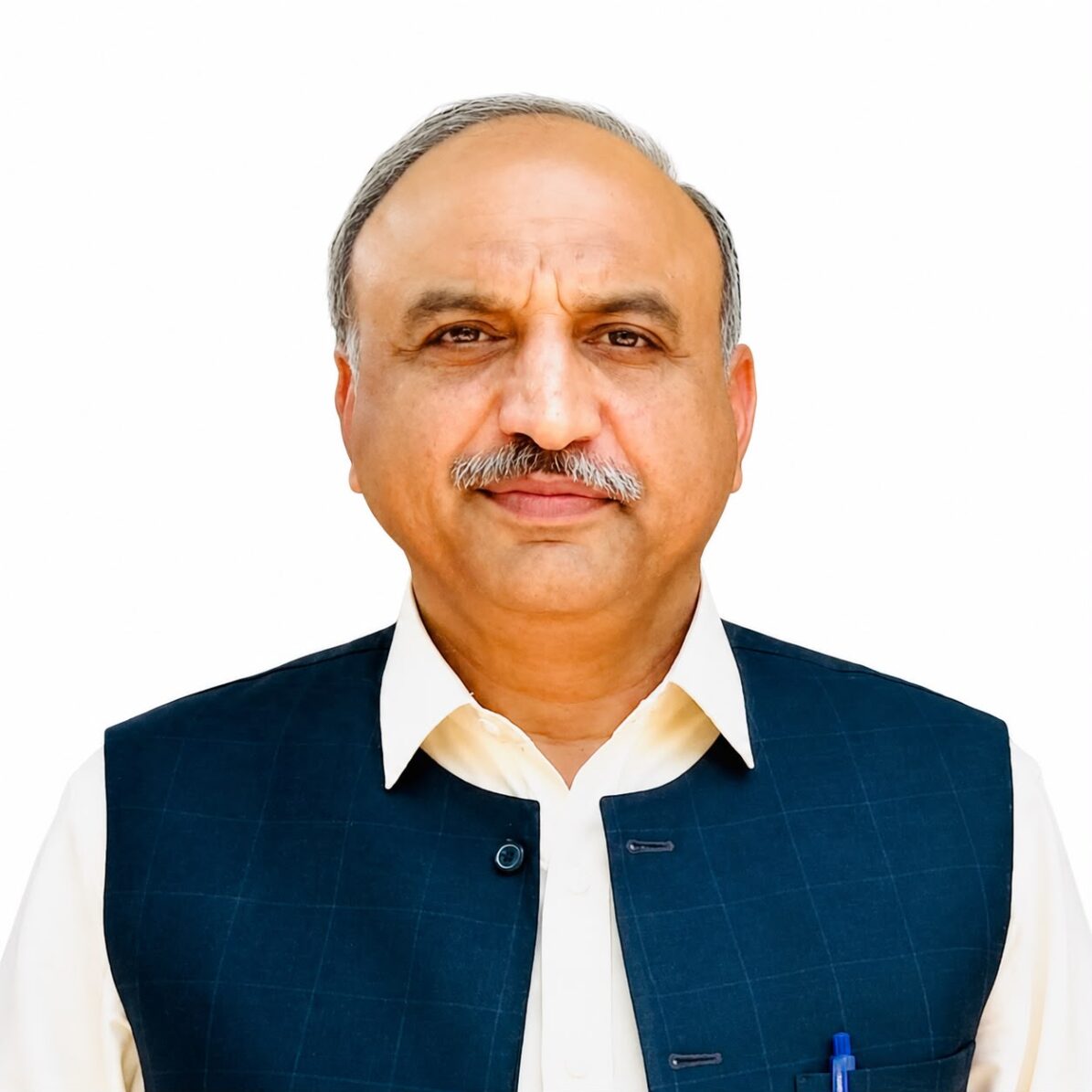
By Shamsul Haq
There is a familiar saying that it is not the gun but the person behind it that matters. The same holds true for public institutions: their effectiveness depends not merely on the powers vested in them, but on the people entrusted with exercising those powers.
The experience of Khyber Pakhtunkhwa over the past 13 years offers an instructive example. When the Pakistan Tehreek-i-Insaf came to power in 2013, the provincial government, led by Pervez Khattak, initiated reforms in the police, revenue administration and other departments. These measures raised hopes that a rigid, often unresponsive bureaucracy could be made more accountable.
But the initial momentum gradually weakened. Subsequent administrations struggled to sustain the reform agenda, while questions about governance, accountability and the use of public resources continued to surface. The broader lesson is that institutional reform cannot depend on the enthusiasm of one individual or the tenure of a particular government.
In Mardan, however, a renewed administrative push has drawn attention to a familiar problem: the gap between official activity and tangible results.
Since assuming charge as commissioner of Mardan Division, senior bureaucrat Syed Muhammad Ali Shah has stepped up inspections of public facilities and development schemes. From hospitals and educational institutions to roads and parks, his frequent visits and meetings with officials have put long-neglected issues back on the administrative agenda.
The approach is welcome. For years, several development schemes have remained incomplete, despite repeated meetings and official assurances. Holding departments accountable at project sites, rather than relying solely on progress reports, can help identify delays and establish responsibility.
Yet inspections alone cannot deliver development.
The condition of areas along the Grand Trunk Road, particularly around Rashakai, highlights the unevenness of municipal oversight. Encroachments, sanitation problems and inadequate maintenance undermine the appearance and functionality of an important commercial corridor. The situation also raises questions about coordination between district administrations and municipal bodies responsible for maintaining public spaces.
Former Mardan commissioner Nisar Ahmed had also sought to improve sanitation and beautification along the Mardan-Nowshera Road, personally monitoring cleaning operations and the upkeep of plants along the central median. Such efforts demonstrate what sustained supervision can achieve. However, expenditure on beautification schemes should also be reviewed to establish whether public money has produced commensurate and lasting benefits.
Transparency in public spending is as important as visible improvements on the ground.
The larger challenge confronting the present administration is the completion of major development projects that have remained unfinished for years. These include the Benazir Children’s Hospital, the District Headquarters Hospital Mardan, the Girls Cadet College Mardan, and the Mardan-Bakhshali and Katlang roads.
Their delay has imposed a continuing cost on residents, whether in the form of inadequate healthcare facilities, interrupted educational opportunities or difficult daily commutes.
During my service in the government, I attended numerous meetings at which development schemes were discussed, reviewed and promised. Yet the question of funding repeatedly emerged as a major obstacle. Projects continued to feature on official agendas, but the resources needed to complete them often failed to materialise.
The lesson is straightforward: administrative resolve must be matched by financial commitment. Where projects are nearing completion, the government should determine their remaining costs, prioritise allocations and establish realistic deadlines. Without these measures, inspections risk becoming another cycle of activity without meaningful progress.
Recent developments following the imposition of governor’s rule have also prompted expectations of greater federal attention to Khyber Pakhtunkhwa’s development needs. If additional resources are made available, Mardan should receive a fair share based on its population, infrastructure needs and the economic and social importance of the district.
As one of the province’s major urban and commercial centres, Mardan cannot afford to have its unfinished projects remain indefinitely on government files. Commissioner Syed Muhammad Ali Shah and Deputy Commissioner Shah Saud have an opportunity to build a credible case for the district by presenting a prioritised list of schemes, their outstanding financial requirements and clear completion targets to the provincial and federal authorities.
Governor Faisal Karim Kundi and the relevant authorities should also ensure that development allocations translate into completed projects rather than fresh announcements.
Ultimately, the performance of an administrator is not measured by the number of meetings attended or inspections conducted. It is measured by whether a hospital becomes functional, a road is completed, a public facility improves and citizens begin to experience a meaningful difference in their daily lives. Mardan needs continuity, adequate funding, institutional coordination and accountability for results. The commissioner may provide the necessary impetus, but lasting progress will depend on whether the entire administrative machinery responds to that leadership. The real test is not how frequently officials visit unfinished projects, but how many of them are finally completed.
