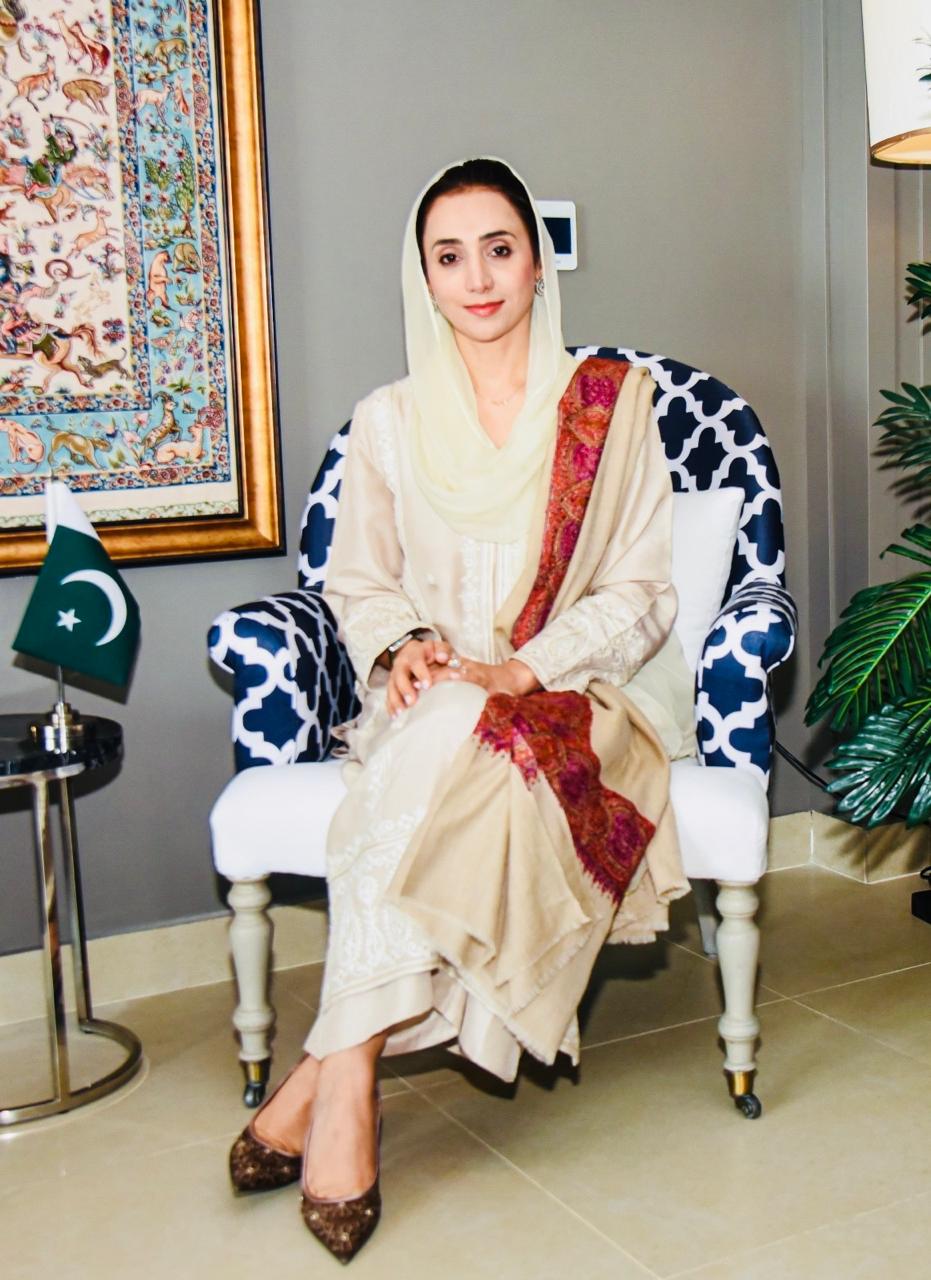
Tazeen Akhtar
Ambassador at Inter-Parliamentary Speakers’ Conference (ISC) and Advisor to Chairman Senate of Pakistan Ms Misbah Khar has said that Central Asia, ASEAN, North Africa have great potential for Pakistan to enhance trade & economic cooperation. Parliamentarians are increasingly sensitized to tap the opportunities there to enhance meaningful relations in all possible spheres. The parliaments can play a role in promoting peaceful resolutions of conflicts through dialogue.
In an interview, she said , performance of women on reserve seats is mixed, some are good, others need mentorship. Political parties should integrate women into main politics by giving 5% tickets quota in general elections. Property inheritance rights and economic independence are must for women empowerment. Policy makers & decision makers should facilitate the youth in visas for jobs abroad , for digital startups.
On regional confrontational situation, Misbah said, the Parliaments can play a role in promoting peaceful resolutions through diplomatic dialogue, passing supportive legislation, and advocating for international mediation and humanitarian assistance in these conflicts.
Misbah said, Pakistan is focusing on Central Asia, ASEAN, and North Africa as promising regions to enhance trade and economic cooperation due to their geographic proximity and market potential. Pakistani parliamentarians are increasingly sensitized to these opportunities through seminars, delegation visits, and policy discussions, which focus on boosting economic projects and regional partnerships for Pakistan’s benefit.
Misbah does not have any plans to do active politics in the future. She said, Since joining the political forum in Aug 2025, my focus is on policy advisory and institutional collaboration. I plan to remain engaged in strategic political discussions and capacity‑building initiatives rather than seeking electoral office, aiming to influence governance through expertise and dialogue.
“Working with seasoned politicians at Pakistan’s highest democratic forum has been a learning experience in legislative craftsmanship and political nuance. It has taught me the importance of balancing experience with innovative ideas to strengthen parliamentary processes, She added.
Misbah grades the performance of women parliamentarians on reserve seats as mixed—some excel in legislative contributions, while others face challenges due to limited direct electoral experience. Enhancing their capacity through mentorship and substantive policy involvement can improve their effectiveness in both houses. Women parliamentarians on reserved seats are valued members of the legislative body, contributing significantly to Pakistan’s development. Their expertise and dedication earn them respect from colleagues and constituents alike.
Misbah emphasized on implementation of 5% ticket allocation for women in general elections. She said, it is a step toward inclusion, but many parties treat it as a formality. My opinion is that parties should integrate women into mainstream candidate selection, providing genuine opportunities and campaign support to reflect true representation.
Misbah recommends to enhance women empowerment, by increasing direct electoral participation, providing leadership training, ensuring equitable resource allocation, promoting policy influence, and creating mentorship programs that bridge experience gaps.
“Financial dependence and property exclusion hinder women’s confidence. My take is that legal reforms for property rights and economic independence, combined with financial literacy programs and supportive social policies, can empower women to lead more autonomous lives, she added.
On first Inter-Parliamentary Speakers Conference ISC in Nov 2025, Misbah Khar shared , (ISC) is a newer, focused platform that brings together parliamentary speakers from around the world to discuss specific issues and strengthen democratic dialogue. Unlike the Inter-Parliamentary Union (IPU), which has been active for many decades and deals with a broad range of parliamentary affairs, the ISC is designed to be a more targeted event that emphasizes direct speaker‑level cooperation and policy exchange.
” Hosting a big international conference like the ISC is an intensive experience that involves meticulous planning, coordination with multiple delegations, logistics management, security arrangements, and media handling. It provides an opportunity to showcase the host country’s capabilities and to foster global diplomatic relations, but it also demands significant resources and organizational effort, Misbah continued.
She said, the ISC can contribute to strengthening democracy in Pakistan by enhancing parliamentary collaboration with 45 other parliaments, sharing best practices in democratic governance, and raising Pakistan’s profile among global democracies. Participation in such forums helps the country learn from international experiences and improve its own democratic institutions.
“The themes of Peace, Security, Stability, and Sustainable Development (including Conflict Resolution and Climate Action) are broad guiding principles for parliamentary discussions. They influence legislation by encouraging lawmakers to draft policies that promote stability, environmental sustainability, and peaceful conflict management, thereby shaping the legislative agenda toward long‑term national and global goals.”
To a question about the employment of youth, Misbah stressed , the situation of youth wanting to go abroad for jobs or to start digital IT businesses, facing visa hurdles and internet infrastructure issues (firewall, slow connectivity), does need the attention of policy and decision makers. Improving internet infrastructure, simplifying visa processes for skilled professionals, and supporting IT entrepreneurship can help address these challenges and enable the youth to contribute to the economy effectively.
On more provinces, She said, the formation of more provinces in Pakistan is a debated topic. Some argue it could lead to better representation, decentralization, and addressing regional grievances. Others cite concerns about administrative challenges, resource distribution, and potential fragmentation. The Senate’s role is to represent provincial interests; ultimately, the decision depends on balancing regional aspirations with national unity and development needs.