
Shakeel Ur Rehman
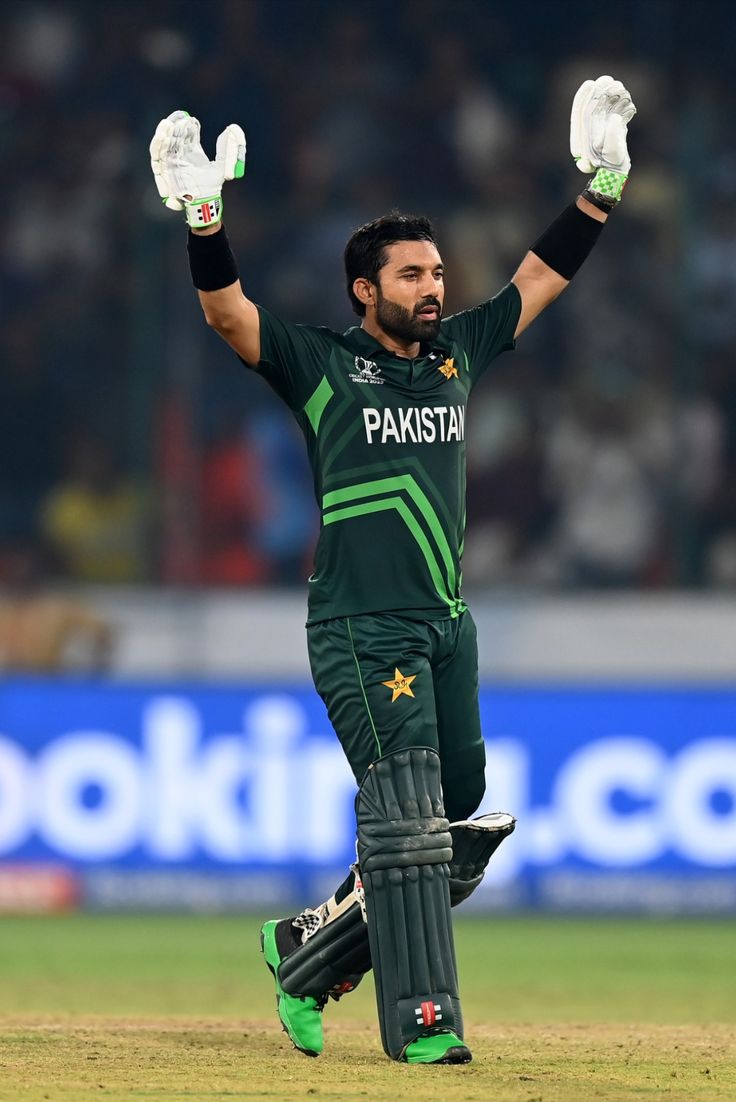
Betting, match-fixing and corruption allegations are not new to Pakistan cricket. Over the past three decades, several prominent names have faced investigations, allegations, bans and controversies in this regard. In the present era, reports concerning Pakistan’s prominent wicketkeeper-batter Mohammad Rizwan and an investigation related to online betting have once again brought some of the incidents of the past into focus.
According to recent reports, legal proceedings have also taken place regarding the investigation of Rizwan’s mobile phone. The Lahore High Court dismissed his petition against the investigation of his phone, while the matter remains at the investigation stage. At this point, it would not be correct to claim that Rizwan has been proven guilty of match-fixing.
A fundamental question therefore arises: does the investigation of a player’s mobile phone, or questioning in connection with betting, by itself constitute evidence of involvement in match-fixing?
The answer is clearly no. Any conclusion regarding a player’s involvement must be based on evidence, due process and the final findings of the relevant authorities.
Mohammad Rizwan’s Case and Memories of the Past
Mohammad Rizwan has been one of Pakistan cricket’s leading wicketkeeper-batters for several years. His career has been marked by hard work, consistency and performances across all three formats.
In the current matter, it is important to distinguish between being investigated and being found guilty. If an investigation does not establish an allegation, it would be inappropriate to damage a player’s reputation merely on the basis of allegations or rumours.
Recent reports concerning Rizwan have referred to forensic examination of his phone and questioning related to betting. However, no final decision has emerged from the available information that would establish him as guilty of match-fixing.
Zulqarnain Haider’s Dubai Episode Still Raises Questions
The current controversy surrounding Mohammad Rizwan has also brought back memories of the 2010 episode involving former Pakistan wicketkeeper Zulqarnain Haider.
In November 2010, Pakistan and South Africa were playing a one-day international series in the United Arab Emirates. In the fourth ODI, Pakistan secured a thrilling victory, with Zulqarnain remaining unbeaten on 19 and making an important contribution to Pakistan’s one-wicket win.
The victory levelled the five-match series at 2-2.
After the match, Zulqarnain claimed that he had been threatened by an individual and pressured in connection with the outcome of a match. He subsequently left the Pakistan team and travelled from Dubai to London. The circumstances surrounding his departure, including how he obtained his passport and travelled to London, raised a number of questions at the time.
Zulqarnain maintained that he had faced pressure from an unidentified individual in relation to the match. However, it would not be appropriate to treat every claim surrounding the incident as an established fact. The Pakistan Cricket Board subsequently constituted a fact-finding committee to investigate the matter.
Questions nevertheless remained about how a national-team player obtained his passport during a tour, how he was able to reach London within a short period, and what happened administratively during the episode.
The PCB investigated the circumstances surrounding Zulqarnain’s departure from the team and he was subsequently suspended for leaving the tour.
Rashid Latif: A Voice Against Betting and a Long Absence
Former Pakistan wicketkeeper Rashid Latif is another prominent name in the history of voices against betting and match-fixing in cricket.
During Pakistan’s tour of South Africa and Zimbabwe in 1994-95, Rashid Latif raised allegations concerning then Pakistan captain Salim Malik and match-fixing. The issue subsequently became part of a wider investigation into corruption in Pakistan cricket.
The inquiry headed by Justice Malik Qayyum examined allegations and the conduct of several players. Salim Malik was later banned for life, while disciplinary action was also taken against some other players.
Rashid Latif’s own international career experienced considerable ups and downs during this period. Historical reports indicate that he remained out of the national team for around three years after 1998 before returning in 2001. Following the 2003 World Cup, he was appointed Pakistan captain.
In 2003, he once again wrote to the International Cricket Council, drawing attention to the threat posed by betting and match-fixing in international cricket. The PCB reprimanded him for making the contents of the letter public.
The historical record demonstrates that speaking out against corruption in cricket has not always been easy. However, claims that a particular institution or an entire network deliberately sought to destroy a player would require concrete evidence.
Is Cricket’s Betting Network Really That Powerful?
The issue is not confined to Pakistan. Cricket around the world has faced the threat of betting and match-fixing. This is why the ICC and national cricket boards have established anti-corruption systems.
From the controversies of the 1990s to the 2010 spot-fixing scandal, Pakistan cricket has witnessed several serious incidents.
In the 2010 spot-fixing case, Salman Butt, Mohammad Asif and Mohammad Amir were accused of involvement in deliberate no-balls during the Lord’s Test against England. The case subsequently reached the British legal system as well as the ICC’s disciplinary process.
This history demonstrates that betting and corruption have been genuine threats to cricket.
However, claims that all of cricket is controlled by Indian bookmakers, or that the ICC is a partner in such a network, would require substantial and independently verified evidence. Similarly, assertions that India and the UAE account for the highest levels of gambling, that India has the world’s largest cricket betting network, or that the financial strength of the Indian cricket board enables it to control the ICC should be treated as claims requiring evidence rather than established facts.
Mohammad Rizwan’s International Career Through 2026
Mohammad Rizwan has represented Pakistan in all three formats, and his international statistics have continued to grow.
Test Cricket
Matches: 43
Innings: 73
Runs: 2,580
Highest score: 171
Average: approximately 40
Centuries: 3
Half-centuries: 14
Wicketkeeping: 115 catches and 10 stumpings
One-Day Internationals
Matches: 103
Innings: 94
Runs: 2,979
Highest score: 131 not out
Average: 40.80
Centuries: 4
Half-centuries: 19
Wicketkeeping: 113 catches and 7 stumpings
T20 Internationals
Matches: 106
Innings: 93
Runs: 3,414
Highest score: 104 not out
Average: 47.41
Centuries: 1
Half-centuries: 30
Wicketkeeping: 55 catches and 12 stumpings
According to these figures, Rizwan has scored more than 9,000 international runs and has served Pakistan for many years as an important batter and wicketkeeper across all three formats.
Will the Decision Be Based on Evidence or Rumours?
If an investigation against Mohammad Rizwan is underway, allowing the process to be completed is in the best interest of cricket.
A player should neither be declared guilty solely on the basis of an allegation nor be given a definitive clean chit before the relevant authorities complete their investigation and issue a final decision.
The Zulqarnain Haider episode, Rashid Latif’s efforts to raise concerns about corruption, and the 2010 spot-fixing scandal are important chapters in Pakistan cricket’s history. They underline one fundamental point: cricket needs transparent, independent and evidence-based investigations into allegations of betting and corruption.
In Rizwan’s case, the central requirement is likewise that the investigation should be completed on the basis of evidence, without being influenced by pressure, rumours or reputation.
If an allegation is not substantiated, protecting and restoring the player’s reputation is as important as taking action when wrongdoing is established.
Pakistan cricket has experienced several corruption-related crises in the past. The need now is to learn from those episodes and ensure a transparent system in which neither an innocent player becomes a scapegoat nor genuine corruption is allowed to remain hidden.
