
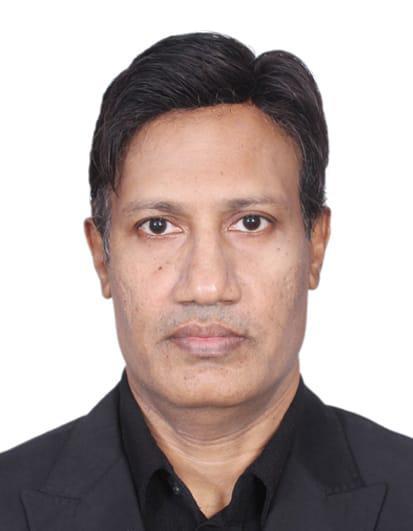
By Junaid Qaiser
At a time when the Middle East is shrouded in uncertainty and Gulf nations are actively defending against missile and drone threats, the United Arab Emirates stands out with a clear sense of direction. Amira Sajwani’s assertion that the UAE has “nothing to fear” is not just corporate reassurance for investors, but a reflection of the country’s bold and strategic leadership. In a region shadowed by conflict, shifting alliances, and economic anxiety, such confidence carries significant weight. It’s not mere rhetoric, but a powerful political and economic signal.
Sajwani, speaking as Managing Director of DAMAC Properties, has anchored her optimism in both leadership and hard data. “In the presence of His Highness Sheikh Mohamed bin Zayed Al Nahyan and His Highness Sheikh Mohammed bin Rashid Al Maktoum — we have nothing to fear,” she declared, directly tying market confidence to the country’s leadership. She further emphasized that “history has taught us that the UAE consistently overcomes challenges and emerges stronger,” pointing to a governance model that thrives under pressure rather than retreats from it.
The numbers she cites reinforce that message. Dubai recorded AED 246 billion in real estate transactions in the first quarter of 2026 alone, marking a remarkable 72 percent year-over-year increase. In any other context, this would be seen simply as a success story. In today’s geopolitical climate, it reads as something more—a test of resilience. “These figures clearly demonstrate that despite political tensions across the region, the fundamentals of Dubai’s real estate market remain exceptionally strong,” Sajwani noted, adding that “investor confidence in Dubai remains robust,” a claim that is increasingly hard to dismiss.
What sets the UAE apart is not the absence of risk, but its proactive approach to managing it. The leadership has consistently shown an ability to turn external shocks into internal momentum. Whether it was the global financial crisis, the COVID-19 pandemic, or even the disruptive Hadeer Storm of 2024, the response has been one of not just recovery, but recalibration – emerging stronger, with sharper strategies and renewed economic vigor.
This pattern has built something more valuable than just short-term gains – it’s created a sense of credibility. Investors aren’t just chasing attractive returns, they’re responding to the predictability in the UAE’s governance. In a region where uncertainty can quickly erode confidence, the UAE has established a reputation for consistency. Policies are communicated clearly, implemented swiftly, and adjusted when necessary. That institutional reliability has become one of the country’s greatest economic assets. The Dubai real estate boom, then, shouldn’t be seen as an isolated success story, but as part of a larger narrative. It reflects how the leadership’s vision translates into market behavior.
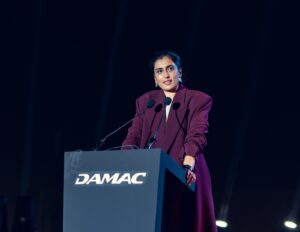
Developers like DAMAC, who reported strong sales and maintained construction timelines, are both beneficiaries and instruments of this system. Their performance signals operational continuity – something that’s deeply important to investors navigating a volatile regional landscape.
Still, it would be simplistic to interpret “nothing to fear” as an absence of challenges. The current geopolitical climate carries risks that are complex and evolving. Energy markets remain sensitive, global capital flows are increasingly cautious, and regional tensions have the potential to shift quickly. Yet Sajwani’s confidence underscores a deeper belief in the UAE’s institutional strength. “We have full confidence in our leadership and their vision, and we are certain that we will emerge stronger,” she affirmed, reinforcing the centrality of leadership in shaping both perception and reality.
There is also a broader strategic layer at play. Dubai’s positioning as a global hub—bridging East and West, finance and trade, innovation and tourism—has been deliberately cultivated. In times of regional disruption, this positioning becomes even more valuable. Capital does not disappear in moments of crisis; it relocates. Increasingly, it appears to be relocating to environments where governance is strong and direction is clear. The UAE has worked systematically to become one such destination.
Amira Sajwani’s statement isn’t about dismissing risk, but rather affirming preparedness. It reflects a confidence rooted in experience, leadership, and performance. In a region where uncertainty often defines the narrative, the UAE is trying to rewrite it – not by ignoring challenges, but by demonstrating an ability to navigate them.
Saying “nothing to fear” may sound like a bold claim, but in the UAE’s case, it’s not without merit. It’s a testament to a leadership model that has made resilience a defining strategy, not just a response to emergencies.
